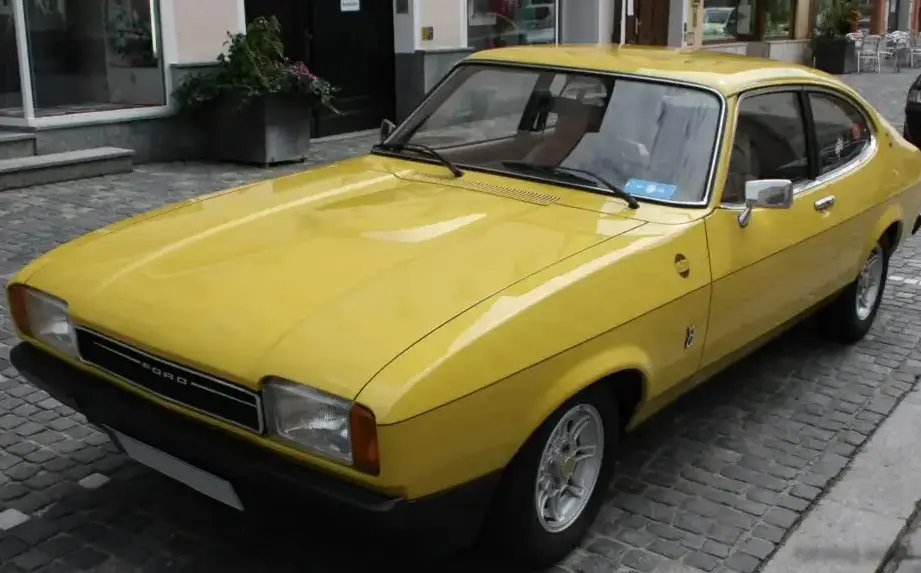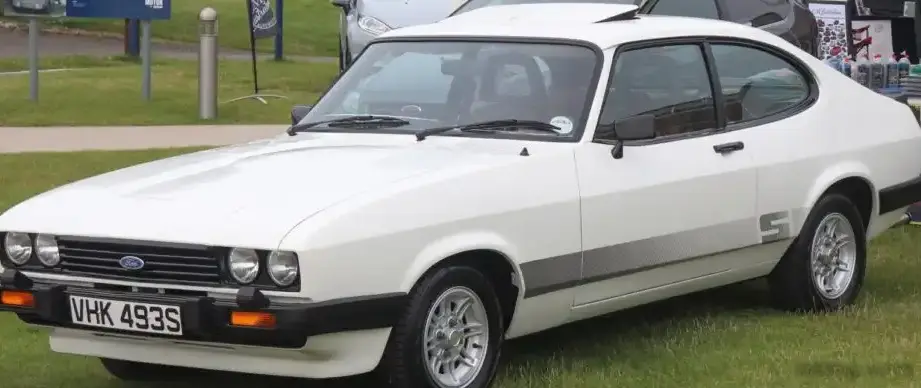
The Ford Capri III 2.3 Super V6, produced between March 1978 and June 1985, represented a significant step up in performance and refinement for Ford’s iconic coupe. Part of the GECP generation, this variant occupied a mid-to-high position in the Capri lineup, appealing to drivers seeking a blend of sporting character and comfortable cruising. It was primarily marketed in Europe, where the Capri enjoyed considerable success as a stylish and relatively affordable grand tourer. The 2.3 Super V6 distinguished itself from the base models with its larger displacement engine and increased power output, offering a more engaging driving experience than the four-cylinder options.
Technical Specifications
| Brand | Ford |
| Model | Capri |
| Generation | Capri III (GECP) |
| Type (Engine) | 2.3 Super V6 (114 Hp) |
| Start of production | March, 1978 |
| End of production | June, 1985 |
| Powertrain Architecture | Internal Combustion engine |
| Body type | Coupe |
| Seats | 4 |
| Doors | 3 |
| Fuel Type | Petrol (Gasoline) |
| Acceleration 0 – 100 km/h | 10.1 sec |
| Acceleration 0 – 62 mph | 10.1 sec |
| Acceleration 0 – 60 mph | 9.6 sec |
| Maximum speed | 186 km/h (115.58 mph) |
| Weight-to-power ratio | 9.7 kg/Hp, 102.7 Hp/tonne |
| Weight-to-torque ratio | 6.3 kg/Nm, 158.6 Nm/tonne |
| Power | 114 Hp @ 5300 rpm |
| Power per litre | 49.7 Hp/l |
| Torque | 176 Nm @ 3000 rpm (129.81 lb.-ft. @ 3000 rpm) |
| Engine layout | Front, Longitudinal |
| Engine Model/Code | Cologne |
| Engine displacement | 2294 cm3 (139.99 cu. in.) |
| Number of cylinders | 6 |
| Engine configuration | V-engine |
| Cylinder Bore | 90 mm (3.54 in.) |
| Piston Stroke | 60.14 mm (2.37 in.) |
| Compression ratio | 8.75:1 |
| Fuel injection system | Carburettor |
| Engine aspiration | Naturally aspirated engine |
| Engine oil capacity | 4.25 l (4.49 US qt | 3.74 UK qt) |
| Coolant | 7.8 l (8.24 US qt | 6.86 UK qt) |
| Kerb Weight | 1110 kg (2447.13 lbs.) |
| Max. weight | 1460 kg (3218.75 lbs.) |
| Max load | 350 kg (771.62 lbs.) |
| Trunk (boot) space – minimum | 640 l (22.6 cu. ft.) |
| Fuel tank capacity | 58 l (15.32 US gal | 12.76 UK gal) |
| Max. roof load | 75 kg (165.35 lbs.) |
| Permitted trailer load with brakes (12%) | 1200 kg (2645.55 lbs.) |
| Permitted trailer load without brakes | 550 kg (1212.54 lbs.) |
| Length | 4440 mm (174.8 in.) |
| Width | 1700 mm (66.93 in.) |
| Height | 1350 mm (53.15 in.) |
| Wheelbase | 2560 mm (100.79 in.) |
| Front track | 1350 mm (53.15 in.) |
| Rear (Back) track | 1380 mm (54.33 in.) |
| Minimum turning circle | 10 m (32.81 ft.) |
| Drivetrain Architecture | Rear wheel drive |
| Number of gears and type of gearbox | 4 gears, manual transmission |
| Front suspension | Independent, type McPherson with coil spring and anti-roll bar |
| Rear suspension | Transverse stabilizer, Leaf spring |
| Front brakes | Disc, 245 mm |
| Rear brakes | Drum, 229×43 mm |
| Steering type | Steering rack and pinion |
| Tires size | 185/70 R13 |
| Wheel rims size | 5.5J x 13 |
Powertrain & Engine Architecture
The heart of the Capri 2.3 Super V6 was the Cologne engine, a 60-degree V6 displacing 2.3 liters (2294 cc). This engine, also used in various other Ford and Lincoln-Mercury models, was known for its smooth operation and relatively high power output for its time. The 114 horsepower peak arrived at 5300 rpm, while 176 Nm (129.81 lb-ft) of torque were available at 3000 rpm. Importantly, this version utilized a carbureted fuel system, a common feature for the era, rather than fuel injection. The engine featured a single overhead camshaft (SOHC) valvetrain, operating two valves per cylinder. The longitudinal engine placement and rear-wheel drive configuration contributed to the Capri’s balanced handling characteristics. The standard transmission was a four-speed manual, although a three-speed automatic was also offered, albeit less common and impacting performance.
Driving Characteristics
The 2.3 Super V6 Capri offered a noticeable improvement in performance over the smaller-engined models. Acceleration to 60 mph took around 9.6 seconds, and it could achieve a top speed of 115.58 mph. While not a sports car in the modern sense, the V6 provided ample power for comfortable highway cruising and spirited driving on winding roads. The manual transmission allowed for precise control, while the automatic, though less engaging, offered convenience. The gear ratios were tuned for a balance between acceleration and fuel economy. Compared to the later 2.8i models, the 2.3 Super V6 felt less urgent, but it was also more forgiving and easier to drive at lower speeds. The rear-wheel drive layout provided a classic driving feel, but also required careful throttle control in wet or slippery conditions.
Equipment & Trim Levels
The 2.3 Super V6 Capri typically came equipped with features such as a vinyl interior, basic instrumentation, and a four-spoke steering wheel. Higher trim levels, often denoted by the “S” or “Ghia” badges, added features like upgraded upholstery (often cloth or leather), a more comprehensive instrument cluster, and additional exterior trim. Optional extras included a sunroof, power steering, and a more sophisticated stereo system. The Ghia trim, in particular, focused on luxury and comfort, offering a more refined interior and a higher level of standard equipment. The base models were fairly spartan, appealing to budget-conscious buyers, while the higher trims aimed for a more premium experience.
Chassis & Braking
The Capri III utilized a McPherson strut front suspension with coil springs and an anti-roll bar, providing responsive handling. The rear suspension employed a leaf spring setup with a transverse stabilizer, a cost-effective design that offered adequate ride comfort. Braking was accomplished via disc brakes at the front and drum brakes at the rear. The size of the front discs was 245mm, while the rear drums measured 229x43mm. Steering was rack and pinion, providing precise control. The suspension setup was tuned to balance ride comfort with handling, making the Capri a capable all-rounder. The relatively light curb weight of around 1110 kg (2447.13 lbs) contributed to its agility.
Market Reception & Comparison
The Capri 2.3 Super V6 was generally well-received by automotive critics. It was praised for its stylish design, comfortable interior, and enjoyable driving experience. However, some critics noted the carbureted engine’s slightly rough running and the relatively basic interior trim on the lower-spec models. Compared to the 1.6L and 2.0L models, the 2.3 Super V6 offered a significant performance boost, but at a higher price point. The later 2.8i models, with their fuel-injected engines and increased power, represented a further step up in performance, but also came with a higher price tag and potentially more complex maintenance requirements. Fuel economy was reasonable for the time, but not exceptional.
Legacy
The Ford Capri 2.3 Super V6 remains a popular classic car today, appreciated for its retro styling and enjoyable driving characteristics. The Cologne V6 engine is generally considered reliable, although regular maintenance is essential. Parts availability is good, thanks to the engine’s widespread use in other Ford models. However, rust can be a significant issue, particularly on cars that have not been properly stored. The 2.3 Super V6 variant strikes a good balance between performance, affordability, and reliability, making it a desirable choice for classic car enthusiasts. Well-maintained examples continue to command respectable prices in the used car market, and the Capri remains a beloved icon of 1970s and 1980s automotive design.