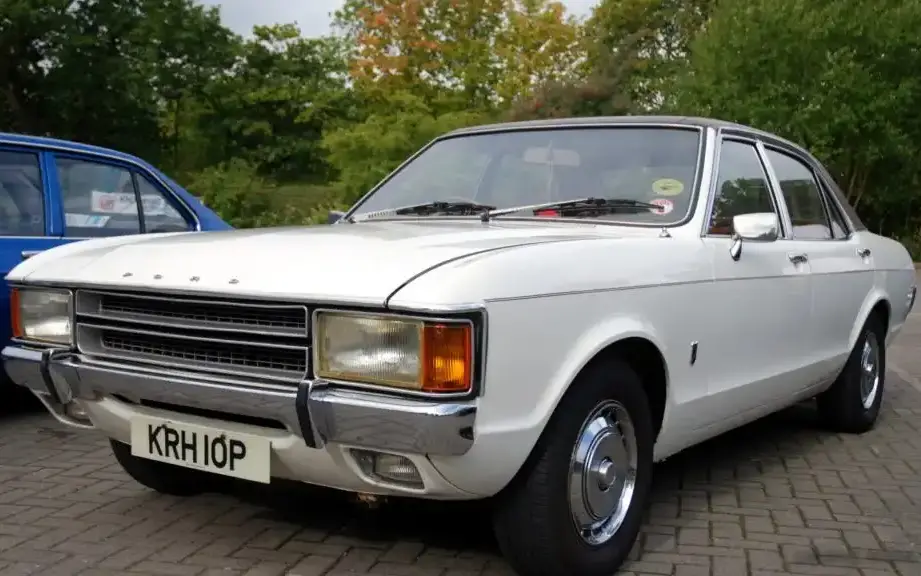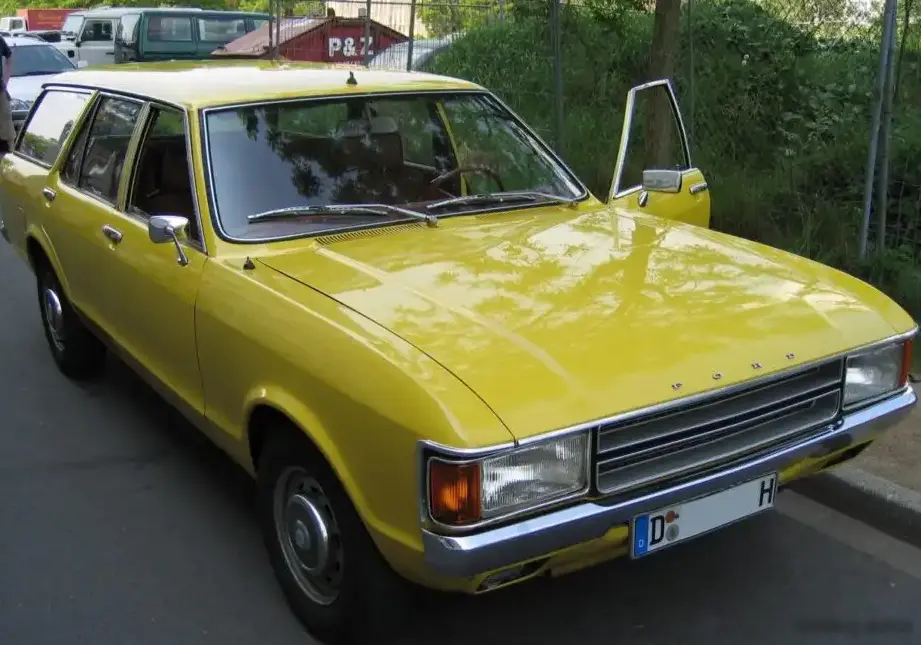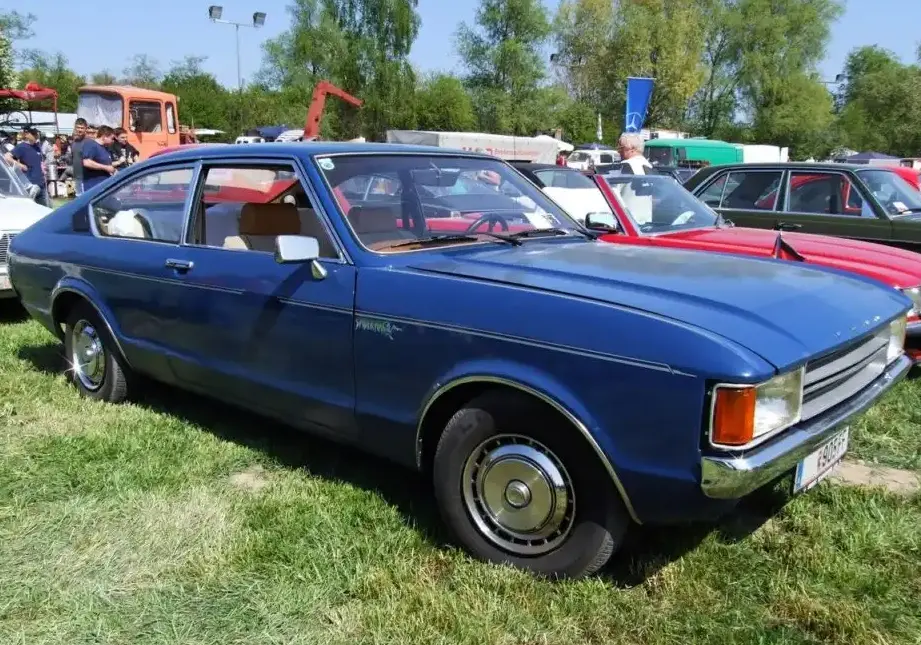
The Ford Consul Coupe (GGCL) 1700, producing 75 horsepower, represents a significant, though often overlooked, chapter in Ford of Britain’s history. Produced between 1972 and 1976, this coupe variant of the Consul line aimed to offer a stylish and relatively affordable option within the British market. It was positioned as a more sporting alternative to the traditional saloon models, appealing to buyers seeking a blend of practicality and aesthetic appeal. The GGCL designation specifically identifies the coupe body style within the broader Consul range, which itself was a descendant of the earlier Consul and Granada models. This generation of Consul coupes occupied a niche between the smaller Escort and the larger, more luxurious Granada, offering a unique proposition for Ford buyers.
Technical Specifications
| Brand | Ford |
| Model | Consul |
| Generation | Consul Coupe (GGCL) |
| Type (Engine) | 1700 (75 Hp) |
| Start of Production | 1972 |
| End of Production | 1976 |
| Powertrain Architecture | Internal Combustion Engine |
| Body Type | Coupe |
| Fuel Type | Petrol (Gasoline) |
| Power | 75 Hp |
| Engine Aspiration | Naturally Aspirated |
Powertrain & Engine Architecture
The heart of the Consul Coupe 1700 was the Essex V4 engine, a 1699cc unit producing 75 horsepower. This engine, designated as the 1700, was a relatively compact and lightweight V4, designed to offer a balance of performance and fuel efficiency. It featured a single overhead camshaft (SOHC) valvetrain and utilized a Zenith 36VN downdraft carburetor for fuel delivery. While not a high-performance engine by modern standards, the Essex V4 was known for its smooth operation and reasonable reliability. The engine’s architecture was notable for its 60-degree V-angle, which contributed to its relatively compact dimensions. The transmission offered was typically a four-speed manual, but a three-speed automatic transmission was also available, though less common. The automatic transmission, a Ford-sourced unit, was geared towards providing comfortable cruising rather than sporty acceleration. The engine’s relatively low compression ratio (typically around 8.5:1) meant it could run on lower octane fuel, a consideration in the 1970s.
Driving Characteristics
The driving experience in the Consul Coupe 1700 was characterized by comfortable cruising and adequate, if not exhilarating, performance. With 75 horsepower on tap, acceleration was modest, taking around 13-14 seconds to reach 60 mph. The automatic transmission, when equipped, further dulled acceleration, prioritizing smooth gear changes over rapid response. The suspension, consisting of independent front suspension with MacPherson struts and a live axle rear suspension, provided a reasonably comfortable ride, though it wasn’t particularly sporty. Steering was power-assisted, making maneuvering easy, but lacked significant feedback. The car’s weight, around 2,400 lbs, contributed to its stable handling, but also limited its agility. Compared to the manual transmission versions, the automatic felt noticeably slower, particularly when overtaking. The gear ratios in the automatic were optimized for fuel economy and relaxed driving, rather than maximizing performance.
Equipment & Trim Levels
The Ford Consul Coupe 1700 was generally well-equipped for its price point. Standard features typically included cloth upholstery, a wood-trimmed dashboard, and a basic AM radio. Power steering was often included as standard, and some models featured a vinyl roof. Optional extras included a more sophisticated radio with cassette player, heated rear window, and upgraded interior trim. The interior design was typical of the early 1970s, with a focus on practicality and durability. The dashboard layout was straightforward, with clearly labeled controls. Trim levels were relatively simple, with the 1700 representing the base model in the coupe range. Higher-spec versions, often with larger engines, offered more luxurious appointments.
Chassis & Braking
The Consul Coupe 1700 utilized a body-on-frame construction, a common practice for Ford at the time. The chassis was relatively robust, providing a solid foundation for the car. The front suspension featured MacPherson struts, coil springs, and an anti-roll bar, while the rear suspension employed a live axle with leaf springs. Braking was initially provided by disc brakes on the front wheels and drum brakes on the rear. Later models sometimes featured all-round disc brakes as standard. The braking system was adequate for the car’s weight and performance, but lacked the sophistication of more modern systems. Steering was rack and pinion, providing reasonably precise control.
Market Reception & Comparison
The Ford Consul Coupe 1700 received mixed reviews from automotive critics. While praised for its stylish design and comfortable ride, it was often criticized for its lack of performance, particularly in automatic transmission guise. Compared to its rivals, such as the Vauxhall Firenza and the Triumph Stag, the Consul Coupe offered a more practical and affordable option. However, it lacked the sporting pretensions of the Triumph and the more modern styling of the Vauxhall. Fuel economy was reasonable for the era, averaging around 25-30 mpg. Reliability was generally good, though the Essex V4 engine was known to be susceptible to oil leaks if not properly maintained. The automatic transmission, while comfortable, was considered less durable than the manual gearbox.
Legacy
Today, the Ford Consul Coupe 1700 is a relatively rare sight on the roads. While not a highly sought-after classic, it has gained a following among enthusiasts who appreciate its unique styling and historical significance. The Essex V4 engine, while not renowned for its performance, is relatively straightforward to maintain, and spare parts are still available. The automatic transmission versions are generally less desirable than the manual models, due to their slower performance. Well-maintained examples can fetch reasonable prices in the used car market, appealing to collectors and those seeking a nostalgic trip back to the 1970s. The Consul Coupe 1700 represents a fascinating example of British automotive design and engineering from a bygone era, offering a glimpse into the tastes and priorities of car buyers in the 1970s.