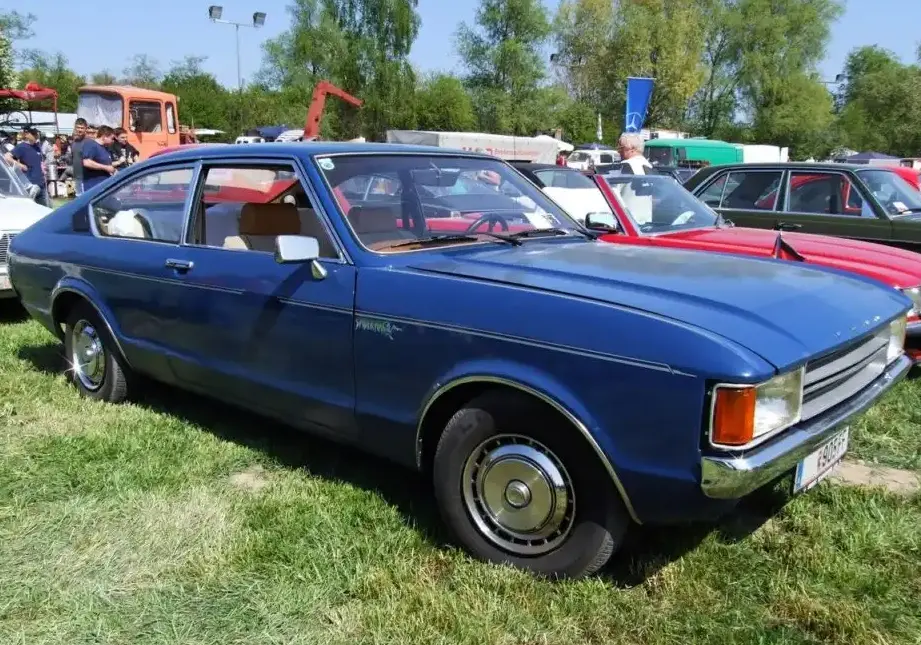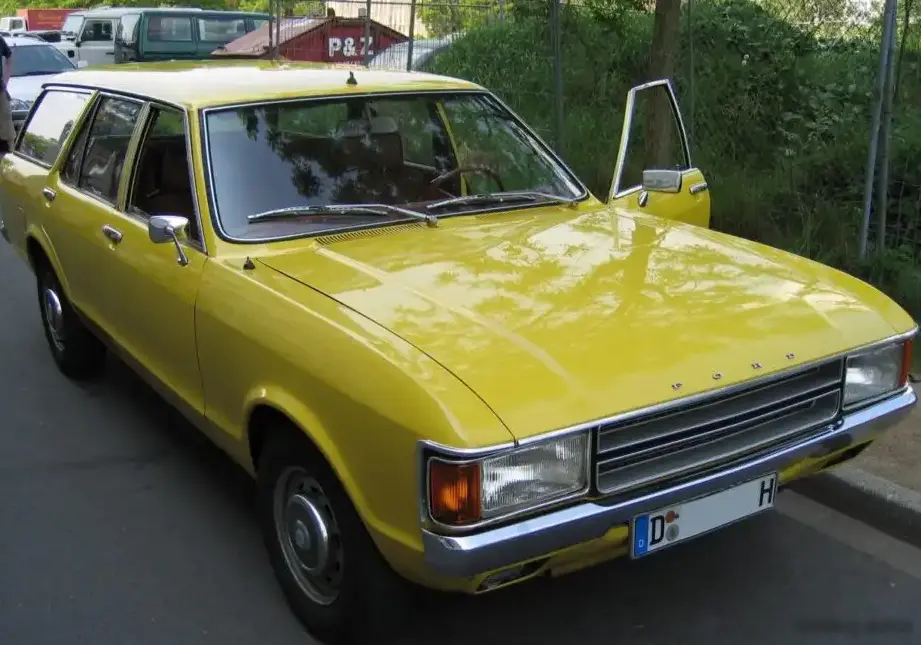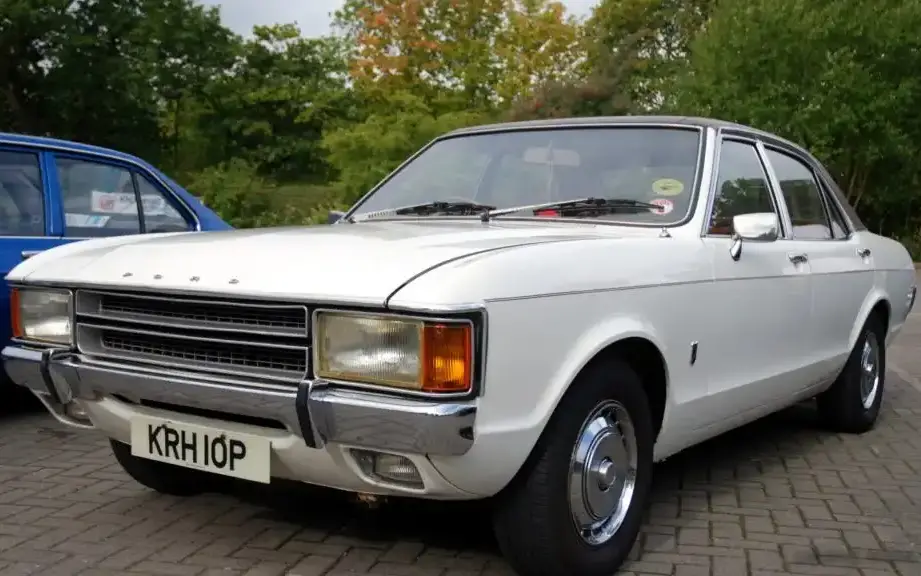
The Ford Consul 1700, produced between 1972 and 1976, represented a significant step in Ford of Britain’s mid-size offerings. Designated the GGFL model code, this variant occupied a crucial position in the Consul line, aiming to provide comfortable and reliable family transportation. It was part of the third generation of the Consul, a nameplate with a history dating back to the 1950s. The 1700 model, with its 75 horsepower engine, was positioned as the standard engine option, offering a balance between affordability and usability for the British and export markets. While not a performance-oriented vehicle, it was designed for everyday driving and represented a practical choice for families and commuters.
Technical Specifications
| Brand | Ford |
| Model | Consul |
| Generation | Consul (GGFL) |
| Type (Engine) | 1700 (75 Hp) |
| Start of Production | 1972 |
| End of Production | 1976 |
| Powertrain Architecture | Internal Combustion Engine |
| Body Type | Sedan |
| Fuel Type | Petrol (Gasoline) |
| Power | 75 Hp |
| Engine Aspiration | Naturally Aspirated |
Powertrain & Engine Architecture
The heart of the Ford Consul 1700 was the Essex V4 engine, a 1699cc (approximately 103.6 cubic inches) naturally aspirated unit. This engine, designated as the 2000E series, was a 60-degree V4, notable for its relatively smooth operation compared to inline-four engines. It featured a single overhead camshaft (SOHC) design, operating two valves per cylinder. Fuel delivery was managed by a Zenith 36mm downdraft carburetor, a common setup for the era. The engine produced 75 horsepower at 4,800 rpm and 98 lb-ft of torque at 3,000 rpm. The engine block was cast iron, while the cylinder head was aluminum, contributing to a reasonable weight for its size.
The 1700 was typically paired with a four-speed manual transmission, but a three-speed automatic transmission (Ford’s Cruise-O-Matic) was also available as an option. The automatic transmission, while offering convenience, did impact performance slightly. The transmission was a conventional torque converter automatic, known for its durability but not its efficiency by modern standards. The rear axle was a live axle with a final drive ratio typically around 3.7:1, providing a balance between acceleration and fuel economy.
Driving Characteristics
The Ford Consul 1700 with the 75 hp engine and manual transmission offered adequate, though not exhilarating, performance. Acceleration from 0 to 60 mph took around 14-16 seconds, making it competitive with other mid-size family sedans of the time. The automatic transmission version was predictably slower, adding a second or two to the 0-60 mph time. The engine’s torque delivery was relatively flat, providing usable power across a reasonable rev range. However, it did require downshifting for overtaking maneuvers or climbing hills. The steering was light and relatively precise, making it easy to maneuver in urban environments. The suspension, consisting of independent front suspension with MacPherson struts and a live rear axle with leaf springs, provided a comfortable ride, although it could feel somewhat wallowy on uneven surfaces. The car wasn’t designed for spirited driving, but it offered a stable and predictable handling experience within its limits.
Equipment & Trim Levels
The Ford Consul 1700 was generally well-equipped for its price point. Standard features included reclining front seats, a heater, and a basic instrument panel with speedometer, fuel gauge, and coolant temperature indicator. The interior trim was typically cloth upholstery, available in a range of colors. The dashboard was constructed from durable plastic, and the overall interior design was functional rather than luxurious. Optional extras included a radio, whitewall tires, a vinyl roof, and upgraded interior trim. The Consul 1700 didn’t offer the same level of luxury as some of its competitors, but it provided a comfortable and practical interior for family use.
Trim levels were relatively simple. The base model offered the essential features, while higher trims added items like more luxurious upholstery, additional chrome trim, and optional equipment packages. The automatic transmission was often bundled with other convenience features.
Chassis & Braking
The Ford Consul 1700 utilized a body-on-frame construction, a common practice for the era. The chassis was robust and provided a solid foundation for the vehicle. The front suspension featured MacPherson struts, coil springs, and an anti-roll bar, while the rear suspension employed a live axle with leaf springs. The braking system consisted of disc brakes on the front wheels and drum brakes on the rear wheels. The brakes were hydraulically operated and provided adequate stopping power for normal driving conditions. The steering was a recirculating ball system, offering light and relatively precise control.
Market Reception & Comparison
The Ford Consul 1700 was generally well-received by the motoring press. Critics praised its comfortable ride, spacious interior, and reasonable fuel economy. However, some criticized its lack of performance and somewhat dated styling. Compared to its rivals, such as the Vauxhall Victor and Morris Oxford, the Consul 1700 offered a competitive package. The Vauxhall Victor often provided slightly more power, while the Morris Oxford was known for its affordability. The Consul 1700 struck a balance between these two, offering a good compromise between performance, comfort, and price. Fuel economy was around 25-30 mpg, depending on driving conditions and transmission type. Reliability was generally good, although the Essex V4 engine was known to be prone to oil leaks in some cases.
Legacy
The Ford Consul 1700, while not a groundbreaking vehicle, played an important role in Ford’s history. It provided a solid and reliable family car for a generation of British motorists. The Essex V4 engine, despite its quirks, proved to be a durable and long-lasting powerplant. Today, the Consul 1700 is a popular choice among classic car enthusiasts, particularly those seeking a relatively affordable and easy-to-maintain vintage vehicle. Parts availability is generally good, and a thriving community of owners and restorers exists. The 1700 variant, with its 75 hp engine, is often considered the most practical and affordable version of the Consul, making it a good entry point for those new to classic car ownership. While not a high-performance machine, the Consul 1700 represents a charming and nostalgic piece of British automotive history.