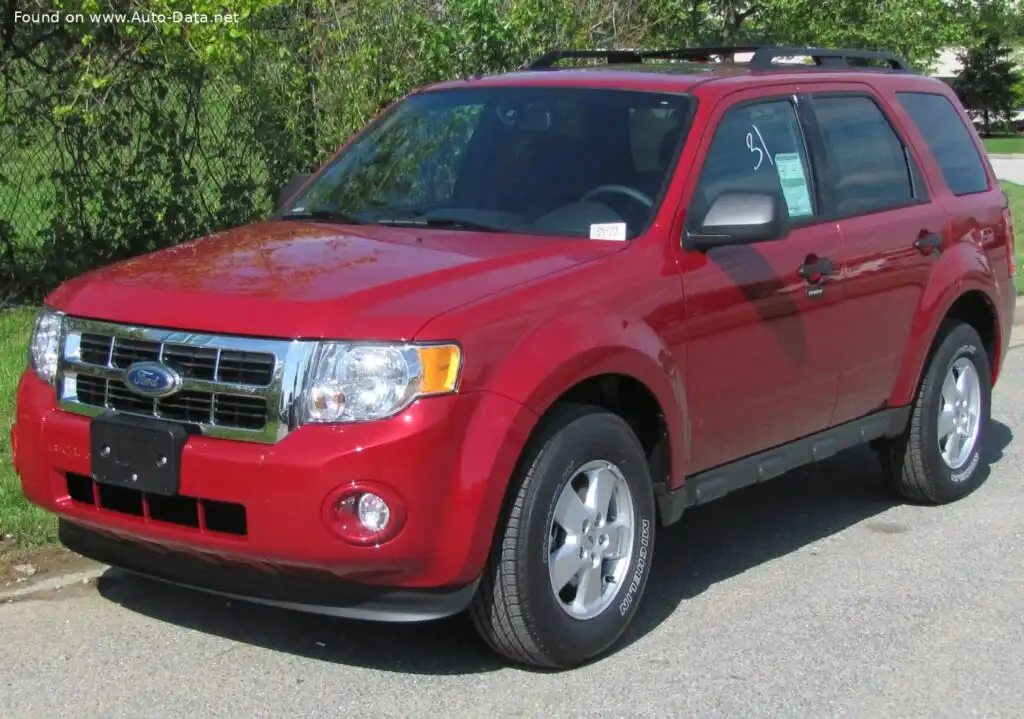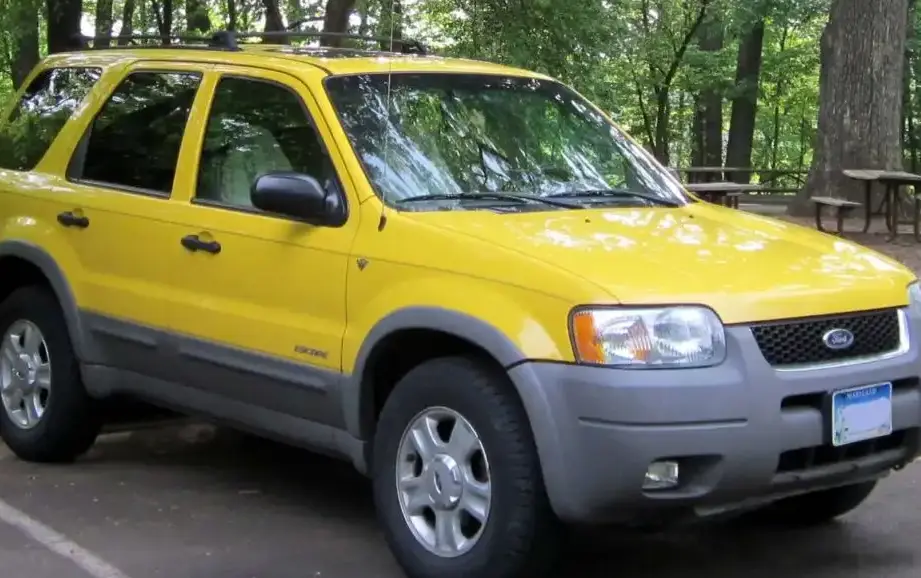
The Ford Escape, launched in 2000 for the 2001 model year, represented Ford’s entry into the rapidly growing compact SUV segment. The first generation Escape (2001-2007), known internally as the P249N, was a significant departure for Ford, utilizing a unibody construction – a first for a Ford SUV – and sharing a platform with the Mazda Tribute. The 2.0L i 16V XLS, producing 129 horsepower, was positioned as a mid-range offering within the Escape lineup, appealing to buyers seeking a balance between affordability and practicality. It sat below the more powerful V6 options and above the base 2.0L engine without the XLS trim package.
Technical Specifications
| Brand | Ford |
| Model | Escape |
| Generation | Escape I |
| Type | 2.0 i 16V XLS (129 Hp) |
| Start of production | 2000 |
| End of production | 2007 |
| Powertrain Architecture | Internal Combustion engine |
| Body type | SUV |
| Seats | 5 |
| Doors | 5 |
| Fuel consumption (urban) | 10.2 l/100 km (23.1 US mpg) |
| Fuel consumption (extra urban) | 8.7 l/100 km (27 US mpg) |
| Fuel Type | Petrol (Gasoline) |
| Acceleration 0 – 100 km/h | 11 sec |
| Acceleration 0 – 62 mph | 11 sec |
| Acceleration 0 – 60 mph | 10.5 sec |
| Maximum speed | 165 km/h (102.53 mph) |
| Weight-to-power ratio | 11 kg/Hp |
| Weight-to-torque ratio | 7.8 kg/Nm |
| Power | 129 Hp @ 5400 rpm |
| Torque | 183 Nm @ 4500 rpm (134.97 lb.-ft. @ 4500 rpm) |
| Engine layout | Front, Transverse |
| Engine displacement | 1988 cm3 (121.32 cu. in.) |
| Number of cylinders | 4 |
| Engine configuration | Inline |
| Cylinder Bore | 84.8 mm (3.34 in.) |
| Piston Stroke | 88 mm (3.46 in.) |
| Compression ratio | 9.6:1 |
| Number of valves per cylinder | 4 |
| Fuel injection system | Multi-port manifold injection |
| Engine aspiration | Naturally aspirated |
| Engine oil capacity | 4.25 l (4.49 US qt | 3.74 UK qt) |
| Coolant capacity | 5 l (5.28 US qt | 4.4 UK qt) |
| Kerb Weight | 1420 kg (3130.56 lbs.) |
| Max. weight | 1872 kg (4127.05 lbs.) |
| Max load | 452 kg (996.49 lbs.) |
| Trunk (boot) space – minimum | 934 l (32.98 cu. ft.) |
| Trunk (boot) space – maximum | 1835 l (64.8 cu. ft.) |
| Fuel tank capacity | 58 l (15.32 US gal | 12.76 UK gal) |
| Length | 4394 mm (172.99 in.) |
| Width | 1780 mm (70.08 in.) |
| Height | 1702 mm (67.01 in.) |
| Wheelbase | 2619 mm (103.11 in.) |
| Front track | 1554 mm (61.18 in.) |
| Rear track | 1550 mm (61.02 in.) |
| Drivetrain Architecture | Front wheel drive |
| Number of gears | 5 |
| Gearbox type | Manual transmission |
| Front suspension | Coil spring |
| Rear suspension | Coil spring |
| Front brakes | Ventilated discs |
| Rear brakes | Drum |
| Assisting systems | ABS (Anti-lock braking system) |
| Steering type | Steering rack and pinion |
| Power steering | Hydraulic |
| Tires size | 225/70 R15 |
Introduction
The Ford Escape I, produced from 2001 to 2007, marked Ford’s initial foray into the compact SUV market. Built on the P249N platform, shared with the Mazda Tribute, the Escape offered a more car-like driving experience compared to traditional body-on-frame SUVs. The 2.0L i 16V XLS variant, available throughout the production run, was a popular choice for buyers prioritizing fuel efficiency and a lower price point. It represented a step up from the base model, offering additional features and a slightly more refined interior.
Powertrain & Engine Architecture
The heart of the 2.0L i 16V XLS Escape is the Zetec-E engine, specifically the 2.0-liter inline-four cylinder. Ford’s Zetec-E engine family was known for its relatively lightweight construction and decent power output for its displacement. The engine code for this variant is often found as variations of the 4X44 or similar. It features multi-port fuel injection, delivering fuel directly into the intake ports, and a single overhead camshaft (SOHC) design operating four valves per cylinder. This configuration provided a good balance between simplicity, reliability, and performance. The 5-speed manual transmission was the standard offering for this trim, providing adequate gear ratios for everyday driving. The transmission itself is a relatively straightforward design, known for its durability, but not particularly sporty feel.
Driving Characteristics
The 129 horsepower and 135 lb-ft of torque produced by the 2.0L engine in the Escape XLS provided adequate, but not exhilarating, performance. Acceleration from 0-60 mph took around 10.5 seconds, making it competitive with other compact SUVs of the era, but noticeably slower than the V6-powered models. The 5-speed manual transmission allowed drivers to keep the engine in its optimal power band, but the engine lacked the low-end grunt of larger displacement engines. The Escape XLS felt most comfortable during highway cruising, where the engine could operate at lower RPMs. Compared to the automatic transmission option, the manual provided better fuel economy and a more engaging driving experience. The front-wheel-drive configuration contributed to decent handling, but lacked the all-weather capability of the available four-wheel-drive system.
Equipment & Trim Levels
The XLS trim level, positioned as a mid-range offering, included several standard features. Interior appointments typically included cloth upholstery, air conditioning, power windows and locks, and an AM/FM stereo with a CD player. Optional extras included alloy wheels, a sunroof, and upgraded audio systems. The dashboard layout was functional and straightforward, prioritizing usability over aesthetics. Safety features included dual front airbags and ABS brakes. The XLS trim aimed to provide a comfortable and well-equipped vehicle without the higher price tag of the Limited or higher-performance trims.
Chassis & Braking
The Ford Escape utilized a fully independent front suspension with coil springs and a multi-link rear suspension, also with coil springs. This suspension setup provided a comfortable ride quality, absorbing bumps and irregularities in the road surface effectively. The front brakes were ventilated discs, providing good stopping power, while the rear brakes were drum brakes, a cost-saving measure common in this class of vehicle. ABS (Anti-lock Braking System) was standard, enhancing safety by preventing wheel lockup during hard braking. The steering was rack-and-pinion with hydraulic power assist, offering responsive and precise steering feel.
Market Reception & Comparison
The Ford Escape was generally well-received by automotive critics, praised for its car-like handling, spacious interior, and competitive pricing. The 2.0L engine, while not the most powerful option, was considered adequate for most drivers. Critics noted that the automatic transmission versions felt sluggish, making the manual transmission a more appealing choice for those prioritizing performance. Compared to rivals like the Honda CR-V and Toyota RAV4, the Escape offered a more affordable entry point, but lacked the established reputation for reliability of its Japanese competitors. Fuel economy was competitive for the class, averaging around 23-27 mpg in mixed driving conditions.
Legacy
The Ford Escape I, particularly the 2.0L i 16V XLS variant, has proven to be a relatively reliable vehicle in the used car market. The Zetec-E engine is known for its durability, and with proper maintenance, can last for many years. Common issues include minor oil leaks and occasional sensor failures. The 5-speed manual transmission is also generally reliable. Today, these Escapes are often found as affordable and practical transportation options, appealing to budget-conscious buyers. While not a collector’s item, the first-generation Escape holds a place in automotive history as Ford’s first successful entry into the compact SUV segment, paving the way for future generations of the popular model.