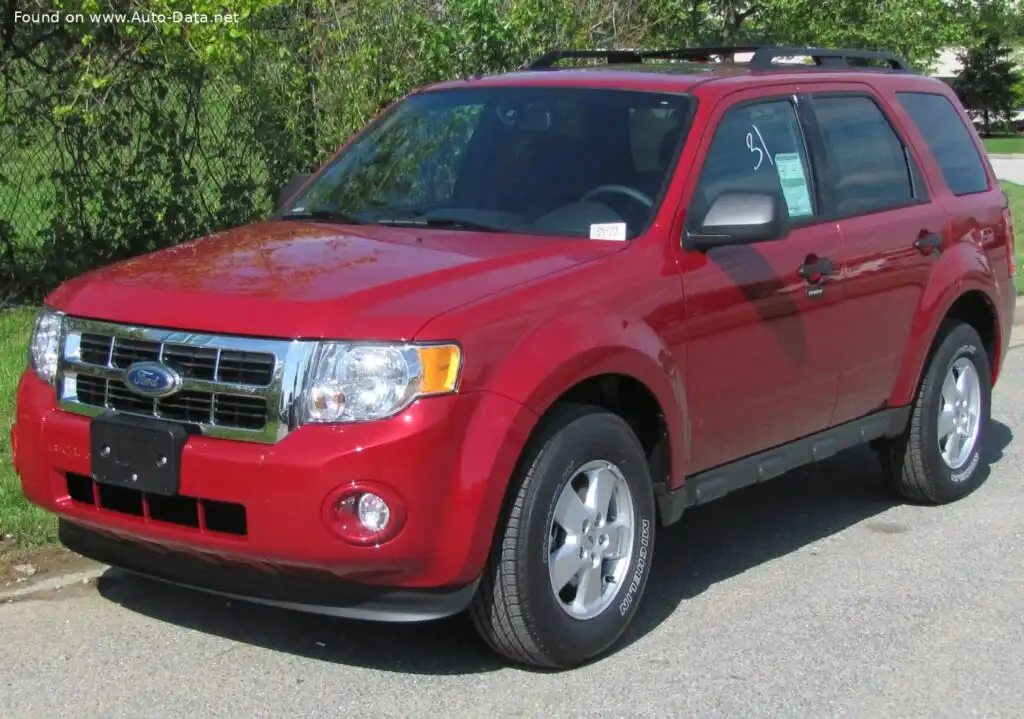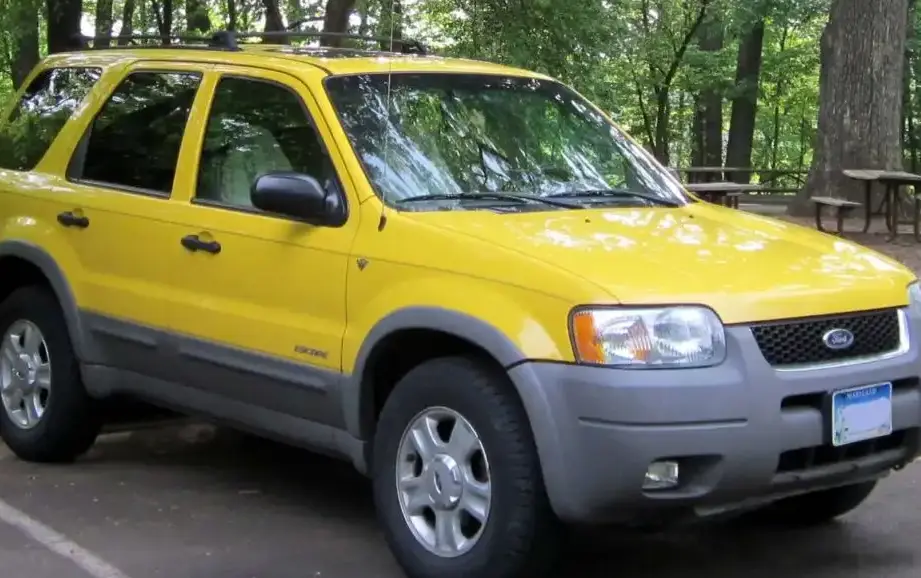
The Ford Escape Hybrid, introduced for the 2005 model year, represented Ford’s first foray into the burgeoning hybrid SUV market in North America. This first-generation Escape Hybrid (produced through 2007) utilized a full hybrid electric vehicle (FHEV) powertrain, combining a 2.3-liter inline-four gasoline engine with an electric motor to deliver improved fuel economy compared to its conventionally powered siblings. The 2.3i 16V Hybrid 4WD eCVT variant occupied the top trim level within the Escape Hybrid lineup, offering all-wheel drive capability and a continuously variable transmission (eCVT) for optimized efficiency. It was a key model in establishing Ford’s commitment to fuel-efficient technology and broadening the appeal of the Escape beyond its traditional compact SUV role.
Technical Specifications
| Brand | Ford |
| Model | Escape |
| Generation | Escape I |
| Type (Engine) | 2.3 i 16V (155 Hp) Hybrid 4WD eCVT |
| Start of production | 2005 |
| End of production | 2007 |
| Powertrain Architecture | FHEV (Full Hybrid Electric Vehicle) |
| Body type | SUV |
| Seats | 5 |
| Doors | 5 |
| Fuel consumption (urban) | 7.4 l/100 km (31.8 US mpg) |
| Fuel consumption (extra urban) | 8.1 l/100 km (29 US mpg) |
| Fuel Type | Petrol (Gasoline) |
| Maximum speed | 170 km/h (105.63 mph) |
| Weight-to-power ratio | 11.3 kg/Hp |
| Weight-to-torque ratio | 10.4 kg/Nm |
| Battery voltage | 330 V |
| Battery technology | Nickel-metal hydride (NiMH) |
| Electric motor power | 94 Hp @ 5000 rpm |
| Electric motor type | Synchronous |
| System power | 155 Hp |
| Engine power | 133 Hp @ 6000 rpm |
| Power per litre | 58.8 Hp/l |
| Torque | 168 Nm @ 4250 rpm (123.91 lb.-ft. @ 4250 rpm) |
| Engine layout | Front, Transverse |
| Engine displacement | 2261 cm3 (137.97 cu. in.) |
| Number of cylinders | 4 |
| Engine configuration | Inline |
| Cylinder Bore | 87.5 mm (3.44 in.) |
| Piston Stroke | 94 mm (3.7 in.) |
| Compression ratio | 9.3:1 |
| Number of valves per cylinder | 4 |
| Fuel injection system | Multi-port manifold injection |
| Engine aspiration | Naturally aspirated |
| Engine oil capacity | 4.25 l (4.49 US qt | 3.74 UK qt) |
| Coolant capacity | 8 l (8.45 US qt | 7.04 UK qt) |
| Kerb Weight | 1745 kg (3847.07 lbs.) |
| Trunk (boot) space (min) | 782 l (27.62 cu. ft.) |
| Trunk (boot) space (max) | 1855 l (65.51 cu. ft.) |
| Fuel tank capacity | 57 l (15.06 US gal | 12.54 UK gal) |
| Length | 4442 mm (174.88 in.) |
| Width | 1781 mm (70.12 in.) |
| Height | 1775 mm (69.88 in.) |
| Wheelbase | 2621 mm (103.19 in.) |
| Front track | 1554 mm (61.18 in.) |
| Rear track | 1550 mm (61.02 in.) |
| Front overhang | 864 mm (34.02 in.) |
| Rear overhang | 958 mm (37.72 in.) |
| Ride height (ground clearance) | 213 mm (8.39 in.) |
| Approach angle | 21.4° |
| Departure angle | 28.7° |
| Ramp-over angle | 21.2° |
| Drivetrain Architecture | ICE and electric motor drive front wheels, rear wheels driven via clutch |
| Drive wheel | All wheel drive (4×4) |
| Number of gears | automatic transmission eCVT |
| Front suspension | Coil spring |
| Rear suspension | Coil spring |
| Front brakes | Ventilated discs |
| Rear brakes | Drum |
| Assisting systems | ABS (Anti-lock braking system) |
| Steering type | Steering rack and pinion |
| Power steering | Electric |
| Tires size | 235/70 R16 |
Powertrain & Engine Architecture
The heart of the 2005-2007 Ford Escape Hybrid was its sophisticated powertrain. The 2.3-liter inline-four engine, designated as the 4G91, featured a single overhead camshaft (SOHC) design with four valves per cylinder. It utilized multi-port fuel injection for precise fuel delivery. The engine produced 133 horsepower at 6000 rpm and 168 lb-ft of torque at 4250 rpm. Crucially, the engine was designed to operate in conjunction with a 94-horsepower electric motor. The electric motor drew power from a 330-volt nickel-metal hydride (NiMH) battery pack. The eCVT (electronically controlled continuously variable transmission) seamlessly blended the power from both the gasoline engine and the electric motor, optimizing efficiency and performance. The system could operate in electric-only mode at lower speeds, providing zero-emission driving for short distances. The all-wheel-drive system was implemented through an electrically controlled clutch that engaged the rear wheels when needed, enhancing traction in slippery conditions.
Driving Characteristics
The Escape Hybrid 2.3i Automatic offered a noticeably different driving experience compared to the standard gasoline-powered Escape. The eCVT provided smooth, stepless acceleration, eliminating the shift shock associated with traditional automatic transmissions. While the combined system output of 155 horsepower wasn’t particularly sporty, it delivered adequate performance for everyday driving. Acceleration was linear and predictable. The electric motor provided instant torque, which helped to compensate for the engine’s relatively modest output. Compared to the manual transmission versions of the standard Escape, the Hybrid offered a more relaxed and refined driving experience. Fuel economy was the primary benefit, with EPA estimates of 31 mpg city and 29 mpg highway, significantly better than the non-hybrid models. However, the added weight of the hybrid components did slightly impact handling, making it feel less nimble than its gasoline-only counterparts.
Equipment & Trim Levels
The 2.3i Hybrid 4WD eCVT represented the highest trim level for the Escape Hybrid. Standard features included air conditioning, power windows and locks, a CD player with an auxiliary audio input, and keyless entry. The interior typically featured cloth upholstery, although leather options were available. Safety features included ABS brakes, front airbags, and side curtain airbags. Optional extras included a premium audio system, a sunroof, and heated front seats. The interior design was functional and straightforward, prioritizing practicality over luxury.
Chassis & Braking
The Escape Hybrid utilized a conventional MacPherson strut front suspension and a multi-link rear suspension. The suspension was tuned for comfort, providing a relatively smooth ride. The 4WD system added some weight, but the suspension was capable of handling the increased load. The braking system consisted of ventilated discs at the front and drum brakes at the rear. ABS was standard, providing enhanced braking control in emergency situations. The steering was power-assisted, making it easy to maneuver in tight spaces.
Market Reception & Comparison
The Ford Escape Hybrid was generally well-received by critics and consumers. It was praised for its fuel efficiency and smooth driving experience. However, some reviewers noted that the hybrid system added to the vehicle’s cost and complexity. Compared to the standard 2.3-liter Escape, the Hybrid offered significantly better fuel economy but slightly less performance. Compared to other hybrid SUVs of the time, such as the Toyota RAV4 Hybrid, the Escape Hybrid was often seen as a more affordable option, but it lacked some of the refinement and advanced features of its Japanese competitor.
Legacy
The first-generation Ford Escape Hybrid played a significant role in popularizing hybrid technology in the SUV segment. While early hybrid systems were often criticized for their complexity and potential maintenance issues, the Escape Hybrid proved to be relatively reliable. The powertrain, while not without its quirks, generally held up well over time. Today, used Escape Hybrids from this era can be found at affordable prices, offering a fuel-efficient and practical transportation option. The battery pack is the most significant potential maintenance concern, but many owners have reported lasting well beyond 100,000 miles. The Escape Hybrid laid the groundwork for Ford’s continued development of hybrid and electric vehicles, and its success helped to establish Ford as a leader in fuel-efficient technology.