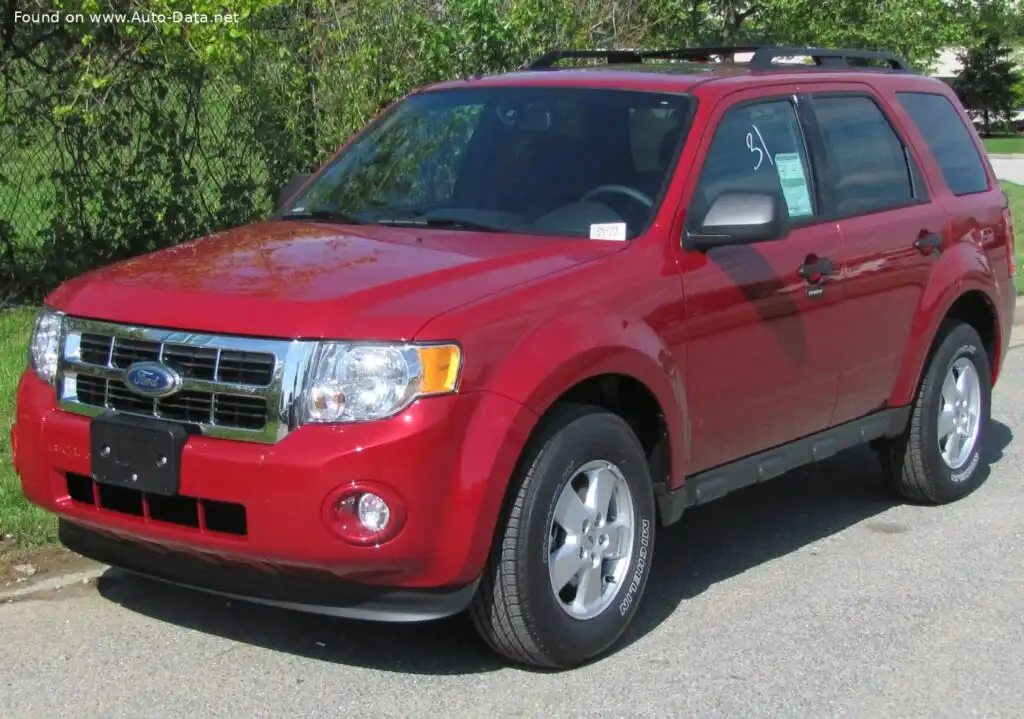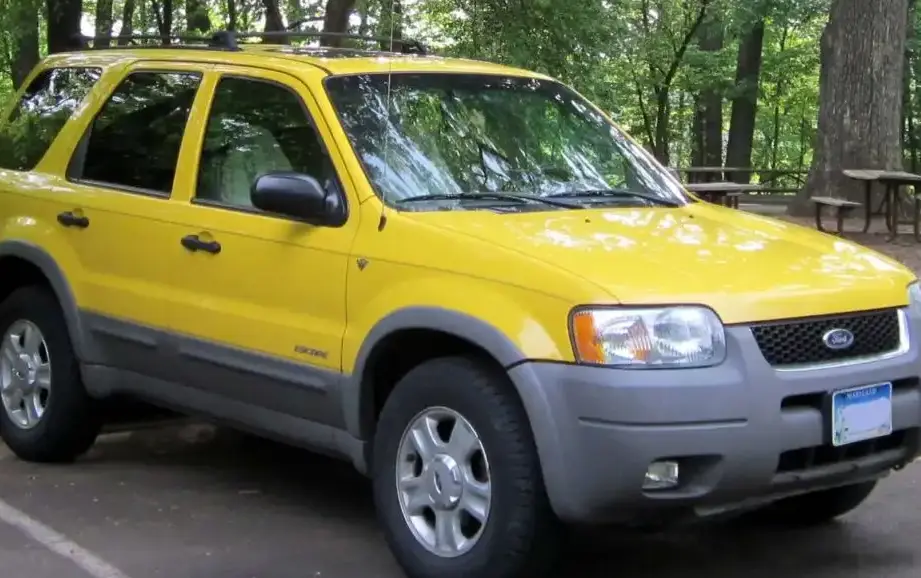
The Ford Escape Hybrid, specifically the 2.3i 16V variant produced between 2005 and 2007, represented Ford’s initial foray into the compact SUV hybrid market in North America. Positioned as a mid-range offering within the first-generation Escape (2001-2007) lineup, it aimed to provide improved fuel economy without sacrificing the practicality and space expected of the vehicle. This model utilized Ford’s full hybrid electric vehicle (FHEV) technology, combining a 2.3-liter inline-four gasoline engine with an electric motor, managed by an electronically controlled continuously variable transmission (eCVT). It was a key component in Ford’s strategy to offer more fuel-efficient options as gas prices began to rise and environmental awareness increased.
Technical Specifications
| Brand | Ford |
| Model | Escape |
| Generation | Escape I |
| Type (Engine) | 2.3 i 16V (155 Hp) Hybrid eCVT |
| Start of production | 2005 |
| End of production | 2007 |
| Powertrain Architecture | FHEV (Full Hybrid Electric Vehicle) |
| Body type | SUV |
| Seats | 5 |
| Doors | 5 |
| Fuel consumption (urban) | 6.5 l/100 km (36.2 US mpg) |
| Fuel consumption (extra urban) | 7.6 l/100 km (30.9 US mpg) |
| Fuel Type | Petrol (Gasoline) |
| Acceleration 0 – 100 km/h | 9 sec |
| Acceleration 0 – 62 mph | 9 sec |
| Acceleration 0 – 60 mph | 8.6 sec |
| Maximum speed | 170 km/h (105.63 mph) |
| Emission standard | SULEV |
| Weight-to-power ratio | 10.8 kg/Hp |
| Weight-to-torque ratio | 9.9 kg/Nm |
| Battery voltage | 330 V |
| Battery technology | Nickel-metal hydride (NiMH) |
| Electric motor power | 94 Hp @ 5000 rpm |
| Electric motor type | Synchronous |
| System power | 155 Hp |
| Engine power | 133 Hp @ 6000 rpm |
| Power per litre | 58.8 Hp/l |
| Torque | 168 Nm @ 4250 rpm (123.91 lb.-ft. @ 4250 rpm) |
| Engine layout | Front, Transverse |
| Engine displacement | 2261 cm3 (137.97 cu. in.) |
| Number of cylinders | 4 |
| Engine configuration | Inline |
| Cylinder Bore | 87.5 mm (3.44 in.) |
| Piston Stroke | 94 mm (3.7 in.) |
| Compression ratio | 9.3:1 |
| Number of valves per cylinder | 4 |
| Fuel injection system | Multi-port manifold injection |
| Engine aspiration | Naturally aspirated |
| Engine oil capacity | 4.25 l (4.49 US qt | 3.74 UK qt) |
| Coolant capacity | 8 l (8.45 US qt | 7.04 UK qt) |
| Kerb Weight | 1670 kg (3681.72 lbs.) |
| Trunk (boot) space – minimum | 782 l (27.62 cu. ft.) |
| Trunk (boot) space – maximum | 1855 l (65.51 cu. ft.) |
| Fuel tank capacity | 57 l (15.06 US gal | 12.54 UK gal) |
| Length | 4442 mm (174.88 in.) |
| Width | 1781 mm (70.12 in.) |
| Height | 1775 mm (69.88 in.) |
| Wheelbase | 2621 mm (103.19 in.) |
| Front track | 1554 mm (61.18 in.) |
| Rear track | 1550 mm (61.02 in.) |
| Front overhang | 864 mm (34.02 in.) |
| Rear overhang | 958 mm (37.72 in.) |
| Ride height (ground clearance) | 213 mm (8.39 in.) |
| Approach angle | 21.4° |
| Departure angle | 28.7° |
| Ramp-over angle | 21.2° |
| Drivetrain Architecture | Front wheel drive. FHEV. ICE and electric motor drive front wheels. |
| Drive wheel | Front wheel drive |
| Number of gears | automatic transmission eCVT |
| Front suspension | Coil spring |
| Rear suspension | Coil spring |
| Front brakes | Ventilated discs |
| Rear brakes | Drum |
| Assisting systems | ABS (Anti-lock braking system) |
| Steering type | Steering rack and pinion |
| Power steering | Electric |
| Tires size | 235/70 R16 |
Powertrain & Engine Architecture
At the heart of the 2005-2007 Ford Escape Hybrid was the 2.3-liter, inline-four cylinder engine, designated as the 4F2 engine family. This engine featured a single overhead camshaft (SOHC) design with four valves per cylinder, utilizing multi-port fuel injection. The engine produced 133 horsepower at 6000 rpm and 168 lb-ft of torque at 4250 rpm. The hybrid system added a 94-horsepower electric motor, bringing the total system output to 155 horsepower. The electric motor drew power from a 330-volt nickel-metal hydride (NiMH) battery pack. The eCVT (electronically controlled continuously variable transmission) seamlessly blended the power from both the gasoline engine and the electric motor, optimizing fuel efficiency and performance. Unlike traditional automatic transmissions with fixed gear ratios, the eCVT offered a virtually infinite number of ratios, allowing the engine to operate at its most efficient point at all times.
Driving Characteristics
The Escape Hybrid 2.3i with the eCVT delivered a noticeably different driving experience compared to the conventionally powered Escape models. Acceleration from 0-60 mph took approximately 8.6 seconds, which was competitive for the class but not particularly sporty. The eCVT provided smooth, linear acceleration, but lacked the responsiveness of a traditional automatic or manual transmission. The hybrid system allowed for short periods of electric-only driving at low speeds, enhancing fuel economy in city driving. The combined effect of the engine and electric motor provided adequate power for everyday driving situations, but passing maneuvers on the highway required careful planning. The regenerative braking system captured energy during deceleration, further improving fuel efficiency and extending brake pad life.
Equipment & Trim Levels
The 2.3i Hybrid typically came well-equipped, reflecting its position as a more technologically advanced and environmentally conscious option. Standard features included air conditioning, power windows and locks, a CD player, and ABS brakes. Higher trim levels added features such as alloy wheels, a sunroof, upgraded audio systems, and leather upholstery. The interior design was functional and comfortable, with a focus on practicality. The rear seats offered ample legroom for passengers, and the split-folding rear seats allowed for versatile cargo space.
Chassis & Braking
The Escape Hybrid utilized a front-wheel-drive layout with independent coil spring suspension in the front and a twist-beam rear suspension. The front brakes were ventilated discs, while the rear brakes were drums. The suspension was tuned for a comfortable ride, prioritizing smoothness over sporty handling. The ABS (Anti-lock Braking System) provided enhanced braking performance and stability in emergency situations. The electric power steering offered light and precise steering feel.
Market Reception & Comparison
The Ford Escape Hybrid was generally well-received by critics and consumers alike. It was praised for its fuel efficiency, smooth ride, and comfortable interior. However, some reviewers noted the lack of sporty handling and the somewhat uninspiring acceleration. Compared to the standard 2.3-liter gasoline-powered Escape, the Hybrid offered significantly better fuel economy, but came at a higher price. Compared to other hybrid SUVs of the time, such as the Toyota RAV4 Hybrid, the Escape Hybrid offered a more affordable entry point into the hybrid market.
Legacy
The 2005-2007 Ford Escape Hybrid was a significant milestone in Ford’s hybrid vehicle development. It demonstrated the company’s commitment to fuel efficiency and environmental sustainability. While the first-generation Escape Hybrid had some limitations, it paved the way for future generations of Ford hybrid vehicles. Today, these early Escape Hybrids can be found on the used car market, often appealing to buyers seeking a fuel-efficient and reliable SUV. The NiMH battery packs, while durable, may require replacement after many years of service, representing a potential maintenance cost for prospective buyers. Overall, the Escape Hybrid 2.3i remains a noteworthy vehicle in the history of hybrid technology.