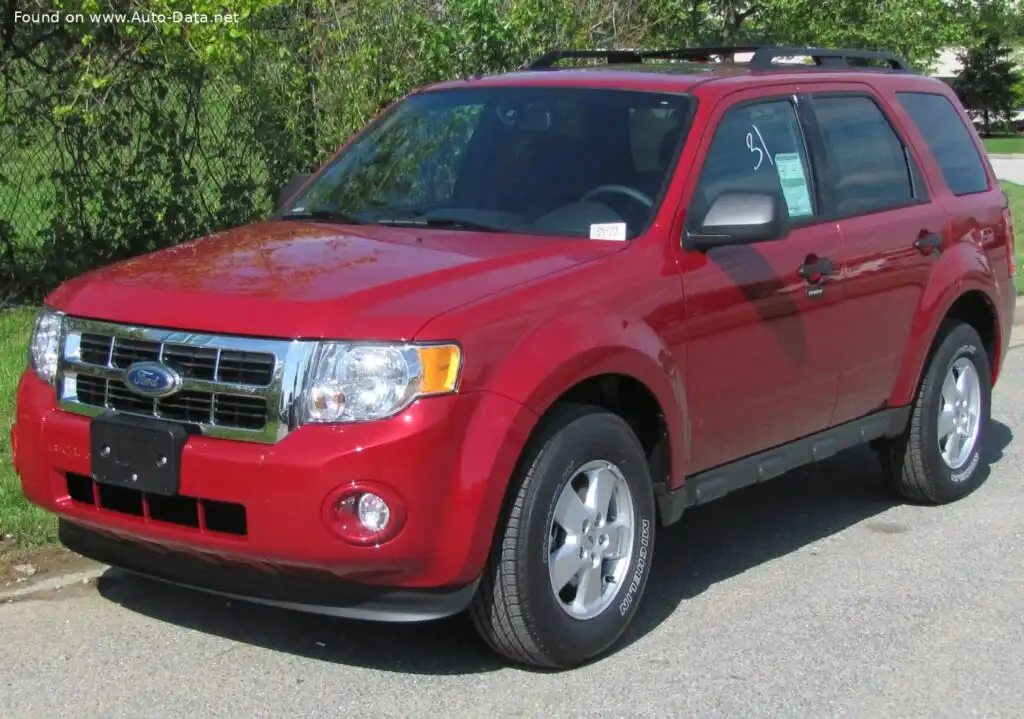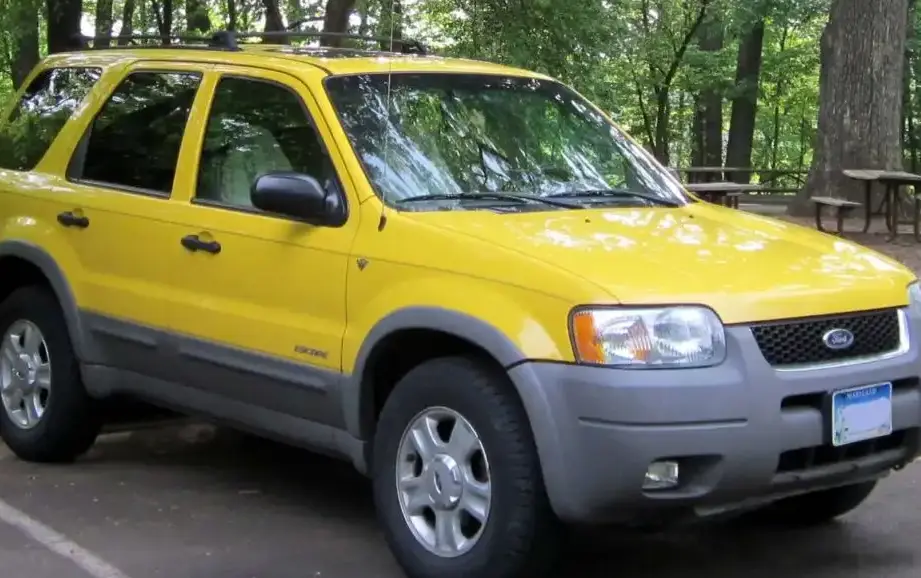
The Ford Escape, launched in 2001 for the 2002 model year, represented Ford’s entry into the rapidly growing compact SUV segment. The first generation, internally designated as the Ford Escape I (2001-2007), was based on the Mazda Tribute, a result of Ford’s ownership stake in Mazda and a collaborative effort to share development costs. The 2.3i 16V 155 Hp 4WD Automatic variant, produced from 2003 to 2007, occupied a middle ground in the Escape lineup, offering a balance between affordability, capability, and convenience. It was positioned above the base 2.0L engine and below the more powerful V6 options, appealing to buyers seeking all-weather capability without the higher price tag or fuel consumption of the larger engines.
Technical Specifications
| Brand | Ford |
| Model | Escape |
| Generation | Escape I |
| Type (Engine) | 2.3i 16V (155 Hp) 4WD Automatic |
| Start of production | 2003 |
| End of production | 2007 |
| Powertrain Architecture | Internal Combustion engine |
| Body type | SUV |
| Seats | 5 |
| Doors | 5 |
| Fuel Type | Petrol (Gasoline) |
| Power | 155 Hp @ 5800 rpm |
| Power per litre | 68.6 Hp/l |
| Torque | 206 Nm @ 4250 rpm / 151.94 lb.-ft. @ 4250 rpm |
| Engine layout | Front, Transverse |
| Engine displacement | 2261 cm3 / 137.97 cu. in. |
| Number of cylinders | 4 |
| Engine configuration | Inline |
| Cylinder Bore | 87.5 mm / 3.44 in. |
| Piston Stroke | 94 mm / 3.7 in. |
| Compression ratio | 10:1 |
| Number of valves per cylinder | 4 |
| Fuel injection system | Multi-port manifold injection |
| Engine aspiration | Naturally aspirated engine |
| Engine oil capacity | 4.25 l / 4.49 US qt | 3.74 UK qt |
| Coolant | 6 l / 6.34 US qt | 5.28 UK qt |
| Trunk (boot) space – minimum | 934 l / 32.98 cu. ft. |
| Trunk (boot) space – maximum | 1835 l / 64.8 cu. ft. |
| Fuel tank capacity | 58 l / 15.32 US gal | 12.76 UK gal |
| Length | 4394 mm / 172.99 in. |
| Width | 1780 mm / 70.08 in. |
| Height | 1702 mm / 67.01 in. |
| Wheelbase | 2619 mm / 103.11 in. |
| Front track | 1554 mm / 61.18 in. |
| Rear (Back) track | 1550 mm / 61.02 in. |
| Drive wheel | All wheel drive (4×4) |
| Number of gears and type of gearbox | 4 gears, automatic transmission |
| Front suspension | Coil spring |
| Rear suspension | Coil spring |
| Front brakes | Ventilated discs |
| Rear brakes | Drum |
| Assisting systems | ABS (Anti-lock braking system) |
| Steering type | Steering rack and pinion |
| Power steering | Hydraulic Steering |
| Tires size | 225/70 R15 |
| Wheel rims size | 15 |
Powertrain & Engine Architecture
The heart of the 2.3i Escape is the 2.3-liter inline-four cylinder engine. This engine, part of Ford’s Duratec family, utilizes a single overhead camshaft (SOHC) design with four valves per cylinder. The engine code is typically associated with variations of the 2.3L Duratec. Fuel delivery is managed by a multi-port fuel injection system, providing adequate atomization for efficient combustion. The 10:1 compression ratio strikes a balance between performance and fuel economy. Paired with this engine is a four-speed automatic transmission, a common choice for North American buyers prioritizing ease of use over ultimate performance. This transmission, while not offering the most advanced gear ratios, provided smooth shifts and adequate power delivery for everyday driving. The 4WD system is a viscous coupling system, automatically engaging the rear wheels when slippage is detected at the front.
Driving Characteristics
The 155 horsepower and 206 Nm (152 lb-ft) of torque produced by the 2.3L engine, when coupled with the four-speed automatic, resulted in a respectable, though not exhilarating, driving experience. Acceleration from 0 to 60 mph was typically in the 9-10 second range. The automatic transmission’s gear ratios were geared more towards fuel efficiency than outright performance. Compared to the five-speed manual transmission available on some Escape models, the automatic felt slightly less responsive. However, the automatic provided a smoother and more convenient driving experience, particularly in urban environments. The 4WD system provided enhanced traction in inclement weather conditions, making it a popular choice in regions with snow or rain. The Escape’s suspension, tuned for comfort, absorbed bumps and irregularities in the road well, providing a relatively smooth ride.
Equipment & Trim Levels
The 2.3i 4WD Automatic Escape typically came standard with features such as air conditioning, power windows and locks, and an AM/FM stereo. Higher trim levels, such as the XLS and XLT, added features like alloy wheels, upgraded interior trim, a CD player, and cruise control. Optional extras included a sunroof, leather upholstery, and a premium sound system. Interior upholstery was typically cloth, with the option of leather on higher trims. The dashboard layout was functional and straightforward, with easy-to-read gauges and controls. Safety features included dual front airbags and ABS brakes.
Chassis & Braking
The Ford Escape I utilized a body-on-frame construction, providing a robust and durable platform. The front suspension consisted of independent coil springs and MacPherson struts, while the rear suspension employed a multi-link coil spring setup. Front brakes were ventilated discs, providing adequate stopping power, while rear brakes were drum brakes, a cost-saving measure common in this class of vehicle. The hydraulic power steering provided light and easy steering effort. The 15-inch wheels were typically fitted with 225/70 R15 tires, offering a good balance between ride comfort and handling.
Market Reception & Comparison
The 2.3i 4WD Automatic Escape was generally well-received by critics as a practical and affordable compact SUV. It offered a good value proposition, providing all-wheel drive capability and a comfortable ride at a competitive price point. Compared to the V6-powered Escapes, the 2.3L engine offered better fuel economy, although at the expense of performance. The 2.3L engine was also considered more reliable than the V6, with fewer reported issues. Against competitors like the Honda CR-V and Toyota RAV4, the Escape offered a more rugged appearance and a slightly more affordable price tag, but lacked the refinement and reputation for reliability of its Japanese rivals.
Legacy
The Ford Escape I, particularly the 2.3i 4WD Automatic variant, has proven to be a relatively reliable vehicle. The Duratec 2.3L engine is known for its durability and longevity, and the four-speed automatic transmission, while not the most sophisticated, is generally dependable. In the used car market, these Escapes are often sought after for their affordability and practicality. Common maintenance issues include minor oil leaks and occasional sensor failures. Overall, the 2.3i 4WD Automatic Escape remains a viable option for buyers seeking a budget-friendly and capable compact SUV.