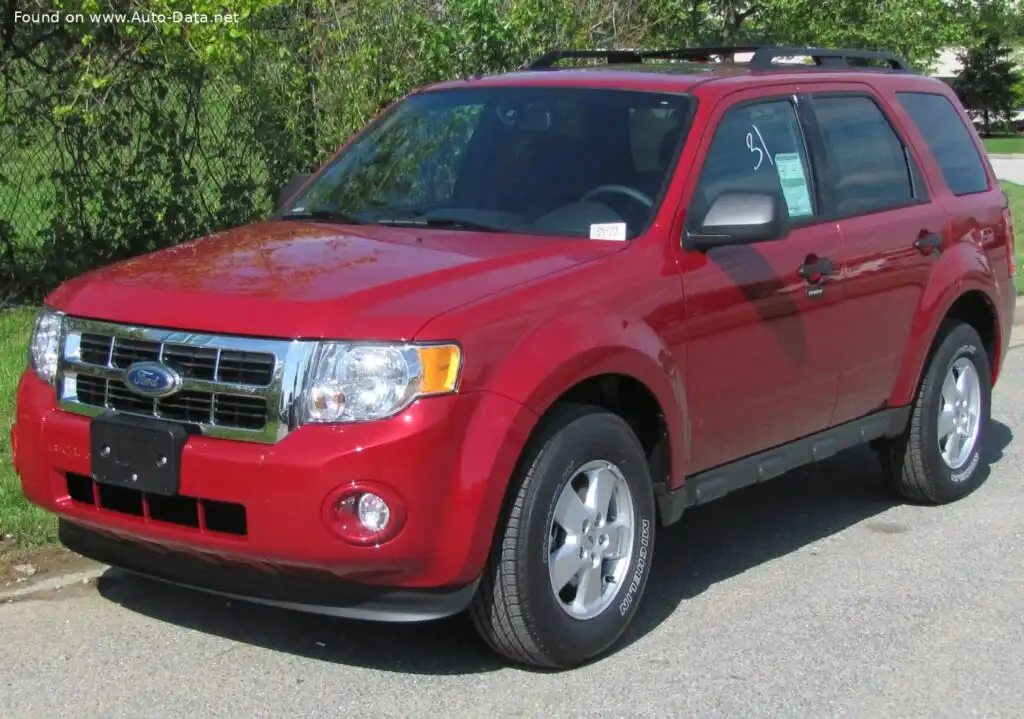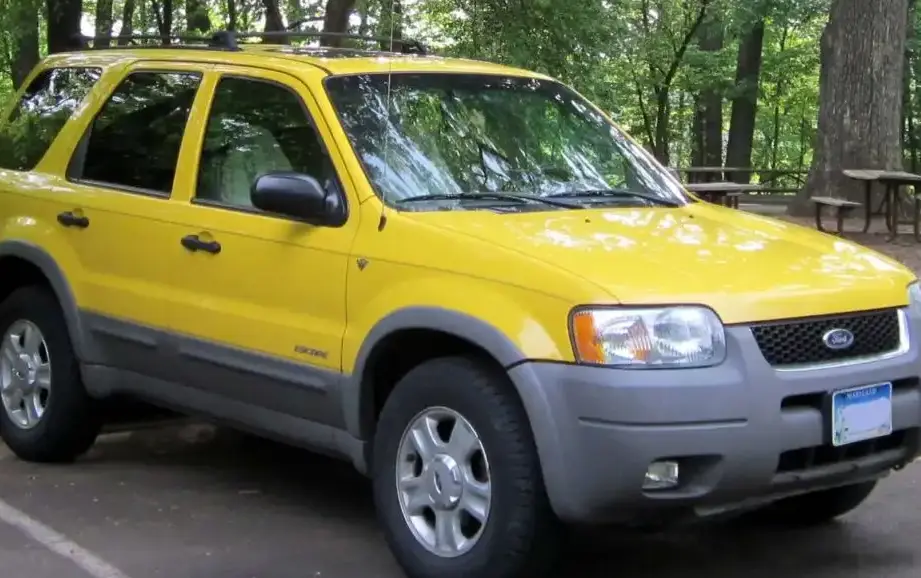
The Ford Escape, launched in 2000 for the 2001 model year, represented Ford’s entry into the rapidly growing compact SUV segment. The first generation Escape (2001-2007), based on the Ford Focus C170 platform, aimed to provide a more affordable and fuel-efficient alternative to larger, truck-based SUVs. The 3.0L i V6 24V XLT variant, produced from 2000 to 2007, occupied a mid-range position within the Escape lineup, offering a balance of power and features for buyers seeking more than the base four-cylinder engine but not requiring the top-tier amenities. This model proved popular for its blend of practicality, space, and relatively strong performance for its class.
Technical Specifications
| Brand | Ford |
| Model | Escape |
| Generation | Escape I |
| Type | 3.0 i V6 24V XLT (203 Hp) |
| Start of production | 2000 |
| End of production | 2007 |
| Powertrain Architecture | Internal Combustion engine |
| Body type | SUV |
| Seats | 5 |
| Doors | 5 |
| Fuel consumption (urban) | 12.4 l/100 km (19 US mpg) |
| Fuel consumption (extra urban) | 9.8 l/100 km (24 US mpg) |
| Fuel Type | Petrol (Gasoline) |
| Maximum speed | 175 km/h (108.74 mph) |
| Weight-to-power ratio | 7.4 kg/Hp |
| Weight-to-torque ratio | 5.6 kg/Nm |
| Power | 203 Hp @ 5750 rpm |
| Power per litre | 68.2 Hp/l |
| Torque | 271 Nm @ 4500 rpm (199.88 lb.-ft. @ 4500 rpm) |
| Engine layout | Front, Transverse |
| Engine displacement | 2976 cm3 (181.61 cu. in.) |
| Number of cylinders | 6 |
| Engine configuration | V-engine |
| Cylinder Bore | 89 mm (3.5 in.) |
| Piston Stroke | 79.5 mm (3.13 in.) |
| Compression ratio | 10:1 |
| Number of valves per cylinder | 4 |
| Fuel injection system | Multi-port manifold injection |
| Engine aspiration | Naturally aspirated engine |
| Valvetrain | DOHC |
| Engine oil capacity | 5.7 l (6.02 US qt | 5.02 UK qt) |
| Coolant capacity | 10 l (10.57 US qt | 8.8 UK qt) |
| Kerb Weight | 1505 kg (3317.96 lbs.) |
| Max. weight | 1985 kg (4376.18 lbs.) |
| Max load | 480 kg (1058.22 lbs.) |
| Trunk (boot) space – minimum | 934 l (32.98 cu. ft.) |
| Trunk (boot) space – maximum | 1835 l (64.8 cu. ft.) |
| Fuel tank capacity | 62 l (16.38 US gal | 13.64 UK gal) |
| Length | 4394 mm (172.99 in.) |
| Width | 1780 mm (70.08 in.) |
| Height | 1702 mm (67.01 in.) |
| Wheelbase | 2619 mm (103.11 in.) |
| Front track | 1554 mm (61.18 in.) |
| Rear track | 1550 mm (61.02 in.) |
| Drivetrain Architecture | Front wheel drive |
| Number of gears | 4 |
| Gearbox type | Automatic transmission |
| Front suspension | Coil spring |
| Rear suspension | Coil spring |
| Front brakes | Ventilated discs |
| Rear brakes | Drum |
| Assisting systems | ABS (Anti-lock braking system) |
| Power steering | Hydraulic Steering |
| Tires size | 235/70 R16 |
Powertrain & Engine Architecture
The heart of the Escape 3.0L XLT is the 3.0-liter Duratec V6 engine. This engine, internally designated as the 302E, is a 60-degree V6 featuring a cast iron block and aluminum cylinder heads. It utilizes a dual overhead camshaft (DOHC) valvetrain with four valves per cylinder, contributing to its relatively high output for its displacement. Fuel delivery is managed by a multi-port fuel injection system, providing precise fuel metering for optimal combustion. The engine produces 203 horsepower at 5750 rpm and 271 Nm (199.88 lb-ft) of torque at 4500 rpm. The engine’s design prioritized smooth operation and reasonable fuel efficiency, although it wasn’t intended to be a high-performance powerplant. Paired with the V6 is a four-speed automatic transmission (typically the 5R55E), chosen for its ease of use and suitability for everyday driving. This transmission features electronic control for smoother shifts and adaptive shift patterns.
Driving Characteristics
The 3.0L V6 automatic Escape offered a noticeable step up in performance compared to the base 2.0L four-cylinder models. Acceleration was adequate for merging onto highways and passing slower traffic, though it wasn’t particularly sporty. The four-speed automatic transmission, while providing smooth shifts, lacked the responsiveness of a manual gearbox or a more modern automatic with additional gears. The gear ratios were tuned for fuel economy and comfortable cruising rather than outright acceleration. In real-world driving, the Escape 3.0L XLT felt competent and capable, but not particularly exciting. The front-wheel-drive configuration provided predictable handling, but lacked the all-weather capability of the available four-wheel-drive system.
Equipment & Trim Levels
The XLT trim level, as fitted with the 3.0L V6, represented a well-equipped version of the Escape. Standard features typically included air conditioning, power windows and locks, a CD player, and cloth upholstery. Optional extras commonly included a sunroof, upgraded audio system, leather upholstery, and alloy wheels. The interior design was functional and straightforward, prioritizing practicality over luxury. The XLT trim also often included features like keyless entry and upgraded interior trim pieces compared to the base model.
Chassis & Braking
The Escape’s chassis utilized an independent front suspension with coil springs and a multi-link rear suspension, also with coil springs. This setup provided a comfortable ride quality, absorbing bumps and irregularities in the road surface effectively. The front brakes were ventilated discs, offering good stopping power, while the rear brakes were drum brakes, a cost-saving measure common in this class of vehicle. Anti-lock Braking System (ABS) was standard, enhancing safety by preventing wheel lockup during hard braking. Hydraulic power steering provided light and easy steering effort.
Market Reception & Comparison
The Ford Escape 3.0L XLT was generally well-received by automotive critics as a practical and versatile SUV. Reviewers praised its spacious interior, comfortable ride, and relatively strong engine performance. However, some criticized the four-speed automatic transmission for feeling dated compared to competitors offering five or six-speed automatics. Compared to the base 2.0L four-cylinder Escape, the 3.0L V6 offered a significant improvement in acceleration and overall driving experience, but at the cost of slightly reduced fuel economy. Against competitors like the Honda CR-V and Toyota RAV4, the Escape offered a more affordable price point, but often lacked the refinement and reputation for long-term reliability of its Japanese rivals.
Legacy
The first-generation Ford Escape, particularly the 3.0L V6 models, have become relatively affordable used car options. The Duratec V6 engine is generally considered reliable, although regular maintenance is crucial to prevent issues such as oil leaks and timing chain wear. The 4R55E automatic transmission, while generally durable, can be prone to failure if not properly maintained. Today, these Escapes are often sought after by buyers looking for a practical and affordable SUV for commuting or light-duty tasks. While not a collector’s item, the first-generation Escape holds a place as a significant vehicle in Ford’s history, marking the company’s successful entry into the compact SUV market.