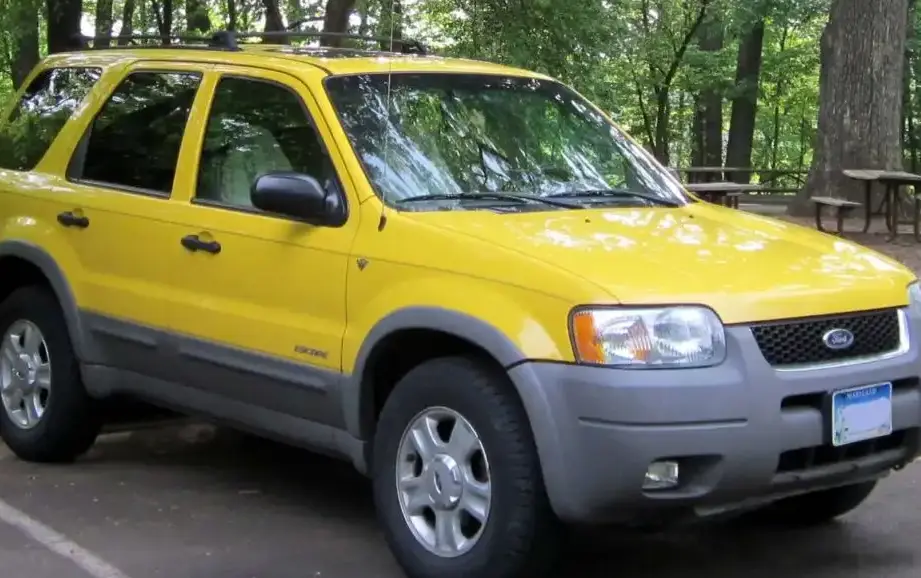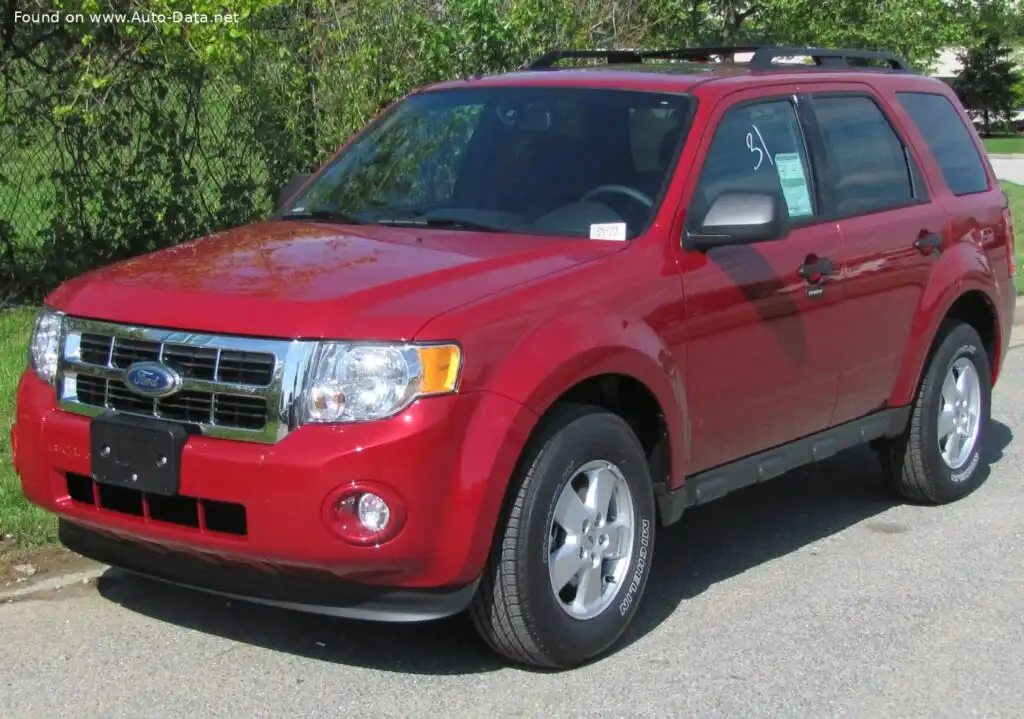
The Ford Escape II 2.3L (145 hp) was a popular compact SUV produced from 2008 to 2012, representing the second generation of the Escape model line. Positioned as a mainstream offering within the range, it served as a practical and affordable option for families and individuals seeking a versatile vehicle. This variant occupied a middle ground in the Escape lineup, offering a balance between fuel economy and performance compared to the base 2.0L engine and the more powerful 3.0L V6. It was a key model for Ford during a period of increasing SUV demand in the North American market.
Technical Specifications
| Brand | Ford |
| Model | Escape |
| Generation | Escape II |
| Type (Engine) | 2.3 L (145 Hp) |
| Start of production | 2008 |
| End of production | 2012 |
| Powertrain Architecture | Internal Combustion engine |
| Body type | SUV |
| Seats | 5 |
| Doors | 5 |
| Fuel Type | Petrol (Gasoline) |
| Maximum speed | 160 km/h (99.42 mph) |
| Emission standard | Euro 4 |
| Weight-to-power ratio | 11.1 kg/Hp, 90.3 Hp/tonne |
| Weight-to-torque ratio | 8 kg/Nm, 124.6 Nm/tonne |
| Power | 145 Hp @ 6000 rpm |
| Power per litre | 64.1 Hp/l |
| Torque | 200 Nm @ 4000 rpm (147.51 lb.-ft. @ 4000 rpm) |
| Engine layout | Front, Transverse |
| Engine displacement | 2261 cm3 (137.97 cu. in.) |
| Number of cylinders | 4 |
| Engine configuration | Inline |
| Cylinder Bore | 87.5 mm (3.44 in.) |
| Piston Stroke | 94 mm (3.7 in.) |
| Compression ratio | 10:1 |
| Number of valves per cylinder | 4 |
| Fuel injection system | Multi-port manifold injection |
| Engine aspiration | Naturally aspirated engine |
| Kerb Weight | 1605 kg (3538.42 lbs.) |
| Max. weight | 1986 kg (4378.38 lbs.) |
| Max load | 381 kg (839.96 lbs.) |
| Trunk (boot) space – minimum | 934 l (32.98 cu. ft.) |
| Trunk (boot) space – maximum | 1792 l (63.28 cu. ft.) |
| Fuel tank capacity | 61 l (16.11 US gal | 13.42 UK gal) |
| Length | 4480 mm (176.38 in.) |
| Width | 1845 mm (72.64 in.) |
| Height | 1730 mm (68.11 in.) |
| Wheelbase | 2620 mm (103.15 in.) |
| Front track | 1545 mm (60.83 in.) |
| Rear (Back) track | 1535 mm (60.43 in.) |
| Drivetrain Architecture | The Internal combustion engine (ICE) drives the front wheels of the vehicle. |
| Drive wheel | Front wheel drive |
| Number of gears and type of gearbox | 5 gears, manual transmission |
| Front suspension | Independent, type McPherson with coil spring and anti-roll bar |
| Rear suspension | Double wishbone |
| Steering type | Steering rack and pinion |
Powertrain & Engine Architecture
The heart of the Escape II 2.3L was the 2.3-liter inline-four cylinder engine. This engine, part of Ford’s Duratec family, utilized a cast iron block with an aluminum cylinder head. It featured a single overhead camshaft (SOHC) design with four valves per cylinder, operated by hydraulic lifters. Fuel delivery was managed by a multi-port fuel injection system, providing adequate atomization for efficient combustion. The engine produced 145 horsepower at 6000 rpm and 147.51 lb-ft of torque at 4000 rpm. The 5-speed manual transmission was the standard gearbox for this variant, offering a relatively direct driving experience. The transmission’s gear ratios were tuned for a balance of acceleration and fuel efficiency, though it wasn’t particularly sporty.
Driving Characteristics
The 2.3L engine, paired with the 5-speed manual, provided adequate, but not exhilarating, performance. Acceleration from 0 to 60 mph took around 9-10 seconds. The engine felt reasonably responsive in everyday driving situations, such as merging onto highways or passing slower vehicles. However, it lacked the punch of the optional 3.0L V6. The manual transmission offered precise shifts, but the gear ratios weren’t optimized for maximizing fuel economy at highway speeds. The front-wheel-drive configuration provided predictable handling, but it wasn’t particularly engaging for driving enthusiasts. Compared to the V6, the 2.3L offered better fuel economy, making it a more practical choice for daily commuting.
Equipment & Trim Levels
The 2.3L Escape typically came standard with features like air conditioning, power windows and locks, a basic audio system, and steel wheels with wheel covers. Higher trim levels, such as the XLS and Limited, added features like alloy wheels, upgraded audio systems, cruise control, and keyless entry. Optional extras included a sunroof, leather upholstery, and a navigation system. Interior upholstery was typically cloth, with higher trims offering leather options. The dashboard layout was functional and straightforward, prioritizing usability over aesthetics.
Chassis & Braking
The Escape II utilized an independent McPherson strut front suspension and a double-wishbone rear suspension. This setup provided a comfortable ride quality, absorbing bumps and irregularities in the road surface effectively. The front brakes were ventilated discs, while the rear brakes were typically drum brakes on the base models, with disc brakes available on higher trims. The steering was rack-and-pinion, providing reasonably precise steering feel. Stabilizer bars were included at both the front and rear to reduce body roll during cornering.
Market Reception & Comparison
The Ford Escape II 2.3L was generally well-received by critics as a practical and affordable SUV. It was praised for its spacious interior, comfortable ride, and decent fuel economy. However, some reviewers noted that the 2.3L engine felt underpowered, especially when fully loaded with passengers and cargo. Compared to the V6 model, the 2.3L offered significantly better fuel economy, achieving around 23 mpg city and 28 mpg highway. Reliability was generally good, with few major issues reported. The 2.3L engine proved to be durable and relatively maintenance-free.
Legacy
The Ford Escape II 2.3L remains a relatively common sight on used car lots today. The 2.3L Duratec engine is known for its reliability and longevity, making it a good choice for budget-minded buyers. Maintenance costs are generally low, and parts are readily available. While it may not offer the performance or features of more modern SUVs, the Escape II 2.3L continues to provide a practical and affordable transportation solution for many drivers. Its enduring popularity is a testament to its solid engineering and overall value.