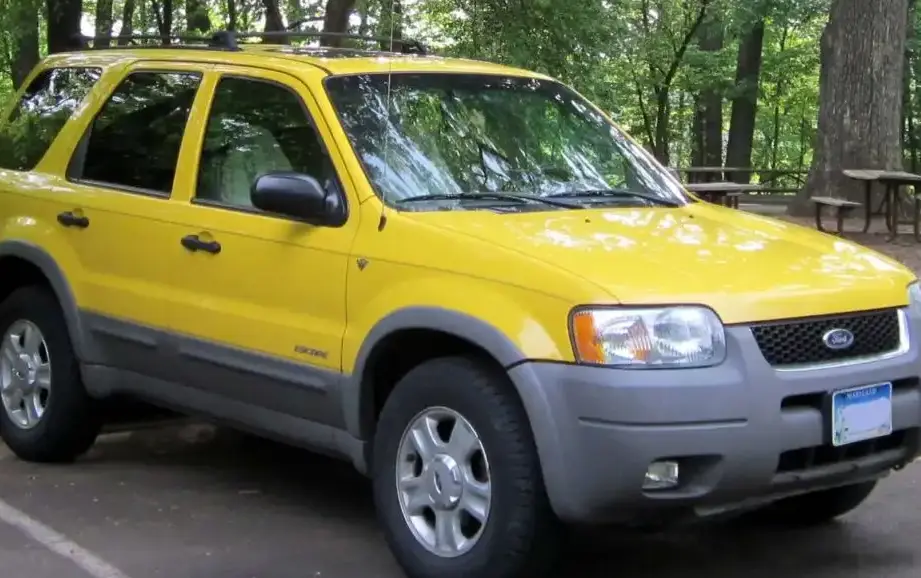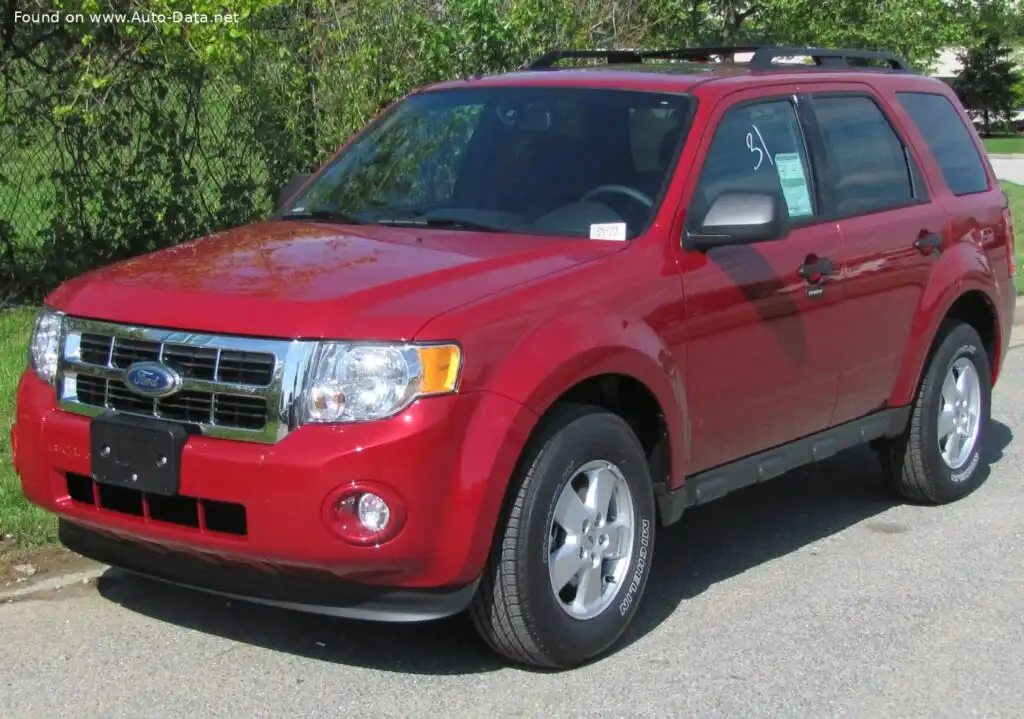
The Ford Escape II, produced from 2008 to 2012, represented a significant evolution of Ford’s popular compact SUV. This generation, built on the CD2 platform shared with the Mazda Tribute and Mercury Mariner, aimed to offer a more refined driving experience and improved interior appointments compared to its predecessor. Within the Escape II lineup, the 2.3-liter four-cylinder engine paired with an all-wheel-drive (AWD) system and a five-speed manual transmission occupied a middle ground, offering a balance between affordability, fuel efficiency, and all-weather capability. It served as a step up from the base 2.0-liter engine, while remaining more accessible than the more powerful 3.0-liter V6 option.
Technical Specifications
| Brand | Ford |
| Model | Escape |
| Generation | Escape II |
| Type (Engine) | 2.3 L (145 Hp) AWD |
| Start of production | 2008 |
| End of production | 2012 |
| Powertrain Architecture | Internal Combustion engine |
| Body type | SUV |
| Seats | 5 |
| Doors | 5 |
| Fuel Type | Petrol (Gasoline) |
| Maximum speed | 160 km/h (99.42 mph) |
| Emission standard | Euro 4 |
| Weight-to-power ratio | 11.1 kg/Hp, 90.3 Hp/tonne |
| Weight-to-torque ratio | 8 kg/Nm, 124.6 Nm/tonne |
| Power | 145 Hp @ 6000 rpm |
| Power per litre | 64.1 Hp/l |
| Torque | 200 Nm @ 4000 rpm (147.51 lb.-ft. @ 4000 rpm) |
| Engine layout | Front, Transverse |
| Engine displacement | 2261 cm3 (137.97 cu. in.) |
| Number of cylinders | 4 |
| Engine configuration | Inline |
| Cylinder Bore | 87.5 mm (3.44 in.) |
| Piston Stroke | 94 mm (3.7 in.) |
| Compression ratio | 10:1 |
| Number of valves per cylinder | 4 |
| Fuel injection system | Multi-port manifold injection |
| Engine aspiration | Naturally aspirated engine |
| Kerb Weight | 1605 kg (3538.42 lbs.) |
| Max. weight | 1986 kg (4378.38 lbs.) |
| Max load | 381 kg (839.96 lbs.) |
| Trunk (boot) space – minimum | 934 l (32.98 cu. ft.) |
| Trunk (boot) space – maximum | 1792 l (63.28 cu. ft.) |
| Fuel tank capacity | 61 l (16.11 US gal | 13.42 UK gal) |
| Length | 4480 mm (176.38 in.) |
| Width | 1845 mm (72.64 in.) |
| Height | 1730 mm (68.11 in.) |
| Wheelbase | 2620 mm (103.15 in.) |
| Front track | 1545 mm (60.83 in.) |
| Rear (Back) track | 1535 mm (60.43 in.) |
| Drive wheel | All wheel drive (4×4) |
| Number of gears and type of gearbox | 5 gears, manual transmission |
| Front suspension | Independent, type McPherson with coil spring and anti-roll bar |
| Rear suspension | Double wishbone |
| Steering type | Steering rack and pinion |
Powertrain & Engine Architecture
The heart of this Escape variant is the 2.3-liter inline four-cylinder engine, internally designated as the 2.3L Duratec. This engine utilizes a cast iron block with an aluminum cylinder head, a common configuration for balancing durability and weight. The engine employs multi-port fuel injection, delivering fuel directly into the intake ports rather than directly into the combustion chamber. This system, while not as advanced as direct injection, proved reliable and contributed to reasonable fuel economy. The valvetrain features single overhead camshafts (SOHC) with four valves per cylinder, providing adequate breathing for the engine’s output. The five-speed manual transmission offered a relatively direct connection to the engine, allowing drivers to make the most of the available power. The all-wheel-drive system, typically an on-demand system, engaged the rear wheels when traction was lost, enhancing stability in slippery conditions.
Driving Characteristics
The 2.3-liter Escape with a manual transmission offered a reasonably engaging driving experience, though it wasn’t a performance standout. With 145 horsepower and 147 lb-ft of torque, acceleration was adequate for everyday driving, but passing maneuvers required planning. The five-speed manual transmission allowed for precise control, and the gear ratios were spaced to keep the engine within its optimal power band. Compared to the base 2.0-liter engine, the 2.3-liter provided noticeably more power and responsiveness. However, it fell short of the 3.0-liter V6 in terms of outright acceleration and towing capacity. The all-wheel-drive system provided enhanced traction in inclement weather, making it a practical choice for drivers in regions with snow or rain.
Equipment & Trim Levels
The 2.3-liter AWD Escape typically came standard with features like air conditioning, power windows and locks, a CD player with an auxiliary input, and basic cloth upholstery. Higher trim levels, such as the Limited, added features like leather upholstery, heated front seats, a sunroof, and upgraded audio systems. Optional extras included a navigation system, a rear entertainment system, and alloy wheels. The interior design was functional and straightforward, prioritizing practicality over luxury. Safety features included front airbags, side airbags, and anti-lock brakes.
Chassis & Braking
The Escape II utilized an independent front suspension with McPherson struts and a multi-link rear suspension. This setup provided a comfortable ride and decent handling characteristics. The front suspension incorporated a stabilizer bar to reduce body roll during cornering. Brakes were typically disc brakes in the front and drum brakes in the rear, a cost-saving measure for this trim level. The steering was rack-and-pinion, providing responsive and accurate steering feel. The all-wheel-drive system added to the vehicle’s overall weight, which slightly impacted handling agility.
Market Reception & Comparison
The 2.3-liter AWD Escape was generally well-received by automotive critics as a practical and versatile SUV. It was praised for its comfortable ride, spacious interior, and available all-wheel-drive system. However, some critics noted that the engine lacked the power of the V6 option and that the interior materials were somewhat basic. Compared to competitors like the Honda CR-V and Toyota RAV4, the Escape offered a more affordable price point and a more rugged appearance. Fuel economy was respectable for its class, averaging around 20 mpg city and 25 mpg highway.
Legacy
The Ford Escape II 2.3L AWD has proven to be a relatively reliable vehicle, with many examples still on the road today. The 2.3-liter Duratec engine is known for its durability, and the five-speed manual transmission is generally trouble-free. Common maintenance items include routine oil changes, timing belt replacements (typically around 100,000 miles), and occasional repairs to the suspension components. In the used car market, these Escapes are often sought after by buyers looking for an affordable and practical SUV with all-wheel-drive capability. While not a collector’s item, it remains a popular choice for those seeking a dependable and reasonably priced vehicle.