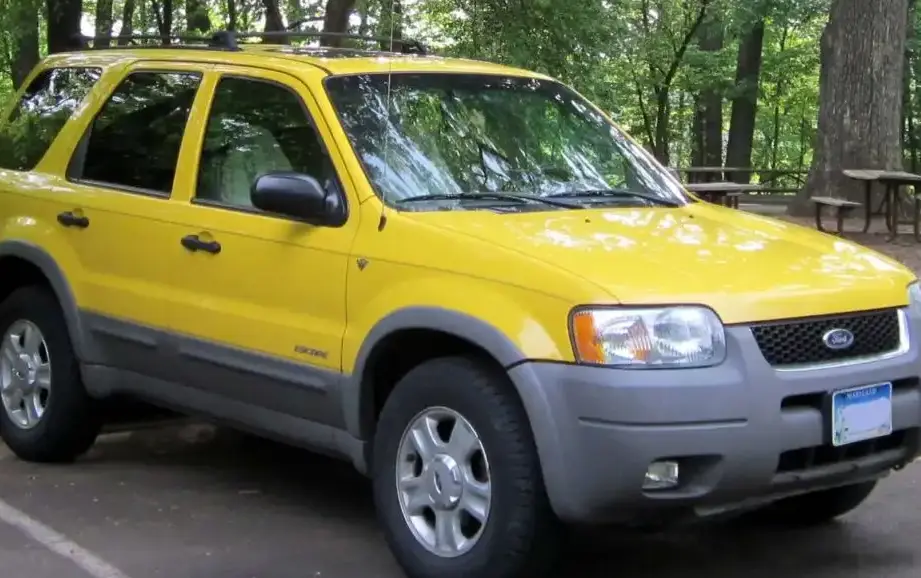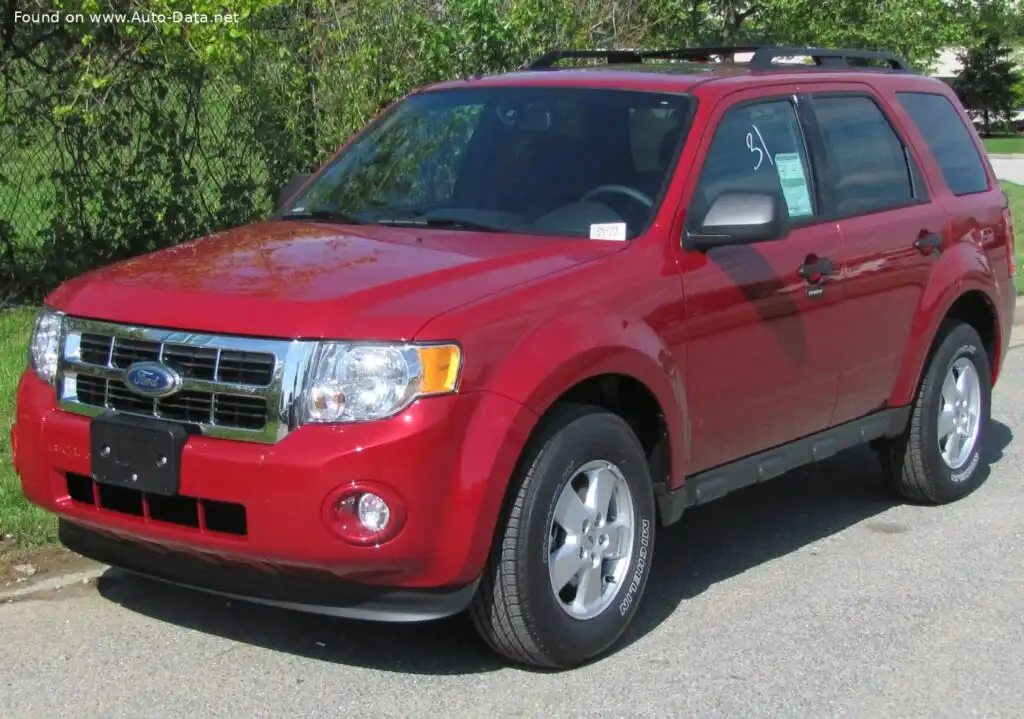
The Ford Escape II 2.5L, produced from 2008 to 2012, represented a significant evolution in Ford’s compact SUV offerings. Positioned as a mainstream, family-oriented vehicle, this generation Escape aimed to balance practicality, fuel efficiency, and affordability within the highly competitive North American SUV market. It was built on the Ford CD2 platform, shared with the Mazda Tribute and Mercury Mariner, and offered a range of engine options, with the 2.5-liter inline-four being a popular choice for buyers prioritizing value and reasonable fuel economy. This variant served as the base engine option for the Escape, offering a step up in refinement and power compared to the earlier generation models.
Technical Specifications
| Brand | Ford |
| Model | Escape |
| Generation | Escape II |
| Type (Engine) | 2.5 L (173 Hp) |
| Start of production | 2008 |
| End of production | 2012 |
| Powertrain Architecture | Internal Combustion engine |
| Body type | SUV |
| Seats | 5 |
| Doors | 5 |
| Fuel consumption (urban) | 11.7 l/100 km (20.1 US mpg) |
| Fuel consumption (extra urban) | 8.4 l/100 km (28 US mpg) |
| Fuel Type | Petrol (Gasoline) |
| Emission standard | Euro 4 |
| Weight-to-power ratio | 9.3 kg/Hp |
| Weight-to-torque ratio | 7.3 kg/Nm |
| Power | 173 Hp @ 6000 rpm |
| Power per litre | 69.3 Hp/l |
| Torque | 220 Nm @ 4250 rpm (162.26 lb.-ft. @ 4250 rpm) |
| Engine layout | Front, Transverse |
| Engine displacement | 2495 cm3 (152.25 cu. in.) |
| Number of cylinders | 6 |
| Engine configuration | V-engine |
| Cylinder Bore | 81.6 mm (3.21 in.) |
| Piston Stroke | 79.5 mm (3.13 in.) |
| Compression ratio | 9.8:1 |
| Number of valves per cylinder | 4 |
| Fuel injection system | Multi-port manifold injection |
| Engine aspiration | Naturally aspirated engine |
| Valvetrain | DOHC |
| Engine oil capacity | 5 l (5.28 US qt | 4.4 UK qt) |
| Coolant | 7 l (7.4 US qt | 6.16 UK qt) |
| Kerb Weight | 1605 kg (3538.42 lbs.) |
| Max. weight | 1986 kg (4378.38 lbs.) |
| Max load | 381 kg (839.96 lbs.) |
| Trunk (boot) space – minimum | 934 l (32.98 cu. ft.) |
| Trunk (boot) space – maximum | 1792 l (63.28 cu. ft.) |
| Fuel tank capacity | 61 l (16.11 US gal | 13.42 UK gal) |
| Length | 4480 mm (176.38 in.) |
| Width | 1845 mm (72.64 in.) |
| Height | 1730 mm (68.11 in.) |
| Wheelbase | 2620 mm (103.15 in.) |
| Front track | 1545 mm (60.83 in.) |
| Rear (Back) track | 1535 mm (60.43 in.) |
| Drivetrain Architecture | Front wheel drive |
| Number of gears | 5 |
| Type of gearbox | Manual transmission |
Powertrain & Engine Architecture
The heart of the 2008-2012 Ford Escape 2.5L is the Duratec 250 engine. This 2.5-liter inline-four cylinder engine, internally designated as the 2.5L Duratec, is a naturally aspirated powerplant featuring a cast iron block and aluminum cylinder head. It utilizes a dual overhead camshaft (DOHC) valvetrain with four valves per cylinder, contributing to its relatively efficient breathing. Fuel delivery is managed by a multi-port fuel injection system, providing precise fuel metering for optimal combustion. The engine produces 173 horsepower at 6000 rpm and 162 lb-ft of torque at 4250 rpm. The 5-speed manual transmission was standard, offering a direct connection to the engine and allowing for driver control. The engine’s design prioritized reliability and affordability over outright performance.
Driving Characteristics
The 2.5L Escape, equipped with the 5-speed manual transmission, offered adequate, though not exhilarating, performance. Acceleration from 0 to 60 mph typically took around 9-10 seconds. The engine’s torque curve was relatively flat, providing usable power across a broad range of engine speeds. However, it did require the driver to downshift frequently when encountering hills or overtaking slower traffic. Compared to the optional 3.0L V6, the 2.5L felt noticeably less powerful, but it offered a more fuel-efficient driving experience. The manual transmission provided a more engaging driving experience than the optional automatic, allowing drivers to better control the engine’s power band.
Equipment & Trim Levels
The 2.5L Escape typically came standard with features such as air conditioning, power windows and locks, a basic audio system, and steel wheels with wheel covers. Higher trim levels, such as the XLS and XLT, added features like alloy wheels, upgraded audio systems, cruise control, and keyless entry. Optional extras included a sunroof, leather upholstery, and a navigation system. The interior was generally functional and durable, with a focus on practicality rather than luxury. The base trim was aimed at budget-conscious buyers, while the XLT offered a more comfortable and well-equipped experience.
Chassis & Braking
The Escape II utilized an independent front suspension with McPherson struts and a multi-link rear suspension. This setup provided a comfortable ride quality, absorbing bumps and irregularities in the road surface effectively. Front disc brakes and rear drum brakes were standard, providing adequate stopping power for everyday driving. Anti-lock brakes (ABS) were available as an option, enhancing safety in emergency braking situations. The chassis was designed to prioritize stability and handling, offering a predictable driving experience.
Market Reception & Comparison
The Ford Escape II 2.5L was generally well-received by critics as a practical and affordable compact SUV. It was praised for its comfortable ride, spacious interior, and reasonable fuel economy. However, some critics noted that the 2.5L engine lacked the power of the optional V6, and the interior materials were somewhat basic. Compared to competitors like the Honda CR-V and Toyota RAV4, the Escape offered a more affordable price point, but it didn’t quite match their refinement or fuel efficiency. The 2.5L engine offered a good balance between fuel economy and performance for everyday driving, making it a popular choice for families and commuters.
Legacy
The Ford Escape II 2.5L has proven to be a relatively reliable vehicle, with many examples still on the road today. The Duratec 2.5L engine is known for its durability and relatively low maintenance costs. Common issues include minor oil leaks and occasional sensor failures, but these are generally inexpensive to repair. In the used car market, the 2.5L Escape represents a good value for buyers seeking an affordable and practical compact SUV. Its simplicity and reliability make it a popular choice for first-time car buyers and those looking for a dependable vehicle for daily commuting.