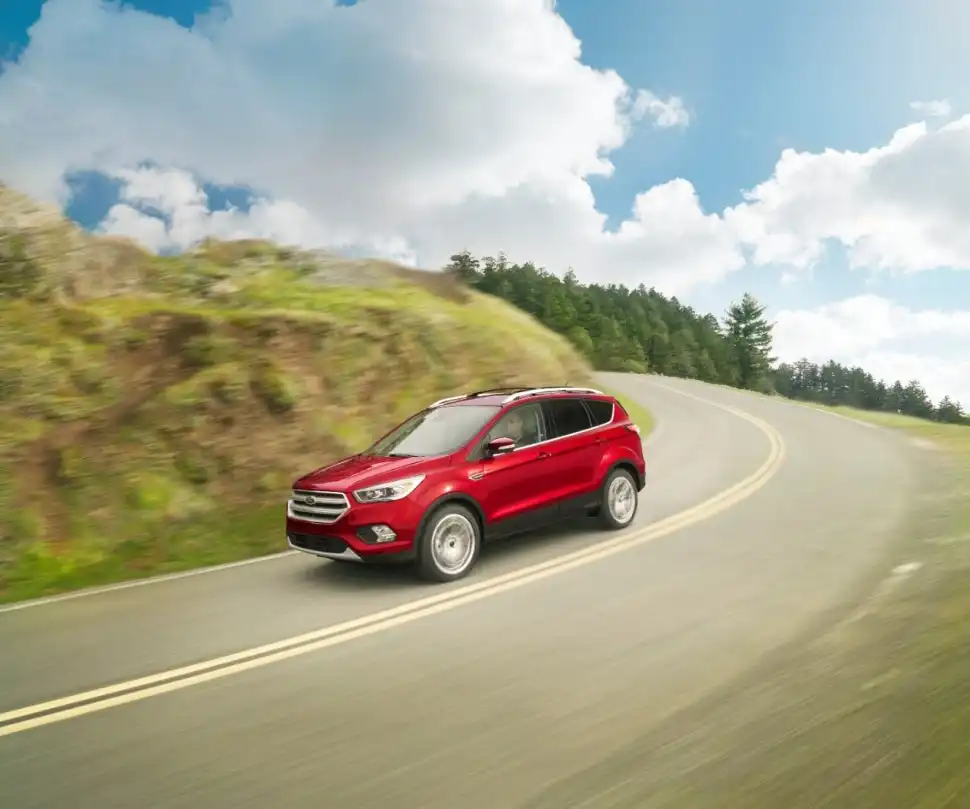
The Ford Escape III, specifically the facelifted version introduced in 2017, represented a significant update to Ford’s popular compact SUV. Within this generation (produced from 2017-2019), the 1.5 EcoBoost engine paired with a six-speed automatic transmission was positioned as a mid-range offering, bridging the gap between the base 2.5L naturally aspirated engine and the more powerful 2.0L EcoBoost. This configuration aimed to provide a balance of fuel efficiency and adequate performance for everyday driving, appealing to a broad segment of the SUV market. The 2017 facelift brought revised styling, updated technology, and refinements to the powertrain options, enhancing the Escape’s competitiveness in a crowded segment.
Technical Specifications
| Brand | Ford |
| Model | Escape |
| Generation | Escape III (facelift 2017) |
| Type (Engine) | 1.5 EcoBoost (179 Hp) Automatic |
| Start of production | 2017 |
| End of production | 2019 |
| Powertrain Architecture | Internal Combustion engine |
| Body type | SUV |
| Seats | 5 |
| Doors | 5 |
| Fuel consumption (urban) | 10.2 l/100 km (23.1 US mpg) |
| Fuel consumption (extra urban) | 7.8 l/100 km (30.2 US mpg) |
| Fuel consumption (combined) | 9 l/100 km (26.1 US mpg) |
| Fuel Type | Petrol (Gasoline) |
| Weight-to-power ratio | 8.9 kg/Hp |
| Weight-to-torque ratio | 6.6 kg/Nm |
| Power | 179 Hp @ 6000 rpm |
| Power per litre | 119.4 Hp/l |
| Torque | 240 Nm @ 2500 rpm (177.01 lb.-ft. @ 2500 rpm) |
| Engine layout | Front, Transverse |
| Engine displacement | 1499 cm3 (91.47 cu. in.) |
| Number of cylinders | 4 |
| Engine configuration | Inline |
| Number of valves per cylinder | 4 |
| Fuel injection system | Direct injection |
| Engine aspiration | Turbocharger, Intercooler |
| Valvetrain | Ti-VCT |
| Engine oil capacity | 4.75 l (5.02 US qt | 4.18 UK qt) |
| Coolant capacity | 11.8 l (12.47 US qt | 10.38 UK qt) |
| Kerb Weight | 1595 kg (3516.37 lbs.) |
| Trunk (boot) space – minimum | 963 l (34.01 cu. ft.) |
| Trunk (boot) space – maximum | 1926 l (68.02 cu. ft.) |
| Fuel tank capacity | 59 l (15.59 US gal | 12.98 UK gal) |
| Permitted trailer load with brakes (12%) | 907 kg (1999.59 lbs.) |
| Length | 4524 mm (178.11 in.) |
| Width | 1839 mm (72.4 in.) |
| Width with mirrors folded | 1905 mm (75 in.) |
| Width including mirrors | 2078 mm (81.81 in.) |
| Height | 1684 mm (66.3 in.) |
| Wheelbase | 2690 mm (105.91 in.) |
| Front track | 1562 mm (61.5 in.) |
| Rear track | 1565 mm (61.61 in.) |
| Drivetrain Architecture | Front wheel drive |
| Number of gears | 6 |
| Gearbox type | Automatic transmission SelectShift |
| Front suspension | Independent, McPherson with coil spring and anti-roll bar |
| Rear suspension | Double wishbone |
| Front brakes | Ventilated discs |
| Rear brakes | Disc |
| Assisting systems | ABS (Anti-lock braking system) |
| Steering type | Steering rack and pinion |
| Power steering | Electric |
| Tires size | 235/55 R17 |
| Wheel rims size | 17 |
Powertrain & Engine Architecture
The heart of this Escape variant is the 1.5-liter EcoBoost inline-four cylinder engine. This engine, part of Ford’s EcoBoost family, utilizes direct fuel injection and a single turbocharger with an intercooler to deliver a balance of power and efficiency. The engine code is typically found as GTDI. The Ti-VCT (Twin Independent Variable Camshaft Timing) system optimizes valve timing for improved performance and fuel economy across the engine’s operating range. The 1.5L EcoBoost produces 179 horsepower at 6000 rpm and 240 Nm (177 lb-ft) of torque at 2500 rpm. This power is then channeled through a six-speed automatic transmission, marketed by Ford as “SelectShift,” which offers a relatively smooth and responsive shifting experience. While not offering the sportiness of a manual transmission, the automatic was geared towards providing ease of use and comfort for the average driver.
Driving Characteristics
The 1.5 EcoBoost automatic Escape delivers adequate performance for daily commuting and highway driving. Acceleration is respectable, though not particularly brisk. The automatic transmission is tuned for fuel efficiency, meaning it will upshift quickly to maintain lower engine speeds. This can sometimes result in the engine feeling slightly strained when accelerating or climbing hills. Compared to the 2.0L EcoBoost variant, the 1.5L feels noticeably less powerful, especially at higher speeds. However, it offers a smoother and more refined driving experience than the base 2.5L engine. The six-speed automatic transmission provides a reasonable range of gear ratios, but it lacks the responsiveness of some newer eight or nine-speed automatics.
Equipment & Trim Levels
The 1.5 EcoBoost automatic trim typically included standard features such as air conditioning, power windows and locks, a rearview camera, and a basic infotainment system with a touchscreen display. Higher trim levels, such as the SEL and Titanium, added features like leather upholstery, a premium sound system, heated front seats, and advanced safety technologies like blind-spot monitoring and lane-keeping assist. Optional extras included a panoramic sunroof, navigation system, and automatic parking assist. Interior upholstery was typically cloth on the base trims, upgrading to leather on higher-end models. Dashboard configurations were consistent across the range, with a focus on user-friendliness and intuitive controls.
Chassis & Braking
The Escape III utilizes a front-wheel-drive platform with an independent McPherson strut suspension in the front and a multi-link double wishbone suspension in the rear. This suspension setup provides a comfortable ride quality, absorbing bumps and imperfections in the road effectively. The front brakes are ventilated discs, while the rear brakes are solid discs. Anti-lock braking system (ABS) is standard. The steering is electric power-assisted, providing light and easy steering feel. Stabilizer bars are present on both the front and rear axles to reduce body roll during cornering. The suspension tuning is geared towards comfort rather than sporty handling.
Market Reception & Comparison
The 1.5 EcoBoost automatic Escape received generally positive reviews from automotive critics. It was praised for its fuel efficiency, comfortable ride, and spacious interior. However, some critics noted that the engine could feel underpowered at times, especially when fully loaded or driving uphill. Compared to the 2.5L engine, the 1.5 EcoBoost offered a noticeable improvement in performance and fuel economy. Compared to the 2.0L EcoBoost, it provided a more affordable entry point into the Escape lineup, albeit with less power. Fuel economy figures averaged around 26.1 US mpg combined, making it a competitive option in its class.
Legacy
The 1.5 EcoBoost engine, while generally reliable, has been subject to some reports of timing belt issues and oil consumption in later years. However, these issues are not widespread and are often related to maintenance neglect. The six-speed automatic transmission has proven to be a durable and dependable unit. On the used car market, the 2017-2019 Ford Escape 1.5 EcoBoost automatic represents a good value proposition, offering a well-rounded package of features, fuel efficiency, and reliability. Its position as a mid-range trim makes it an attractive option for buyers seeking a practical and affordable compact SUV.