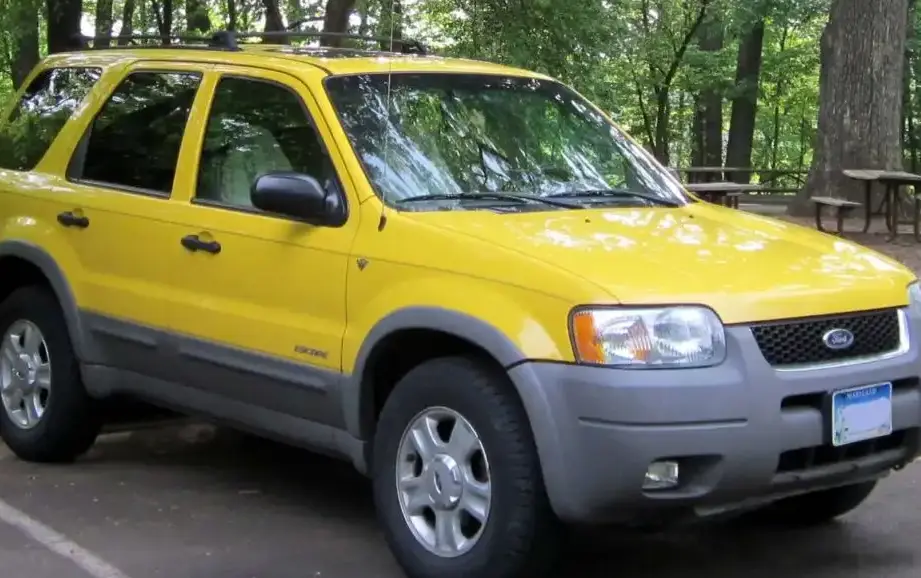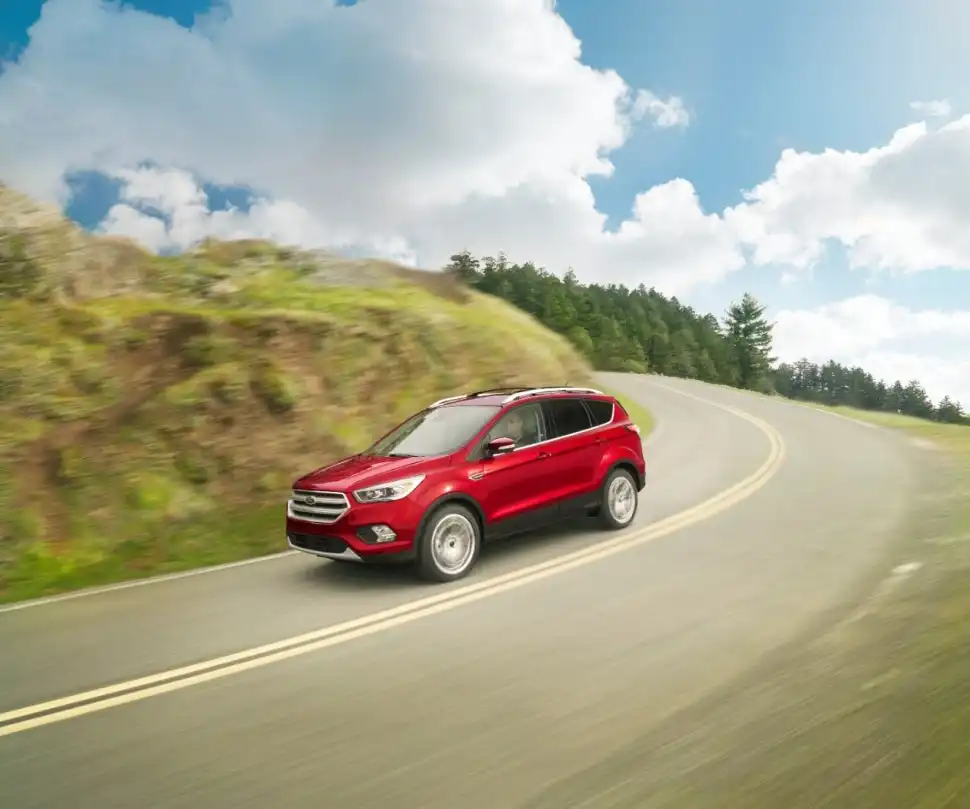
The Ford Escape III, specifically the facelifted version produced from 2017 to 2019, represented a significant update to Ford’s popular compact SUV. Among the engine options available, the 2.0 EcoBoost with 245 horsepower paired with a six-speed automatic transmission occupied a prominent mid-range position in the lineup. This variant aimed to balance performance with reasonable fuel economy, appealing to buyers seeking a more engaging driving experience than the base engine offered, without the higher price tag of potential add-ons. It was a key offering in the North American market, where the Escape competed with vehicles like the Honda CR-V, Toyota RAV4, and Nissan Rogue.
Technical Specifications
| Brand | Ford |
| Model | Escape |
| Generation | Escape III (facelift 2017) |
| Type (Engine) | 2.0 EcoBoost (245 Hp) Automatic |
| Start of production | 2017 |
| End of production | 2019 |
| Powertrain Architecture | Internal Combustion engine |
| Body type | SUV |
| Seats | 5 |
| Doors | 5 |
| Fuel consumption (urban) | 11.2 l/100 km (21 US mpg) |
| Fuel consumption (extra urban) | 8.4 l/100 km (28 US mpg) |
| Fuel consumption (combined) | 9.8 l/100 km (24 US mpg) |
| Fuel Type | Petrol (Gasoline) |
| Weight-to-power ratio | 6.7 kg/Hp, 149.9 Hp/tonne |
| Weight-to-torque ratio | 4.4 kg/Nm, 228.3 Nm/tonne |
| Power | 245 Hp @ 5500 rpm |
| Power per litre | 122.6 Hp/l |
| Torque | 373 Nm @ 3000 rpm (275.11 lb.-ft. @ 3000 rpm) |
| Engine layout | Front, Transverse |
| Engine displacement | 1999 cm3 (121.99 cu. in.) |
| Number of cylinders | 4 |
| Engine configuration | Inline |
| Compression ratio | 9.3:1 |
| Number of valves per cylinder | 4 |
| Fuel injection system | Direct injection |
| Engine aspiration | Turbocharger, Intercooler |
| Valvetrain | Ti-VCT |
| Engine oil capacity | 5.4 l (5.71 US qt | 4.75 UK qt) |
| Coolant capacity | 10.3 l (10.88 US qt | 9.06 UK qt) |
| Kerb Weight | 1634 kg (3602.35 lbs.) |
| Trunk (boot) space – minimum | 963 l (34.01 cu. ft.) |
| Trunk (boot) space – maximum | 1926 l (68.02 cu. ft.) |
| Fuel tank capacity | 59 l (15.59 US gal | 12.98 UK gal) |
| Permitted trailer load with brakes (12%) | 1588 kg (3500.94 lbs.) |
| Length | 4524 mm (178.11 in.) |
| Width | 1839 mm (72.4 in.) |
| Width with mirrors folded | 1905 mm (75 in.) |
| Width including mirrors | 2078 mm (81.81 in.) |
| Height | 1684 mm (66.3 in.) |
| Wheelbase | 2690 mm (105.91 in.) |
| Front track | 1562 mm (61.5 in.) |
| Rear track | 1565 mm (61.61 in.) |
| Drivetrain Architecture | Front wheel drive |
| Number of gears | 6 |
| Gearbox type | Automatic transmission SelectShift |
| Front suspension | Independent, type McPherson with coil spring and anti-roll bar |
| Rear suspension | Double wishbone |
| Front brakes | Ventilated discs |
| Rear brakes | Disc |
| Tire size | 235/45 R19 |
| Wheel rims size | 19 |
INTRODUCTION
The 2017-2019 Ford Escape facelift brought a refreshed look and updated technology to Ford’s popular compact SUV. The 2.0 EcoBoost engine, paired with the six-speed automatic, was introduced as a step up from the base 2.5-liter naturally aspirated four-cylinder. Positioned as a mid-range offering, it aimed to provide a more spirited driving experience and increased capability for those who found the base engine lacking. This variant was built on the Ford C-platform (specifically the 1HX0/A3 platform shared with the Ford Focus and C-Max), and was primarily sold in North America and select international markets.
Powertrain & Engine Architecture
The heart of this Escape variant is the 2.0-liter EcoBoost inline-four cylinder engine, designated with engine code B6G. This engine utilizes direct fuel injection, a twin-scroll turbocharger, and Ford’s Ti-VCT (Twin Independent Variable Camshaft Timing) technology. The Ti-VCT system allows for independent control of intake and exhaust valve timing, optimizing engine performance and efficiency across a wider range of engine speeds. The 6F35 SelectShift six-speed automatic transmission was the sole transmission option for this engine. This transmission features a conventional torque converter and offers a manual shift mode for greater driver control. The 6F35 was known for its smooth operation, but wasn’t considered the most advanced automatic available at the time, lacking the eight or nine speeds found in some competitor vehicles.
Driving Characteristics
The 245 horsepower and 373 lb-ft of torque delivered by the 2.0 EcoBoost engine provided a noticeable improvement in acceleration and overall responsiveness compared to the base 2.5-liter engine. While not a sports car, the Escape 2.0 EcoBoost offered brisk acceleration for merging onto highways and passing maneuvers. The six-speed automatic transmission generally shifted smoothly, but could sometimes feel hesitant during quick downshifts. The gear ratios were tuned for a balance of acceleration and fuel economy, with a relatively tall final drive. Compared to the manual transmission options available on other Escape trims, the automatic prioritized convenience over outright performance. The front-wheel-drive configuration contributed to a slightly less engaging driving experience than the available all-wheel-drive system.
Equipment & Trim Levels
The 2.0 EcoBoost trim typically included features such as alloy wheels, automatic headlights, a rearview camera, and Ford’s SYNC infotainment system. Higher trim levels, like the SEL and Titanium, added features such as leather upholstery, a power liftgate, and advanced safety technologies like blind-spot monitoring and lane-keeping assist. Interior upholstery was typically cloth on the base 2.0 EcoBoost trim, with leather available as an upgrade. Dashboard configurations were consistent across the range, featuring a central touchscreen display and a relatively straightforward layout. Optional extras included a panoramic sunroof, navigation system, and premium audio system.
Chassis & Braking
The Escape III utilized a unibody construction with independent front suspension (McPherson strut) and a multi-link rear suspension. The suspension tuning was geared towards comfort, providing a relatively smooth ride over most road surfaces. Front brakes were ventilated discs, while rear brakes were solid discs. The base 2.0 EcoBoost trim typically featured a smaller stabilizer bar compared to higher trims, resulting in slightly more body roll during cornering. The steering system was an electric power-assisted rack-and-pinion setup, providing light and easy steering feel.
Market Reception & Comparison
Critics generally praised the 2.0 EcoBoost engine for its strong performance and relatively good fuel economy. However, some reviewers noted that the six-speed automatic transmission felt dated compared to the newer transmissions offered by competitors. Compared to the base 2.5-liter engine, the 2.0 EcoBoost offered a significant improvement in power and torque, but at a higher price point. The 2.0 EcoBoost was also more fuel-efficient than the optional 3.0-liter V6 engine, while offering comparable performance. Reliability reports were generally positive, with few major issues reported with the 2.0 EcoBoost engine or the 6F35 transmission.
Legacy
The 2.0 EcoBoost engine became a mainstay in Ford’s lineup, appearing in a variety of vehicles including the Fusion, Explorer, and F-150. The combination of direct injection, turbocharging, and variable valve timing proved to be a successful formula for delivering both performance and efficiency. While the 6F35 transmission has been superseded by more advanced units, it remains a relatively reliable transmission when properly maintained. On the used car market, the 2017-2019 Ford Escape 2.0 EcoBoost Automatic holds its value reasonably well, appealing to buyers seeking a well-rounded and capable compact SUV. Regular maintenance, including oil changes and transmission fluid services, is crucial for ensuring the long-term reliability of this powertrain.