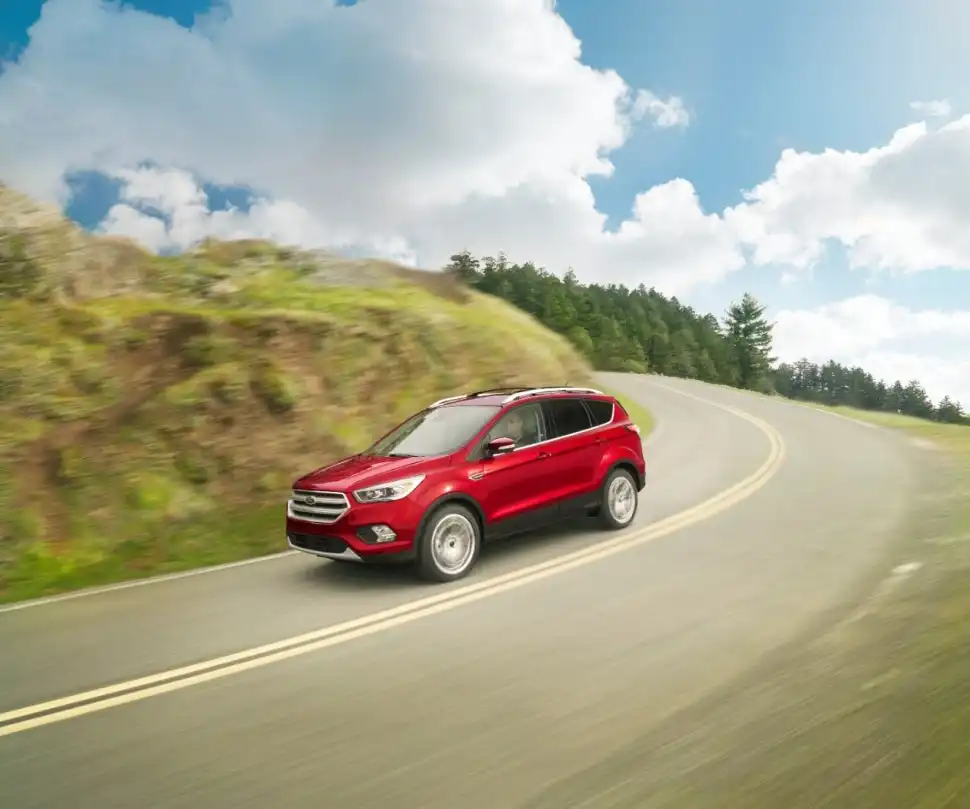
The Ford Escape III, specifically the facelifted version produced from 2017 to 2019, represented a significant update to Ford’s popular compact SUV. Among the engine and transmission options available, the 2.5-liter Duratec engine paired with a 6-speed automatic transmission was a mainstay, offering a balance of affordability and practicality for the North American market. This configuration served as the entry-level powertrain for the Escape during these model years, positioned below the more powerful turbocharged EcoBoost options. It aimed to provide a comfortable and efficient driving experience for everyday commuting and family use.
Technical Specifications
| Brand | Ford |
| Model | Escape |
| Generation | Escape III (facelift 2017) |
| Type (Engine) | 2.5 Duratec (168 Hp) Automatic |
| Start of production | 2017 |
| End of production | 2019 |
| Powertrain Architecture | Internal Combustion engine |
| Body type | SUV |
| Seats | 5 |
| Doors | 5 |
| Fuel consumption (urban) | 11.2 l/100 km (21 US mpg) |
| Fuel consumption (extra urban) | 8.1 l/100 km (29 US mpg) |
| Fuel consumption (combined) | 9.8 l/100 km (24 US mpg) |
| Fuel Type | Petrol (Gasoline) |
| Weight-to-power ratio | 9.6 kg/Hp |
| Weight-to-torque ratio | 7 kg/Nm |
| Power | 168 Hp @ 6000 rpm |
| Power per litre | 67.5 Hp/l |
| Torque | 230 Nm @ 4500 rpm (169.64 lb.-ft. @ 4500 rpm) |
| Engine layout | Front, Transverse |
| Engine displacement | 2488 cm3 (151.83 cu. in.) |
| Number of cylinders | 4 |
| Engine configuration | Inline |
| Compression ratio | 9.7:1 |
| Number of valves per cylinder | 4 |
| Fuel injection system | Multi-port manifold injection |
| Engine aspiration | Naturally aspirated engine |
| Valvetrain | i-VCT |
| Engine oil capacity | 5.4 l (5.71 US qt | 4.75 UK qt) |
| Coolant capacity | 10.7 l (11.31 US qt | 9.41 UK qt) |
| Kerb Weight | 1607 kg (3542.83 lbs.) |
| Trunk (boot) space – minimum | 963 l (34.01 cu. ft.) |
| Trunk (boot) space – maximum | 1926 l (68.02 cu. ft.) |
| Fuel tank capacity | 59 l (15.59 US gal | 12.98 UK gal) |
| Permitted trailer load with brakes (12%) | 680 kg (1499.14 lbs.) |
| Length | 4524 mm (178.11 in.) |
| Width | 1839 mm (72.4 in.) |
| Width with mirrors folded | 1905 mm (75 in.) |
| Width including mirrors | 2078 mm (81.81 in.) |
| Height | 1684 mm (66.3 in.) |
| Wheelbase | 2690 mm (105.91 in.) |
| Front track | 1562 mm (61.5 in.) |
| Rear track | 1565 mm (61.61 in.) |
| Drivetrain Architecture | Front wheel drive |
| Number of gears and type of gearbox | 6 gears, automatic transmission SelectShift |
| Front suspension | Independent, type McPherson with coil spring and anti-roll bar |
| Rear suspension | Double wishbone |
| Front brakes | Ventilated discs |
| Rear brakes | Disc |
| Tires size | 235/55 R17 |
| Wheel rims size | 17 |
INTRODUCTION
The 2017-2019 Ford Escape 2.5 Duratec with the automatic transmission was a core component of the Escape lineup during its third generation. Built on the Ford C-platform (also known as the 1HX0/A3 platform, shared with the Mazda Atenza/6), the Escape aimed to provide a practical and affordable SUV option for families. This particular variant was designed to appeal to buyers prioritizing fuel efficiency and ease of use over outright performance. It served as the gateway to the Escape range, offering a comfortable and reliable driving experience without the higher price tag of the EcoBoost models.
Powertrain & Engine Architecture
The heart of this Escape variant is the 2.5-liter Duratec inline-four cylinder engine. This engine, part of Ford’s Duratec family, is a naturally aspirated powerplant featuring multi-port fuel injection and Ford’s intelligent Variable Camshaft Timing (i-VCT) system. The i-VCT system optimizes valve timing for improved fuel economy and performance across the engine’s operating range. The engine produces 168 horsepower at 6000 rpm and 169 lb-ft of torque at 4500 rpm. Paired with this engine is a 6-speed automatic transmission, marketed by Ford as “SelectShift.” This transmission offers a smooth and responsive shifting experience, with a manual shift mode for drivers who prefer more control. The transmission was chosen for its balance of efficiency and drivability, complementing the engine’s characteristics.
Driving Characteristics
The 2.5-liter Duratec and 6-speed automatic combination delivers adequate, though not exhilarating, performance. Acceleration is sufficient for everyday driving situations, but it won’t provide the quick response of the turbocharged EcoBoost engines. The automatic transmission is tuned for comfort and fuel efficiency, with gear ratios optimized for relaxed cruising. Compared to the manual transmission option (available on other Escape trims), the automatic prioritizes convenience and ease of use. The power delivery is linear, making it predictable and easy to modulate. While not a sporty setup, it provides a comfortable and composed ride, suitable for long commutes and family road trips.
Equipment & Trim Levels
The 2.5-liter automatic Escape typically came standard with features like air conditioning, a basic infotainment system with a small touchscreen display, Bluetooth connectivity, and power windows and locks. Higher trim levels, such as the SE and SEL, added features like alloy wheels, upgraded interior materials, a larger touchscreen display with Ford’s SYNC system, and advanced safety features. Optional extras included a sunroof, leather upholstery, a premium audio system, and a navigation system. The interior generally featured durable cloth upholstery and a functional, if somewhat basic, dashboard layout.
Chassis & Braking
The Escape’s chassis features an independent McPherson strut front suspension and a multi-link rear suspension, providing a comfortable ride and decent handling characteristics. The suspension was tuned to prioritize comfort over sporty handling. Braking duties are handled by ventilated discs up front and solid discs in the rear. Anti-lock brakes (ABS) are standard, providing enhanced stopping power and control. The steering system is an electric power-assisted rack and pinion setup, offering light and precise steering feel. The standard tire size was 235/55R17, providing a good balance of ride comfort and grip.
Market Reception & Comparison
Critics generally viewed the 2.5-liter Escape as a practical and affordable option, but noted that it lacked the performance of the EcoBoost models. Fuel economy was considered a strong point, with the combined EPA rating of 24 mpg being competitive for its class. Reliability was generally good, although some owners reported minor issues with the automatic transmission. Compared to the 1.5L and 2.0L EcoBoost engines, the 2.5L offered a lower initial cost but sacrificed performance and fuel efficiency. The 2.5L was often favored by buyers who prioritized value and simplicity over outright power.
Legacy
The 2.5-liter Duratec engine, while not known for being particularly groundbreaking, proved to be a reliable and durable powerplant. In the used car market, the 2017-2019 Escape 2.5L automatic remains a popular choice for budget-conscious buyers seeking a practical and dependable SUV. Maintenance costs are generally reasonable, and parts availability is good. While it may not offer the latest technology or the most exciting driving experience, it continues to provide a solid and affordable transportation option for many years to come. Its simplicity and proven reliability contribute to its enduring appeal in the used vehicle segment.