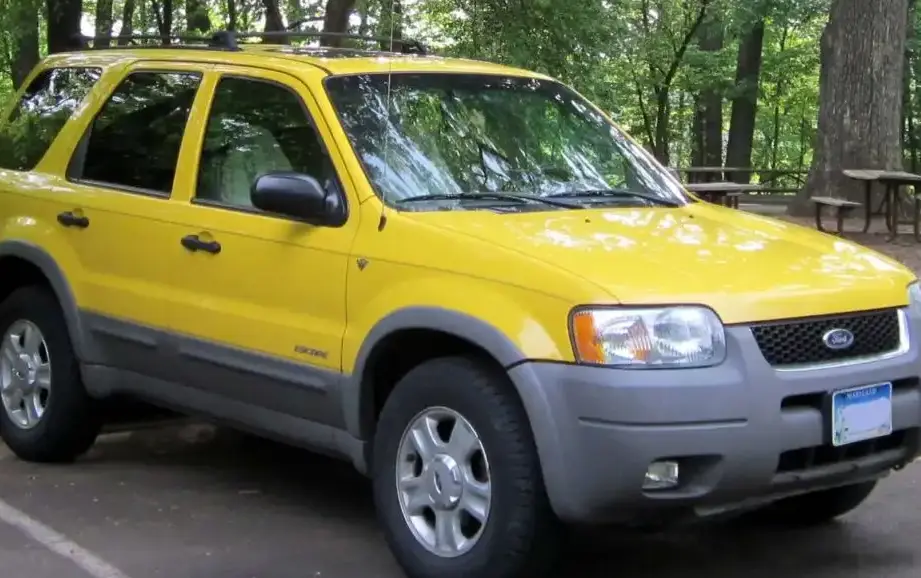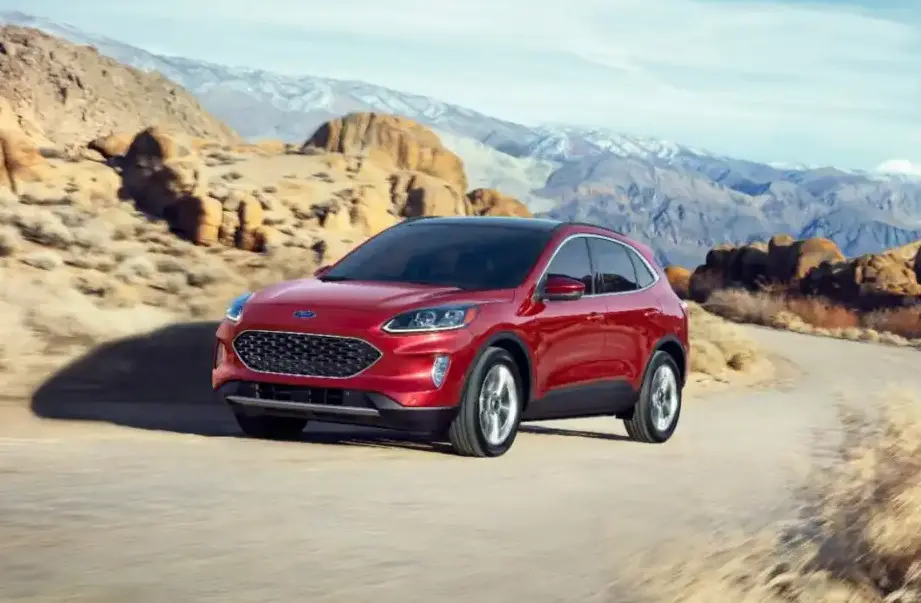
The Ford Escape IV, produced from 2019 to 2022, represented a significant redesign for Ford’s popular compact SUV. Within the fourth generation, the 1.5 EcoBoost engine paired with an eight-speed automatic transmission was a key volume seller, positioned as the mid-range offering in the Escape lineup. It slotted between the base 1.5L naturally aspirated engine and the more powerful 2.0L EcoBoost variants, aiming to balance fuel efficiency with adequate performance for everyday driving. This configuration was primarily marketed towards families and individuals seeking a practical and comfortable SUV experience.
Technical Specifications
| Brand | Ford |
| Model | Escape |
| Generation | Escape IV |
| Type (Engine) | 1.5 EcoBoost (180 Hp) Automatic |
| Start of production | 2019 |
| End of production | 2022 |
| Powertrain Architecture | Internal Combustion engine |
| Body type | SUV |
| Seats | 5 |
| Doors | 5 |
| Fuel consumption (urban) | 8.7 l/100 km (27 US mpg) |
| Fuel consumption (extra urban) | 7.1 l/100 km (33.1 US mpg) |
| Fuel consumption (combined) | 7.8 l/100 km (30.2 US mpg) |
| Fuel Type | Petrol (Gasoline) |
| Weight-to-power ratio | 8.3 kg/Hp |
| Weight-to-torque ratio | 6.2 kg/Nm |
| Power | 180 Hp |
| Power per litre | 120.2 Hp/l |
| Torque | 240 Nm (177.01 lb.-ft.) |
| Engine layout | Front, Transverse |
| Engine displacement | 1497 cm3 (91.35 cu. in.) |
| Number of cylinders | 3 |
| Engine configuration | Inline |
| Cylinder Bore | 84 mm (3.31 in.) |
| Piston Stroke | 90 mm (3.54 in.) |
| Compression ratio | 10:1 |
| Number of valves per cylinder | 4 |
| Fuel injection system | Direct injection |
| Engine aspiration | Turbocharger, Intercooler |
| Valvetrain | DOHC, Ti-VCT |
| Engine oil capacity | 5.05 l (5.34 US qt | 4.44 UK qt) |
| Coolant | 7.2 l (7.61 US qt | 6.34 UK qt) |
| Kerb Weight | 1496 kg (3298.12 lbs.) |
| Trunk (boot) space – minimum | 948 l (33.48 cu. ft.) |
| Trunk (boot) space – maximum | 1851 l (65.37 cu. ft.) |
| Fuel tank capacity | 55 l (14.53 US gal | 12.1 UK gal) |
| Length | 4585 mm (180.51 in.) |
| Width | 1882 mm (74.09 in.) |
| Width with mirrors folded | 1999 mm (78.7 in.) |
| Width including mirrors | 2174 mm (85.59 in.) |
| Height | 1742 mm (68.58 in.) |
| Wheelbase | 2710 mm (106.69 in.) |
| Front track | 1585 mm (62.4 in.) |
| Rear (Back) track | 1570 mm (61.81 in.) |
| Drivetrain Architecture | Front wheel drive |
| Number of gears | 8 |
| Type of gearbox | automatic transmission |
| Front suspension | Independent, type McPherson with coil spring and anti-roll bar |
| Rear suspension | Independent multi-link spring suspension with stabilizer |
| Front brakes | Disc |
| Rear brakes | Disc |
| Assisting systems | ABS (Anti-lock braking system) |
| Steering type | Steering rack and pinion |
| Power steering | Electric Steering |
| Tires size | 225/65 R17 102H; 225/60 R18; 225/55 R19 |
| Wheel rims size | 17; 18; 19 |
INTRODUCTION
The Ford Escape IV 1.5 EcoBoost Automatic, manufactured between 2019 and 2022, represents a key iteration of Ford’s popular compact SUV. Built on the C2 platform (also known as the 1HX0/A3 platform shared with the Mazda CX-5 and other models), this version aimed to deliver a balance of fuel efficiency, practicality, and affordability. It served as a crucial stepping stone in Ford’s SUV lineup, offering a more accessible entry point compared to the higher-performance 2.0L EcoBoost models. The 1.5 EcoBoost was designed to appeal to a broad customer base, particularly those prioritizing fuel economy and everyday usability.
Powertrain & Engine Architecture
At the heart of this Escape variant lies the 1.5-liter EcoBoost inline-three cylinder engine, designated with engine code B6G. This engine utilizes direct fuel injection and a single turbocharger with an integrated intercooler to boost power and efficiency. The engine features a double overhead camshaft (DOHC) valvetrain with Twin Independent Variable Camshaft Timing (Ti-VCT), allowing for optimized valve control across the engine’s operating range. The eight-speed automatic transmission, sourced from Aisin, was specifically chosen for its smooth shifting and efficiency. This transmission features a wide gear ratio spread, contributing to both fuel economy and responsive acceleration. The engine’s relatively small displacement and turbocharging contribute to reduced internal friction and improved thermal efficiency.
Driving Characteristics
The 180 horsepower and 240 lb-ft of torque produced by the 1.5 EcoBoost engine, when paired with the eight-speed automatic, provided adequate performance for typical driving scenarios. Acceleration from 0 to 60 mph was typically in the 8.5-9.5 second range. While not as quick as the 2.0L EcoBoost models, the 1.5L offered a more relaxed and fuel-efficient driving experience. The automatic transmission’s gear ratios were tuned for everyday drivability, with quick downshifts for passing maneuvers. Compared to manual transmission versions (not widely available in the US market for this engine), the automatic prioritized convenience and ease of use. The engine’s turbo lag was noticeable at lower RPMs, but the turbocharger quickly spooled up to provide a surge of power in the mid-range.
Equipment & Trim Levels
The 1.5 EcoBoost Automatic was typically offered in SE, SEL, and Titanium trim levels. The base SE trim included standard features such as Ford’s SYNC infotainment system with a touchscreen display, automatic emergency braking, lane-keeping assist, and a rearview camera. The SEL trim added features like heated front seats, power-adjustable driver’s seat, and upgraded interior materials. The top-tier Titanium trim included premium leather upholstery, a larger touchscreen display, a premium audio system, and additional driver-assistance features. Optional extras across all trims included a panoramic sunroof, adaptive cruise control, and a hands-free power liftgate. Interior upholstery ranged from cloth in the SE to leather in the Titanium, with varying dashboard configurations depending on the trim level.
Chassis & Braking
The Escape IV utilized a unibody construction for improved rigidity and reduced weight. The front suspension featured an independent McPherson strut design with coil springs and an anti-roll bar, while the rear suspension employed an independent multi-link setup with a stabilizer bar. This suspension configuration provided a comfortable ride quality and predictable handling. Brakes consisted of disc brakes on all four wheels, providing adequate stopping power for the vehicle’s weight. The standard braking system included ABS (Anti-lock Braking System) and electronic brake-force distribution. The front stabilizer bar thickness was typically 24mm, contributing to reduced body roll during cornering. Rear drum brakes were not offered on this trim level.
Market Reception & Comparison
Critics generally praised the Ford Escape IV 1.5 EcoBoost Automatic for its fuel efficiency and comfortable ride. However, some reviewers noted that the engine could feel underpowered when fully loaded or when climbing steep hills. Compared to the 2.0L EcoBoost, the 1.5L offered significantly better fuel economy (around 30 mpg combined) but lacked the same level of performance. Against competitors like the Honda CR-V and Toyota RAV4, the Escape 1.5 EcoBoost offered a competitive price point and a well-equipped interior. Reliability reports were generally positive, with few major issues reported with the engine or transmission. However, some owners reported minor issues with the infotainment system.
Legacy
The 1.5 EcoBoost engine and eight-speed automatic transmission combination proved to be a reliable and efficient powertrain in the Ford Escape IV. In the used car market, these models continue to be popular choices for buyers seeking a practical and affordable compact SUV. The engine’s relatively simple design and robust construction contribute to its long-term durability. While not a performance standout, the 1.5 EcoBoost offered a compelling blend of fuel economy, comfort, and practicality, solidifying its place as a significant variant within the fourth-generation Ford Escape lineup. Maintenance costs are generally reasonable, and parts availability remains good, making it a sensible choice for budget-conscious buyers.