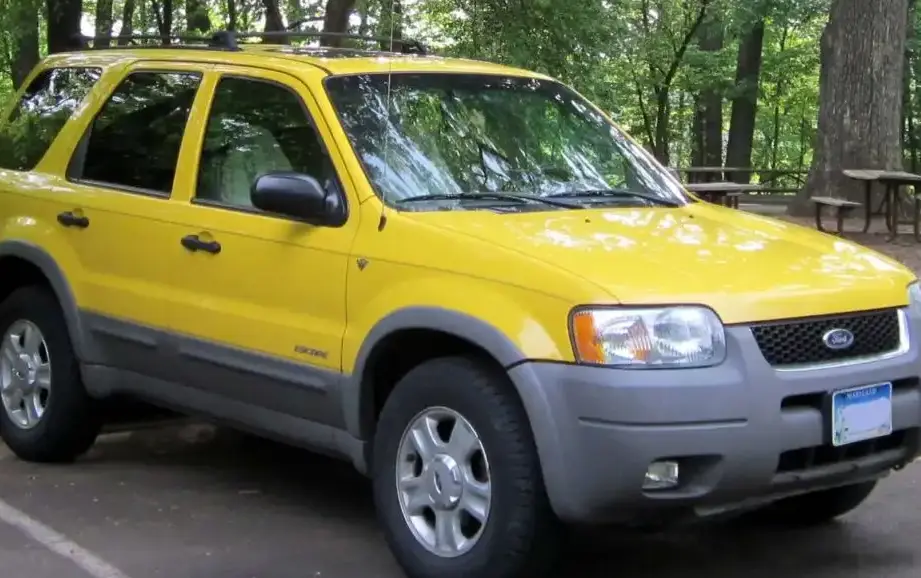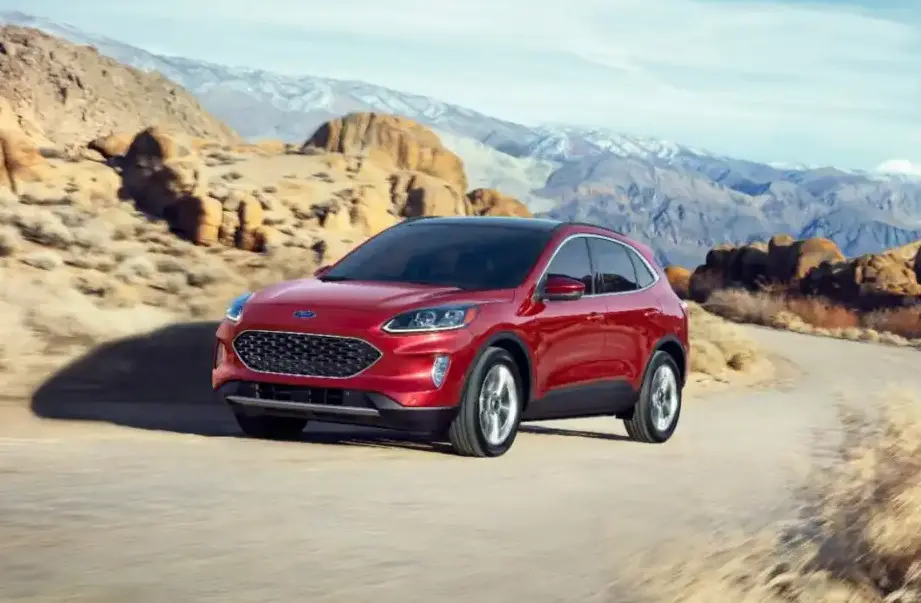
The Ford Escape IV 2.0 EcoBoost Automatic, produced from 2019 to 2022, represents a significant iteration in Ford’s popular compact SUV lineup. Positioned as a mid-to-upper trim level within the fourth generation (2019-2023) Escape range, this variant offered a balance of performance and fuel efficiency, appealing to buyers seeking more than the base engine provided. It was a key model in Ford’s strategy to modernize the Escape and compete effectively in the increasingly crowded crossover segment, particularly in the North American market. The Escape IV moved to a completely new platform, abandoning the previous CD2 platform for the C2 platform shared with the Focus.
Technical Specifications
| Brand | Ford |
| Model | Escape |
| Generation | Escape IV |
| Type (Engine) | 2.0 EcoBoost (250 Hp) Automatic |
| Start of production | 2019 year |
| End of production | 2022 year |
| Powertrain Architecture | Internal Combustion engine |
| Body type | SUV |
| Seats | 5 |
| Doors | 5 |
| Fuel Type | Petrol (Gasoline) |
| Weight-to-power ratio | 6.2 kg/Hp, 161.4 Hp/tonne |
| Weight-to-torque ratio | 4.2 kg/Nm, 240.8 Nm/tonne |
| Power | 250 Hp |
| Power per litre | 125.1 Hp/l |
| Torque | 373 Nm (275.11 lb.-ft.) |
| Engine layout | Front, Transverse |
| Engine displacement | 1999 cm3 (121.99 cu. in.) |
| Number of cylinders | 4 |
| Engine configuration | Inline |
| Compression ratio | 9.3:1 |
| Number of valves per cylinder | 4 |
| Fuel injection system | Direct injection |
| Engine aspiration | Turbocharger, Intercooler |
| Valvetrain | DOHC, Ti-VCT |
| Engine oil capacity | 5.2 l (5.49 US qt | 4.58 UK qt) |
| Coolant | 8.2 l (8.66 US qt | 7.21 UK qt) |
| Kerb Weight | 1549 kg (3414.96 lbs.) |
| Trunk (boot) space – minimum | 948 l (33.48 cu. ft.) |
| Trunk (boot) space – maximum | 1851 l (65.37 cu. ft.) |
| Fuel tank capacity | 59 l (15.59 US gal | 12.98 UK gal) |
| Permitted trailer load with brakes (12%) | 1587 kg (3498.74 lbs.) |
| Length | 4585 mm (180.51 in.) |
| Width | 1882 mm (74.09 in.) |
| Width with mirrors folded | 1999 mm (78.7 in.) |
| Width including mirrors | 2174 mm (85.59 in.) |
| Height | 1742 mm (68.58 in.) |
| Wheelbase | 2710 mm (106.69 in.) |
| Front track | 1585 mm (62.4 in.) |
| Rear (Back) track | 1570 mm (61.81 in.) |
| Drivetrain Architecture | The Internal combustion engine (ICE) drives the front wheels of the vehicle. |
| Drive wheel | Front wheel drive |
| Number of gears and type of gearbox | 8 gears, automatic transmission |
| Front suspension | Independent, type McPherson with coil spring and anti-roll bar |
| Rear suspension | Independent multi-link spring suspension with stabilizer |
| Front brakes | Disc |
| Rear brakes | Disc |
| Assisting systems | ABS (Anti-lock braking system) |
| Steering type | Steering rack and pinion |
| Power steering | Electric Steering |
| Tires size | 225/65 R17; 225/60 R18; 225/55 R19 |
| Wheel rims size | 17; 18; 19 |
Powertrain & Engine Architecture
At the heart of the Escape IV 2.0 EcoBoost Automatic lies the Ford EcoBoost 2.0-liter inline-four cylinder engine. This engine, part of Ford’s EcoBoost family, utilizes direct fuel injection and a single turbocharger with an intercooler to deliver a robust 250 horsepower and 373 Nm (275 lb-ft) of torque. The engine features a double overhead camshaft (DOHC) valvetrain with Twin Independent Variable Camshaft Timing (Ti-VCT), optimizing engine breathing for improved performance and efficiency. The engine code is generally identified as a variant within the broader EcoBoost family, often with specific sub-designations depending on the production year and calibration. The 8-speed automatic transmission, sourced from a collaboration with Getrag, was specifically tuned to handle the EcoBoost engine’s output. This transmission offered smooth shifts and helped maximize fuel economy. The transmission’s gear ratios were optimized for both acceleration and highway cruising, providing a balance between responsiveness and efficiency.
Driving Characteristics
The 2.0 EcoBoost Automatic Escape offered a noticeable step up in performance compared to the base 1.5-liter EcoBoost engine. Acceleration was brisk, with the SUV capable of reaching 60 mph in around 7.5 seconds. The 8-speed automatic transmission contributed to a smooth driving experience, with minimal hesitation during acceleration. While not a sports SUV, the 2.0 EcoBoost provided ample power for merging onto highways and overtaking other vehicles. Compared to the manual transmission options available on other Escape trims, the automatic prioritized convenience and ease of use over outright driver engagement. The automatic’s programming was generally geared towards fuel efficiency, with upshifts occurring relatively early in the rev range. However, drivers could utilize the manual shift mode for more control when desired.
Equipment & Trim Levels
The 2.0 EcoBoost Automatic was typically offered in the SEL and Titanium trim levels. The SEL trim included standard features such as Ford’s SYNC 3 infotainment system with an 8-inch touchscreen, Apple CarPlay and Android Auto compatibility, automatic climate control, and a power liftgate. The Titanium trim added features like leather upholstery, a premium audio system, and advanced driver-assistance systems such as adaptive cruise control and lane-keeping assist. Optional extras included a panoramic sunroof, navigation system, and upgraded wheels. Interior upholstery was typically cloth on the SEL and leather on the Titanium. Dashboard configurations were consistent across trims, featuring a modern design with a focus on user-friendliness.
Chassis & Braking
The Escape IV utilized a front-wheel-drive platform as standard, with all-wheel drive available as an option. The front suspension consisted of an independent McPherson strut setup with coil springs and an anti-roll bar, while the rear suspension employed an independent multi-link design with a stabilizer bar. This suspension setup provided a comfortable ride quality while maintaining reasonable handling characteristics. Braking duties were handled by disc brakes on all four wheels, providing adequate stopping power. The inclusion of ABS (Anti-lock Braking System) was standard. The chassis was designed to balance weight reduction with structural rigidity, contributing to improved handling and fuel efficiency. Stabilizer bar thickness was typical for the class, providing a reasonable level of body roll control.
Market Reception & Comparison
The Ford Escape IV 2.0 EcoBoost Automatic received generally positive reviews from automotive critics. It was praised for its strong engine performance, comfortable ride, and well-equipped interior. Fuel economy was also considered competitive for its class, achieving around 23 mpg city and 30 mpg highway. Compared to other trims in the Escape lineup, the 2.0 EcoBoost Automatic offered a significant performance advantage over the base 1.5-liter engine, but at a higher price point. The 1.5L EcoBoost was favored by those prioritizing fuel economy, while the 2.0L appealed to those wanting more power. Compared to competitors like the Honda CR-V and Toyota RAV4, the Escape 2.0 EcoBoost offered a more engaging driving experience, but some critics noted that its interior materials weren’t quite as refined.
Legacy
The 2.0 EcoBoost engine proved to be a relatively reliable powertrain in the Escape IV, although some owners have reported issues with the turbocharger and fuel injectors over the long term. Regular maintenance, including oil changes and timely replacement of wear items, is crucial for ensuring the longevity of this engine. In the used car market, the 2.0 EcoBoost Automatic Escape holds its value reasonably well, particularly in well-maintained condition. Its combination of performance, features, and fuel efficiency continues to make it an attractive option for buyers seeking a compact SUV. The EcoBoost engine family, in general, has become a mainstay in Ford’s lineup, demonstrating the company’s commitment to turbocharged engine technology.