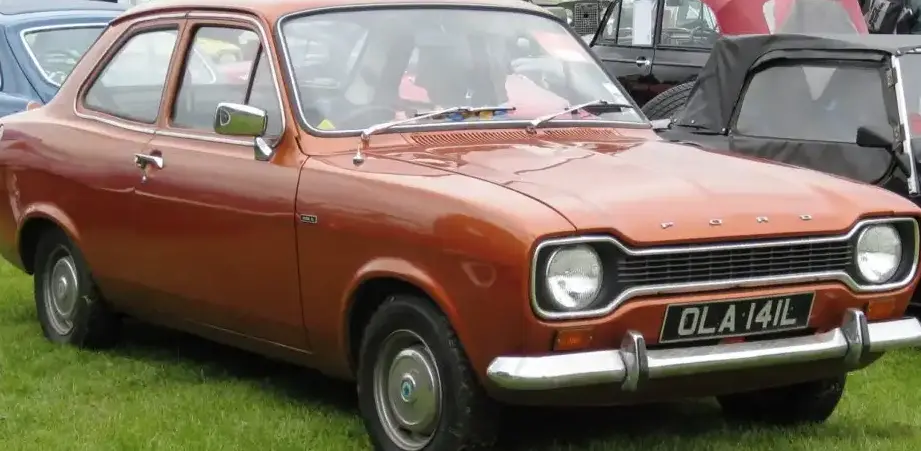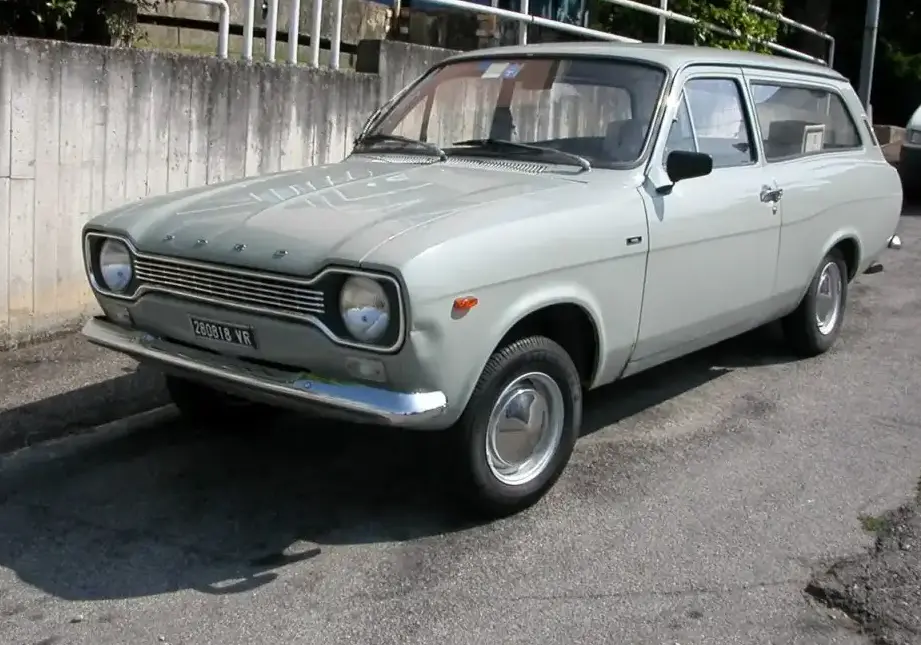
The Ford Escort I Turnier 1100, produced between 1970 and 1976, represents the station wagon (estate) variant of the first-generation Ford Escort. Introduced as a practical and affordable family vehicle, the Turnier – Ford’s designation for its estate models – broadened the Escort’s appeal beyond the initially offered saloon and coupe body styles. This 1100 model, equipped with a modest 48 horsepower engine, served as the entry point into the Escort range, targeting budget-conscious buyers seeking a reliable and spacious vehicle for everyday use. It played a significant role in establishing the Escort as a dominant force in the European small family car market.
Technical Specifications
| Brand | Ford |
| Model | Escort |
| Generation | Escort I Turnier |
| Type (Engine) | 1100 (48 Hp) |
| Start of Production | 1970 |
| End of Production | 1976 |
| Powertrain Architecture | Internal Combustion Engine |
| Body Type | Station Wagon (Estate) |
| Fuel Type | Petrol (Gasoline) |
| Power | 48 Hp |
| Engine Aspiration | Naturally Aspirated |
Powertrain & Engine Architecture
The Escort I Turnier 1100 was powered by the Ford Kent engine, specifically the 1100cc inline-four cylinder unit. This engine, designated as the 1100 OHV, featured a single overhead valve (OHV) configuration. It was a simple, robust design intended for reliability and ease of maintenance rather than outright performance. The engine utilized a single barrel carburetor for fuel delivery, and ignition was handled by a conventional distributor system. The 1100 Kent engine produced 48 horsepower at approximately 5,000 rpm and 68 lb-ft of torque at 3,000 rpm. The engine’s relatively low compression ratio (typically around 8.9:1) allowed it to run on lower octane fuel, which was a significant advantage in many European markets at the time. The transmission was a four-speed manual gearbox, as an automatic transmission wasn’t offered on this base model. The engine’s design prioritized durability and fuel economy over high output, making it well-suited for the demands of everyday driving.
Driving Characteristics
The driving experience in the Escort I Turnier 1100 was characterized by its practicality and ease of use. With only 48 horsepower propelling a relatively heavy station wagon body, acceleration was modest. 0-60 mph times were in the region of 18-20 seconds, and top speed was around 85 mph. However, the engine’s torque delivery was reasonably linear, making it manageable in urban environments and on winding country roads. The four-speed manual gearbox offered a decent spread of ratios, allowing the driver to keep the engine in its optimal power band. The Turnier’s suspension, consisting of independent front suspension with MacPherson struts and a leaf-sprung rear axle, provided a comfortable ride, although it wasn’t particularly sporty. Steering was by a recirculating ball system, offering reasonable precision but lacking the directness of more modern setups. Compared to the higher-powered Escort variants, such as the 1300 or 1600 models, the 1100 felt noticeably slower, particularly when fully loaded with passengers and luggage. However, its lower power output also contributed to better fuel economy.
Equipment & Trim Levels
The Escort I Turnier 1100 was positioned as the entry-level model in the Turnier range. As such, it featured a relatively basic level of equipment. Standard features typically included cloth upholstery, vinyl floor covering, and a basic instrument panel with speedometer and fuel gauge. Heating and ventilation were standard, but air conditioning was not available. The exterior trim was minimal, with black plastic bumpers and simple steel wheels with hubcaps. Optional extras included a radio, upgraded upholstery, and a sunroof. The interior was designed for practicality and durability, with hard-wearing materials and a functional layout. The Turnier’s spacious cargo area was a key selling point, offering ample room for luggage, groceries, or other items. Trim levels were fairly limited; the 1100 was generally offered in a single, base specification, with options being added individually.
Chassis & Braking
The Escort I Turnier 1100 utilized a body-on-frame construction, which was common for cars of that era. The chassis was relatively simple and robust, providing a solid foundation for the vehicle. The front suspension featured MacPherson struts, coil springs, and an anti-roll bar, while the rear suspension employed a leaf spring setup. This combination provided a reasonable balance between ride comfort and handling. The braking system consisted of drum brakes on all four wheels. While adequate for the car’s weight and performance, the drum brakes lacked the stopping power and fade resistance of disc brakes. Steering was by a recirculating ball mechanism, offering reasonable precision but requiring a fair amount of effort. The 1100’s relatively light weight helped to compensate for the limitations of the braking and steering systems.
Market Reception & Comparison
The Ford Escort I Turnier 1100 was generally well-received by critics and buyers alike. It was praised for its practicality, affordability, and reliability. However, its modest performance was often noted. Compared to other small family cars of the time, such as the Vauxhall Viva Estate or the Hillman Avenger Estate, the Escort offered a good balance of features and value. The 1100 model was particularly popular with budget-conscious buyers who prioritized fuel economy and low running costs. The higher-powered Escort variants, such as the 1300 and 1600, offered significantly better performance but came at a higher price. Fuel economy for the 1100 was around 35-40 mpg, which was competitive for the time. Reliability was generally good, although the drum brakes and leaf-sprung rear suspension required periodic maintenance.
Legacy
The Ford Escort I Turnier 1100 holds a significant place in automotive history as a quintessential example of a 1970s family car. While not known for its performance, it was a reliable and practical vehicle that served the needs of countless families. Today, the Escort I Turnier 1100 is a popular choice among classic car enthusiasts, particularly those seeking a simple and affordable restoration project. The 1100 Kent engine is known for its durability and ease of maintenance, making it a relatively straightforward engine to rebuild. Parts availability is generally good, although some components can be difficult to find. Well-maintained examples of the Escort I Turnier 1100 are becoming increasingly collectible, and prices have been steadily rising in recent years. The car represents a bygone era of automotive design and engineering, and it continues to be appreciated for its simplicity, practicality, and enduring charm.