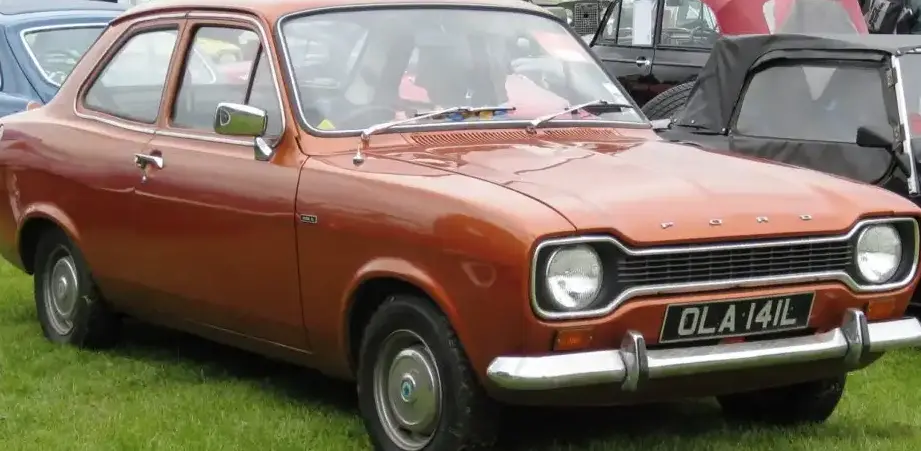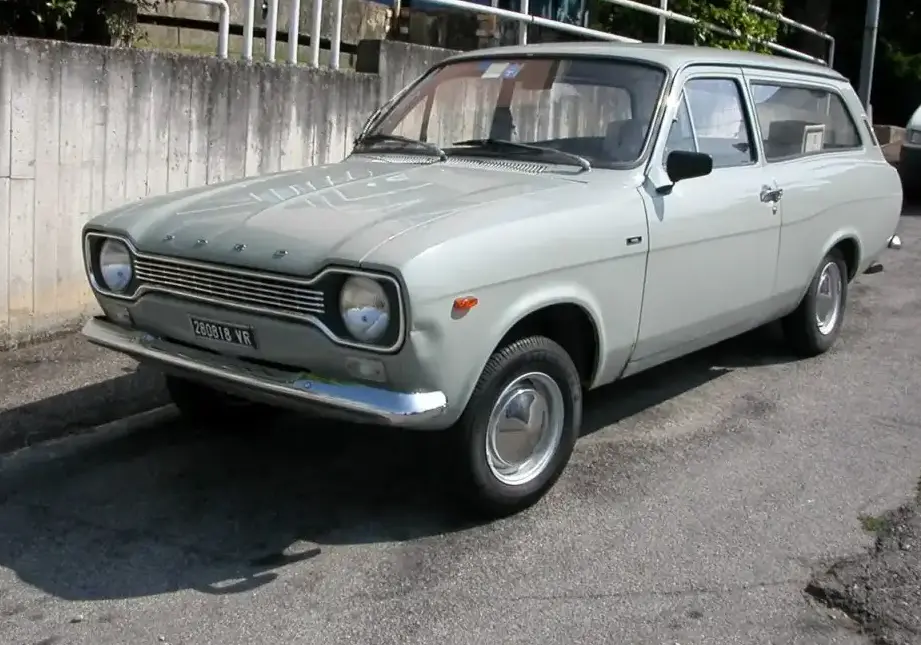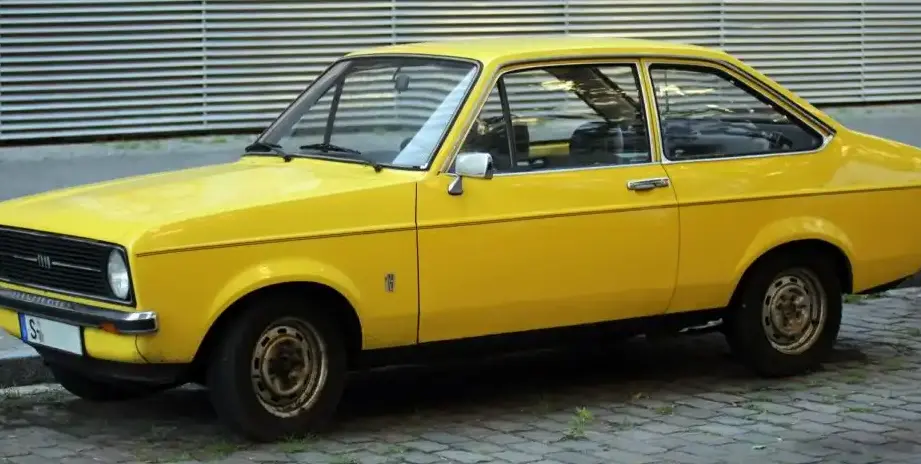
The Ford Escort II, produced between 1974 and 1980, represented a significant evolution of the original Escort, building upon its success as a compact family car. The 1.3-liter variant, producing 54 horsepower, occupied the entry-level position within the Escort II range. This model was primarily aimed at buyers seeking economical transportation, prioritizing fuel efficiency and affordability over outright performance. It played a crucial role in Ford’s European lineup during a period of increasing fuel costs and a growing demand for smaller, more practical vehicles. While the Escort II was sold in various global markets, its core development and sales were concentrated in Europe, with limited direct sales in the United States.
Technical Specifications
| Brand | Ford |
| Model | Escort |
| Generation | Escort II (ATH) |
| Type (Engine) | 1.3 (54 Hp) |
| Start of Production | 1974 |
| End of Production | 1980 |
| Powertrain Architecture | Internal Combustion Engine |
| Body Type | Sedan |
| Fuel Type | Petrol (Gasoline) |
| Power | 54 Hp |
| Engine Aspiration | Naturally Aspirated |
Powertrain & Engine Architecture
The 1.3-liter engine powering the base Escort II was a naturally aspirated inline-four cylinder unit. While specific engine codes varied slightly depending on the market, it generally featured a single overhead camshaft (SOHC) design. This engine, though modest in output, was known for its durability and simplicity. Fuel delivery was managed by a single downdraft carburetor, a common feature for vehicles of this era aiming for cost-effectiveness. The engine’s bore and stroke dimensions contributed to its relatively long-stroke configuration, favoring low-end torque over high-revving power. The 1.3-liter engine was paired exclusively with a four-speed manual transmission in most markets, though a three-speed automatic transmission was offered as an optional extra, albeit less commonly selected due to its impact on fuel economy and performance. The automatic transmission was a Ford-sourced unit, designed for smooth, if not particularly sporty, operation.
Driving Characteristics
The 1.3-liter Escort II offered a decidedly unhurried driving experience. With only 54 horsepower on tap, acceleration was modest, and overtaking required careful planning. The four-speed manual transmission allowed drivers to make the most of the available power, keeping the engine within its optimal operating range. The automatic transmission, while providing convenience, further diminished acceleration and increased fuel consumption. The Escort II’s suspension, consisting of MacPherson struts at the front and a leaf spring rear suspension, provided a comfortable ride, prioritizing smoothness over sharp handling. Steering was relatively light, making it easy to maneuver in urban environments. Compared to the higher-output 1.6-liter versions of the Escort II, the 1.3-liter model felt significantly slower and less responsive. However, it excelled in providing economical and reliable transportation for everyday use.
Equipment & Trim Levels
The 1.3-liter Escort II typically represented the base trim level. Standard equipment was fairly basic, reflecting its position as an affordable family car. Interior appointments generally included cloth upholstery, vinyl floor coverings, and a simple dashboard layout. Features such as a radio, heater, and basic instrumentation were usually standard, but options like power steering, upgraded upholstery, and a sunroof were rarely fitted to this base model. The exterior typically featured steel wheels, chrome bumpers, and relatively simple trim. The focus was on functionality and durability rather than luxury or aesthetic embellishments. The L model offered a few more features, such as a better interior trim and some additional chrome detailing, but remained a fairly spartan offering compared to the Ghia or XR3 models.
Chassis & Braking
The Escort II utilized a body-on-frame construction, a common practice for vehicles of its era. The chassis was designed to provide a balance between rigidity and affordability. Front suspension consisted of MacPherson struts, while the rear employed a leaf spring setup. This configuration provided a comfortable ride but wasn’t particularly sporty. Braking systems varied depending on the market and year. Early models typically featured drum brakes on all four wheels, while later versions often incorporated front disc brakes for improved stopping power. The braking system was generally adequate for the vehicle’s performance capabilities, but lacked the sophistication of more modern systems. Steering was a recirculating ball system, providing relatively light steering effort but lacking precision compared to rack-and-pinion setups.
Market Reception & Comparison
The 1.3-liter Escort II was generally well-received as an economical and reliable family car. Critics acknowledged its affordability and fuel efficiency, but often noted its lack of performance. Compared to the 1.6-liter versions, the 1.3-liter model was significantly slower and less refined. However, it offered a lower purchase price and better fuel economy, making it an attractive option for budget-conscious buyers. The 1.6-liter models, while more expensive, provided a noticeable improvement in performance and were often preferred by drivers who valued driving enjoyment. The 1.3-liter Escort II competed with other small family cars of the era, such as the Vauxhall Viva, Austin Allegro, and Renault 5. It generally held its own in terms of reliability and affordability, but often lagged behind in terms of performance and features.
Legacy
The 1.3-liter Escort II, while not the most glamorous variant of the model, played a vital role in establishing the Escort’s reputation as a practical and dependable family car. The engine itself, while simple, proved to be remarkably durable and relatively easy to maintain. Today, the 1.3-liter Escort II is a relatively rare sight on the road, with many examples having succumbed to rust or been scrapped. However, those that remain are often cherished by enthusiasts for their simplicity and nostalgic appeal. The 1.3-liter engine, while not particularly powerful, is still capable of providing reliable transportation with proper maintenance. In the used car market, well-maintained examples of the 1.3-liter Escort II can command a modest premium, particularly among collectors and enthusiasts seeking a classic Ford from the 1970s. Its enduring appeal lies in its representation of a simpler era of automotive design and its embodiment of practical, affordable transportation.