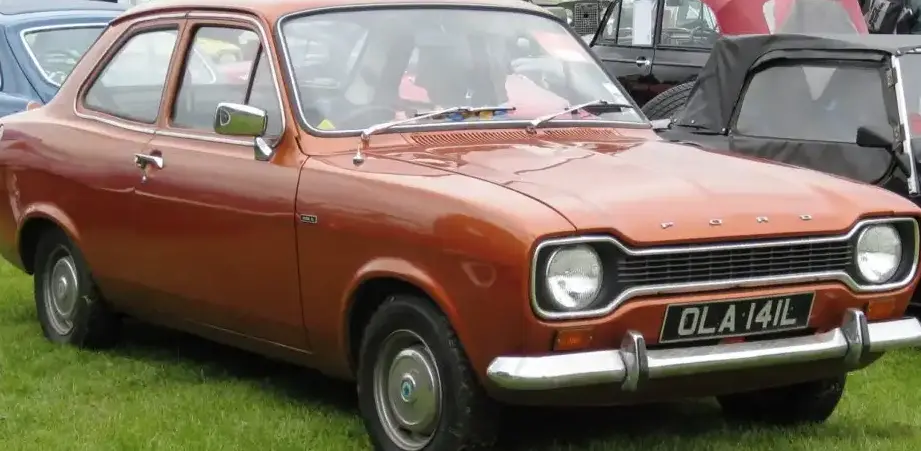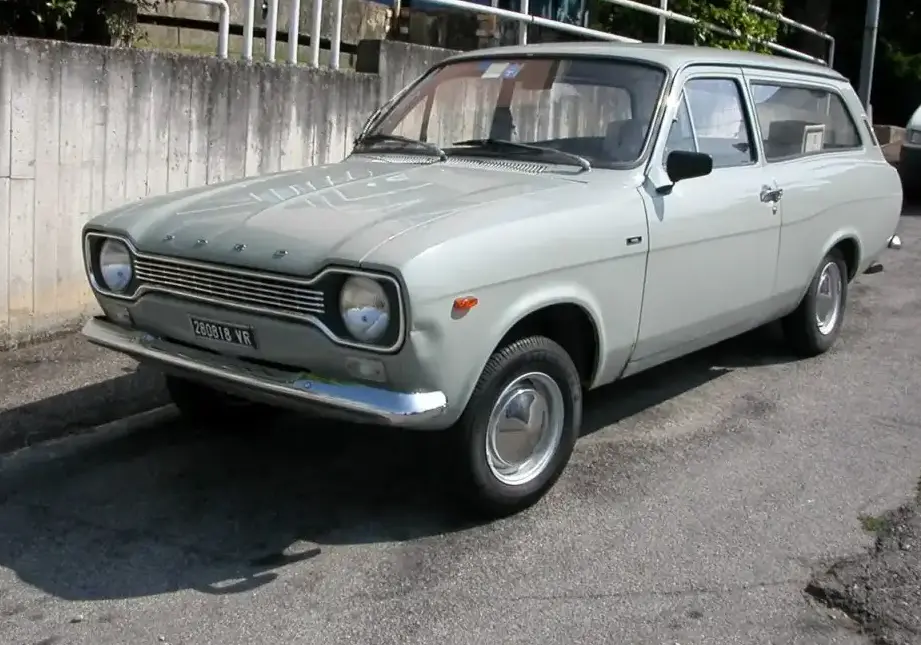
The Ford Escort II, produced between 1974 and 1979, represented a significant evolution of Ford of Britain’s popular Escort line. The ‘ATH’ designation refers to this second generation, which aimed to modernize the original while retaining the core characteristics that made the first Escort a success. Within the Escort II range, the 1.3-liter variant, producing 57 horsepower, served as the entry-level model, offering affordable transportation for a broad customer base. This version was particularly important in the UK and European markets where smaller, economical cars were in high demand. It was a direct competitor to vehicles like the Vauxhall Viva and the Austin Allegro.
Technical Specifications
| Brand | Ford |
| Model | Escort |
| Generation | Escort II (ATH) |
| Type (Engine) | 1.3 (57 Hp) |
| Start of production | November, 1974 |
| End of production | July, 1979 |
| Powertrain Architecture | Internal Combustion engine |
| Body type | Sedan |
| Seats | 5 |
| Doors | 4 |
| Fuel Type | Petrol (Gasoline) |
| Power | 57 Hp @ 5500 rpm |
| Power per litre | 43.9 Hp/l |
| Torque | 74 Nm @ 3000 rpm |
| Torque (lb-ft) | 54.58 lb.-ft. @ 3000 rpm |
| Engine layout | Front, Longitudinal |
| Engine displacement | 1298 cm3 |
| Engine displacement (cu. in.) | 79.21 cu. in. |
| Number of cylinders | 4 |
| Engine configuration | Inline |
| Cylinder Bore | 80.98 mm |
| Cylinder Bore (in.) | 3.19 in. |
| Piston Stroke | 62.99 mm |
| Piston Stroke (in.) | 2.48 in. |
| Number of valves per cylinder | 2 |
| Fuel injection system | Carburettor |
| Engine aspiration | Naturally aspirated engine |
| Valvetrain | OHV |
| Engine oil capacity | 3.25 l |
| Engine oil capacity (US qt) | 3.43 US qt |
| Engine oil capacity (UK qt) | 2.86 UK qt |
| Coolant | 6 l |
| Coolant (US qt) | 6.34 US qt |
| Coolant (UK qt) | 5.28 UK qt |
| Trunk (boot) space – minimum | 385 l |
| Trunk (boot) space – minimum (cu. ft.) | 13.6 cu. ft. |
| Fuel tank capacity | 41 l |
| Fuel tank capacity (US gal) | 10.83 US gal |
| Fuel tank capacity (UK gal) | 9.02 UK gal |
| Length | 3977 mm |
| Length (in.) | 156.57 in. |
| Width | 1570 mm |
| Width (in.) | 61.81 in. |
| Height | 1406 mm |
| Height (in.) | 55.35 in. |
| Wheelbase | 2401 mm |
| Wheelbase (in.) | 94.53 in. |
| Minimum turning circle (turning diameter) | 8.9 m |
| Minimum turning circle (turning diameter) (ft) | 29.2 ft. |
| Drivetrain Architecture | The Internal combustion engine (ICE) drives the rear wheels of the vehicle. |
| Drive wheel | Rear wheel drive |
| Number of gears and type of gearbox | 4 gears, manual transmission |
| Front suspension | Independent, type McPherson with coil spring and anti-roll bar |
| Rear suspension | Leaf spring |
| Front brakes | Disc, 21.8 mm |
| Rear brakes | Drum, 20.3 mm |
| Steering type | Steering rack and pinion |
Powertrain & Engine Architecture
The heart of the Escort II 1.3 was the 1298cc inline-four cylinder engine. This engine, often referred to by its internal code, utilized a simple overhead valve (OHV) valvetrain and a single downdraft carburetor for fuel delivery. The carburetor, typically a Ford-manufactured unit, was responsible for mixing air and fuel in the correct proportions for combustion. The engine’s relatively low compression ratio (typically around 8.8:1) was a design choice aimed at maximizing fuel economy and allowing the engine to run on lower octane fuel, common in many European markets. The engine was mounted longitudinally in the front of the vehicle, driving the rear wheels. The four-speed manual transmission was a standard feature, providing a straightforward and reliable means of transferring power to the drivetrain. The transmission was not known for its particularly short ratios, prioritizing fuel efficiency over outright acceleration.
Driving Characteristics
The 1.3-liter Escort II was not a performance car. With only 57 horsepower on tap, acceleration was modest, and overtaking required careful planning. However, the car was surprisingly nimble and enjoyable to drive, thanks to its relatively light weight and well-tuned suspension. The McPherson strut front suspension provided decent handling, while the leaf spring rear suspension, though simpler, offered a comfortable ride. The four-speed manual transmission had relatively long gearing, which further emphasized fuel economy. Compared to the more powerful 1.6-liter and even the later 1.6-liter fuel-injected versions, the 1.3 felt significantly slower. The difference was particularly noticeable on inclines or when carrying a full load of passengers. However, the 1.3’s simplicity and ease of driving made it a popular choice for novice drivers and those seeking a practical, economical vehicle.
Equipment & Trim Levels
The 1.3-liter Escort II was typically offered in a basic trim level. Standard features included cloth upholstery, vinyl floor covering, and a basic instrument panel. The dashboard was functional but lacked the more sophisticated features found in higher-spec models. Optional extras included a radio, heated rear window, and upgraded upholstery. The exterior trim was minimal, with black plastic bumpers and relatively simple steel wheels. The focus was on providing a functional and affordable vehicle, rather than luxury or extravagance.
Chassis & Braking
The Escort II utilized a body-on-frame construction, which was common for the era. The chassis was relatively simple and robust, providing a solid foundation for the vehicle. The front suspension featured independent McPherson struts with coil springs and an anti-roll bar, while the rear suspension employed leaf springs. Braking was accomplished via disc brakes on the front wheels and drum brakes on the rear. The brakes were adequate for the car’s performance, but lacked the stopping power of more modern systems. Steering was via a rack and pinion system, providing precise and responsive handling.
Market Reception & Comparison
The Escort II 1.3 was well-received in its target market. Critics praised its fuel economy, reliability, and affordability. However, its lack of power was often noted. Compared to the higher-spec Escort II models, such as the 1.6 GL, the 1.3 offered significantly less performance. The 1.6 GL, with its larger engine and more sophisticated features, appealed to drivers who prioritized performance and comfort. The 1.3, however, remained a popular choice for those seeking a practical and economical vehicle. Its fuel economy was notably better than the 1.6-liter models, making it an attractive option for budget-conscious buyers.
Legacy
The Ford Escort II 1.3, while not the most powerful or luxurious version of the Escort II, remains a fondly remembered classic. Its simple, robust design and reliable powertrain have ensured that many examples are still on the road today. The 1.3-liter engine is known for its durability, and maintenance is relatively straightforward. In the used car market, these Escorts are often sought after by enthusiasts and collectors, particularly those looking for a classic British Ford. While values have been steadily increasing, they remain relatively affordable, making them an accessible entry point into the world of classic car ownership. The Escort II 1.3 represents a significant chapter in Ford’s history, embodying the spirit of affordable, reliable transportation that defined the era.