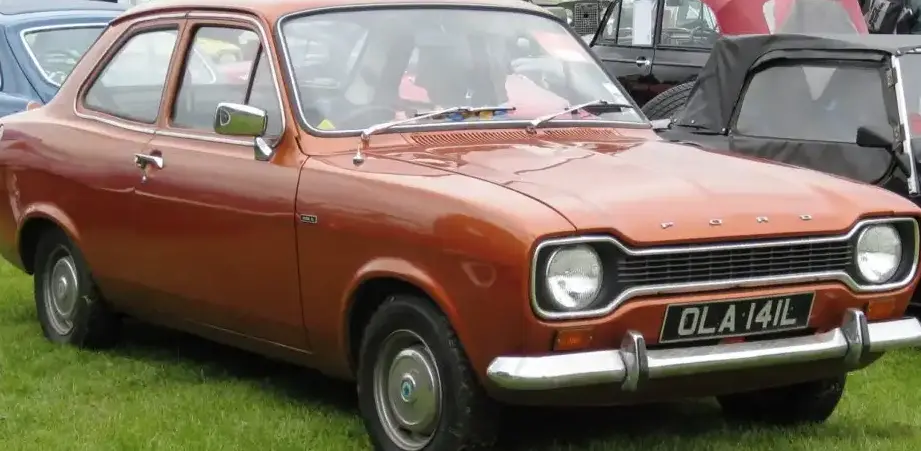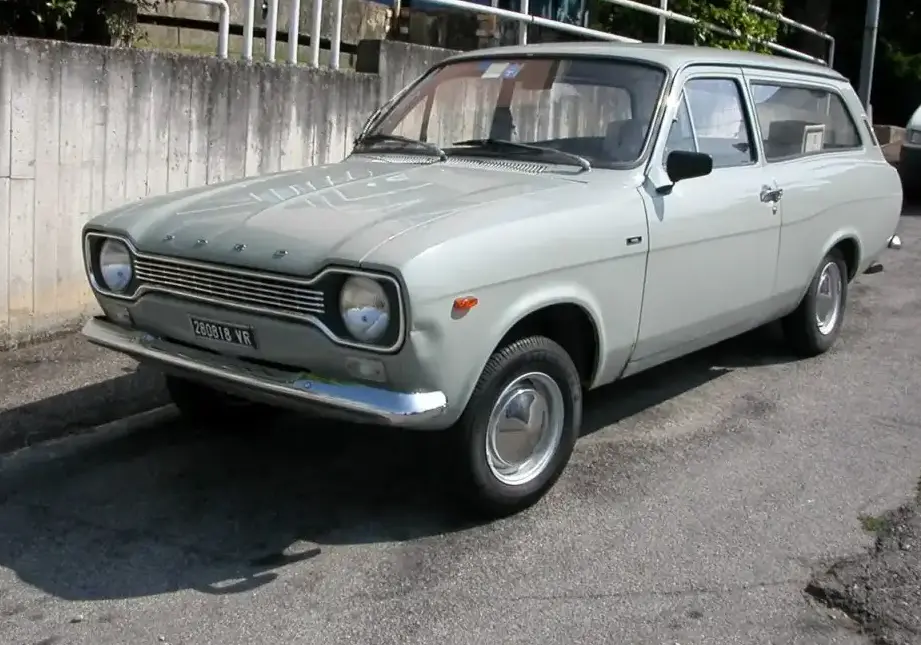
The Ford Escort II 2.0 RS, produced between 1975 and 1980, represented a performance-oriented variant within the broader Escort II (ATH) range. Positioned as a sporty upgrade over the standard Escort models, the 2.0 RS aimed to deliver a more engaging driving experience. It was a key part of Ford’s strategy to offer a rally-inspired road car, capitalizing on the Escort’s success in motorsport. The Escort II, launched in 1975, was a significant update to the original Escort, offering improved refinement and a more modern appearance. The RS model, in particular, was designed to appeal to enthusiasts seeking a blend of practicality and performance in a compact package.
Technical Specifications
| Brand | Ford |
| Model | Escort |
| Generation | Escort II (ATH) |
| Type | 2.0 RS (110 Hp) |
| Start of Production | 1975 |
| End of Production | 1980 |
| Powertrain Architecture | Internal Combustion Engine |
| Body Type | Sedan |
| Fuel Type | Petrol (Gasoline) |
| Power | 110 Hp |
| Engine Aspiration | Naturally Aspirated |
Powertrain & Engine Architecture
The heart of the Escort II 2.0 RS was the 1993cc, inline-four cylinder engine. This engine, based on Ford’s Zetec architecture (though not the later Zetec-E), featured a cast iron block and an aluminum cylinder head. It utilized a single overhead camshaft (SOHC) design, operating two valves per cylinder. Fuel delivery was managed by a Weber 32/36 DGV carburetor, a common setup for performance cars of the era. While not as sophisticated as fuel injection, the Weber carburetor provided adequate fuel atomization for the engine’s output. The engine’s compression ratio was approximately 9.0:1, contributing to its respectable power output for the time. The 2.0 RS engine differed significantly from the standard Escort engines, which typically featured smaller displacements and lower power outputs. The engine was mated to a four-speed manual transmission, chosen for its durability and direct connection to the drivetrain. This transmission featured a close-ratio gearset designed to maximize acceleration and maintain engine speed during spirited driving.
Driving Characteristics
The Escort II 2.0 RS offered a noticeably more engaging driving experience compared to the standard Escort models. The 110 horsepower engine provided brisk acceleration, particularly in the lower gears. While not a high-revving engine, it delivered a usable amount of torque throughout the rev range, making it suitable for both everyday driving and more enthusiastic pursuits. The four-speed manual transmission allowed for precise gear selection, and the close ratios helped to keep the engine in its power band. Handling was a strong point of the 2.0 RS, thanks to its well-tuned suspension and relatively lightweight construction. The car felt nimble and responsive, with good steering feel. Compared to the lower-powered Escort variants, the 2.0 RS offered a more direct and connected driving experience. It wasn’t as raw or demanding as some of its contemporary rivals, like the Vauxhall Nova SR, but it provided a good balance of performance and usability. The car’s relatively short wheelbase contributed to its agility, but it also meant that the ride could be somewhat firm, especially on rough surfaces.
Equipment & Trim Levels
The Escort II 2.0 RS was generally well-equipped for its time, although it wasn’t a luxury car. Standard features included a basic instrument cluster with speedometer, fuel gauge, and temperature gauge. The interior typically featured cloth upholstery, and the seats offered reasonable support. A basic AM/FM radio was often included, and options such as a vinyl roof and upgraded sound system were available. The RS trim level also included some cosmetic enhancements, such as a sporty steering wheel and unique badging. The dashboard layout was functional and straightforward, with all controls within easy reach of the driver. The interior trim was generally durable, although it could show its age over time. Compared to the base Escort models, the 2.0 RS featured a more refined interior with higher-quality materials and a more sporty appearance.
Chassis & Braking
The Escort II 2.0 RS utilized a MacPherson strut front suspension and a leaf spring rear suspension. This setup provided a good balance of handling and ride comfort, although the leaf spring rear suspension could be prone to some axle tramp under hard acceleration. The front suspension featured anti-roll bar to reduce body roll during cornering. Braking was handled by disc brakes on the front wheels and drum brakes on the rear wheels. While the disc/drum setup was adequate for most driving conditions, it wasn’t as powerful or fade-resistant as a full disc brake system. The braking system was generally reliable, but it required regular maintenance to ensure optimal performance. The chassis of the Escort II was relatively lightweight, which contributed to its agility and handling. The car’s unibody construction provided good structural rigidity, although it was not as strong as some of its more modern counterparts.
Market Reception & Comparison
The Escort II 2.0 RS was generally well-received by automotive critics and enthusiasts. It was praised for its performance, handling, and overall driving experience. However, some critics noted that the carburetor could be finicky and that the interior was somewhat basic. Compared to other performance cars of the era, such as the Vauxhall Nova SR and the Ford Capri, the Escort II 2.0 RS offered a good balance of performance, practicality, and affordability. It was a popular choice among young drivers and those seeking a sporty and reliable compact car. Fuel economy was reasonable for a performance car of the 1970s, averaging around 25-30 miles per gallon. Reliability was generally good, although regular maintenance was essential to prevent problems. The 2.0 RS was considered to be a more reliable and durable option than some of its more exotic rivals.
Legacy
The Ford Escort II 2.0 RS has become a sought-after classic car among enthusiasts. Its combination of performance, affordability, and rally-inspired heritage has made it a popular choice for restoration and modification. The 2.0 RS engine is known for its durability and relatively simple design, making it a relatively easy engine to maintain and repair. However, finding original parts can be challenging, and prices for these parts have been steadily increasing in recent years. Today, well-maintained examples of the Escort II 2.0 RS can command significant prices in the used car market. The car remains a testament to Ford’s commitment to producing affordable and engaging performance cars. Its influence can still be seen in modern Ford models, which continue to prioritize driving dynamics and sporty styling.