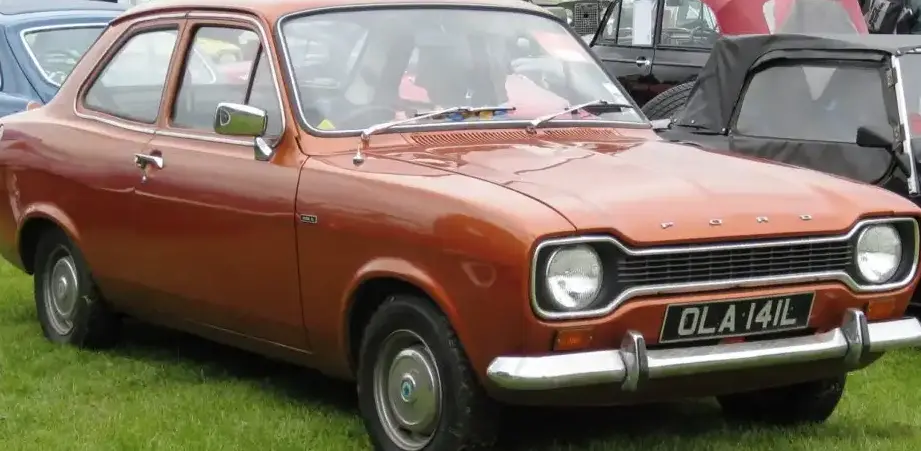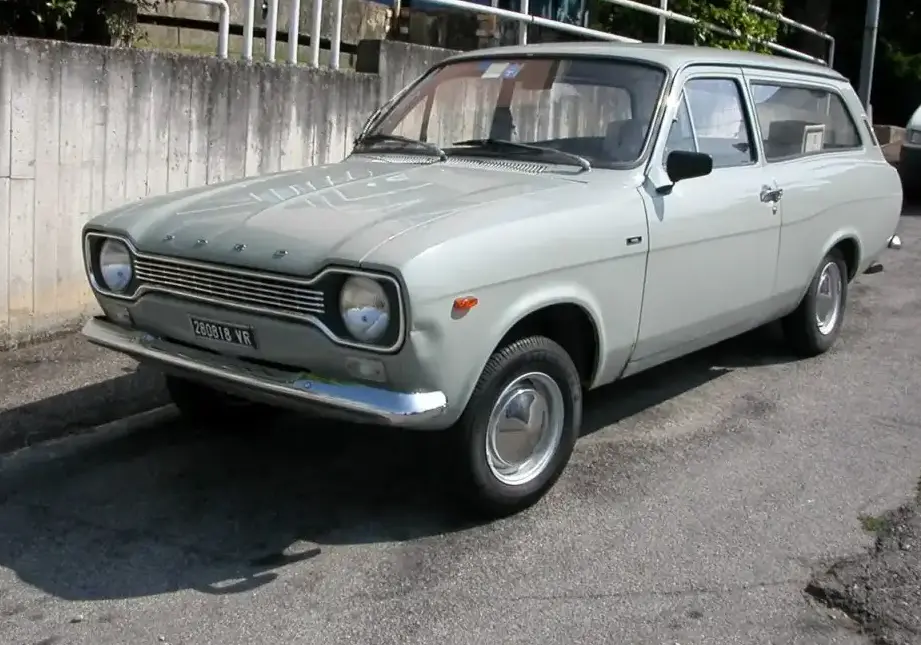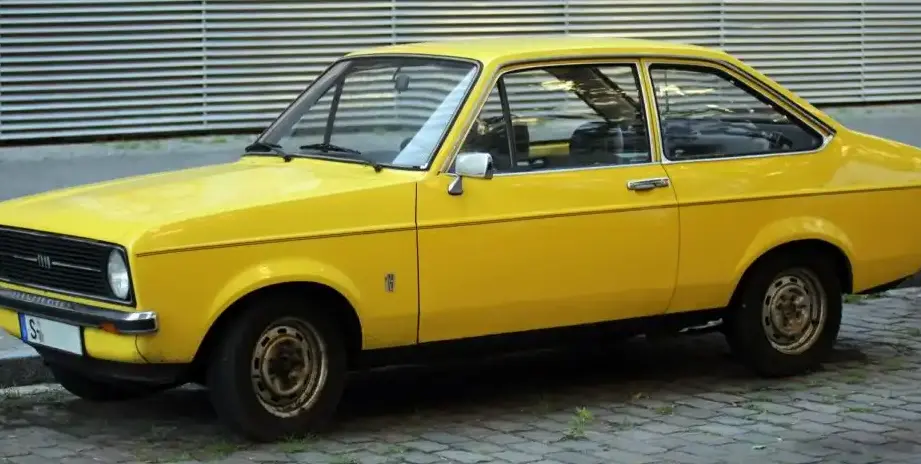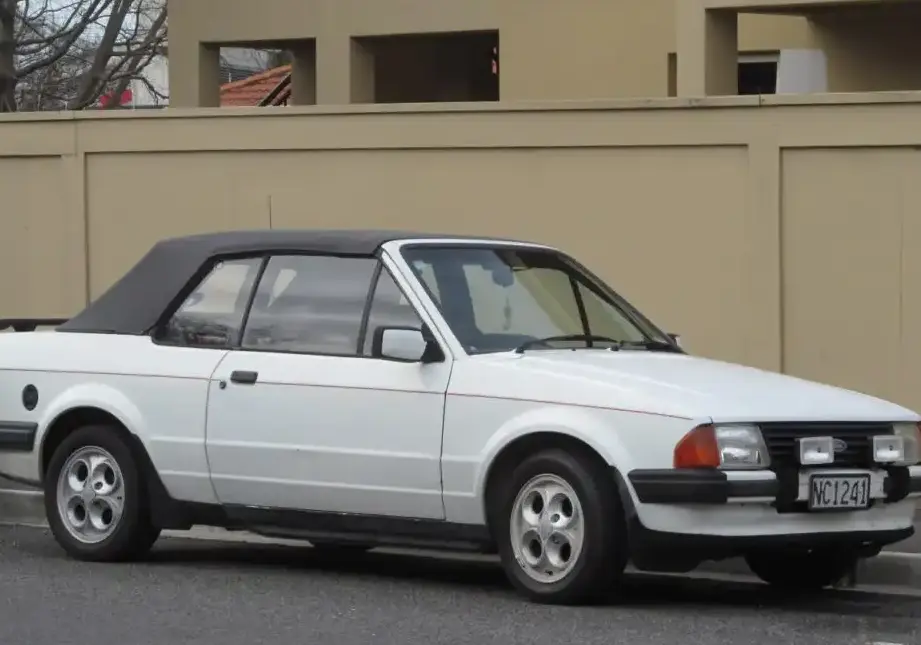
The Ford Escort III Cabriolet, produced between 1983 and 1985, represented Ford of Europe’s entry into the increasingly popular convertible market. Based on the Mk III Escort saloon and estate, the Cabriolet (designated ALD) offered open-air motoring at a relatively affordable price point. This particular variant, powered by a 1.3-liter engine producing 69 horsepower, served as the base model in the Cabriolet range, aimed at buyers prioritizing style and accessibility over outright performance. It was a key part of Ford’s strategy to broaden the Escort’s appeal and compete with rivals like the Volkswagen Cabriolet and Opel Astra Cabriolet.
Technical Specifications
| Brand | Ford |
| Model | Escort |
| Generation | Escort III Cabrio (ALD) |
| Type (Engine) | 1.3 (69 Hp) |
| Start of production | 1983 |
| End of production | 1985 |
| Powertrain Architecture | Internal Combustion Engine |
| Body type | Cabriolet |
| Fuel Type | Petrol (Gasoline) |
| Power | 69 Hp |
| Engine Aspiration | Naturally Aspirated |
Powertrain & Engine Architecture
The Escort III Cabriolet 1.3 utilized the Ford CVH (Compound Valve angle Hemispherical) engine, specifically the 1297cc variant. This engine, first introduced in the early 1980s, was a relatively simple and robust design. It featured an eight-valve, single overhead camshaft configuration. Fuel delivery was managed by a Weber 32/36 DGV carburetor, a common setup for European Fords of this era. While not particularly sophisticated, the carburetor provided adequate fuel atomization for the engine’s modest power output. The engine’s bore and stroke measured 79.0 mm x 80.6 mm, resulting in a compression ratio of 9.0:1.
The 69 horsepower was transmitted to the front wheels through a four-speed manual transmission as standard. A three-speed automatic transmission was offered as an optional extra, though it was less common due to its impact on fuel economy and performance. The automatic transmission, a Ford-sourced unit, was known for its smooth operation but relatively slow shift times. The engine’s torque output was approximately 88 lb-ft at 3,600 rpm, providing reasonable low-end grunt for everyday driving. The CVH engine, while durable, was known to be somewhat prone to oil leaks as it aged, particularly around the valve cover and oil pan gaskets.
Driving Characteristics
The 1.3-liter Escort Cabriolet offered a relaxed and comfortable driving experience. Acceleration was modest, with a 0-60 mph time estimated around 14-15 seconds. Top speed was approximately 95 mph, though maintaining that speed for extended periods was not practical. The four-speed manual transmission allowed drivers to make the most of the engine’s limited power, while the optional automatic, while convenient, noticeably dulled performance. The Cabriolet’s suspension, derived from the standard Escort Mk III, provided a reasonable compromise between ride comfort and handling. The steering was light and responsive, making it easy to maneuver in urban environments. However, the Cabriolet’s open-top construction and relatively lightweight chassis meant it was susceptible to body flex, particularly on uneven road surfaces. Compared to the 1.6-liter versions, the 1.3 felt noticeably slower, especially when fully loaded with passengers and luggage.
Equipment & Trim Levels
The base 1.3-liter Escort Cabriolet was relatively sparsely equipped, reflecting its position as the entry-level model. Standard features typically included cloth upholstery, a basic instrument panel with speedometer, fuel gauge, and temperature gauge, and a two-spoke steering wheel. Power steering and central locking were not standard, but were available as optional extras. The Cabriolet’s soft top was manually operated and came with a tonneau cover for added security and weather protection. Interior trim was generally functional rather than luxurious, with hard-wearing plastics and simple door panels. Optional extras included upgraded stereo systems, alloy wheels, and more comfortable seats. The color palette for the interior was limited to a few basic options, typically shades of grey or blue.
Chassis & Braking
The Escort III Cabriolet shared its chassis with the standard Escort Mk III, featuring independent front suspension with MacPherson struts and a twist-beam rear axle. The front brakes were disc brakes, while the rear brakes were typically drum brakes, although some later models featured rear disc brakes as an upgrade. The braking system was hydraulically operated and provided adequate stopping power for the car’s weight and performance. The steering was a rack-and-pinion system, offering precise and responsive handling. The Cabriolet’s suspension was tuned for comfort, resulting in a relatively soft ride. However, the lack of a rigid roof structure meant that the chassis was more prone to flex than the saloon or estate versions. Stabilizer bars were fitted to both the front and rear axles to reduce body roll during cornering.
Market Reception & Comparison
The Escort III Cabriolet 1.3 was generally well-received by critics as an affordable and stylish open-top car. However, its performance was often criticized as being underwhelming, particularly compared to rivals like the Volkswagen Cabriolet. Fuel economy was reasonable for the time, averaging around 35-40 mpg. Reliability was generally good, although the CVH engine was known to be prone to oil leaks as it aged. The 1.6-liter versions of the Cabriolet offered significantly better performance, but at a higher price point. The 1.3-liter model appealed to buyers who prioritized style and affordability over outright speed. It was a popular choice for young drivers and those looking for a fun and practical everyday car.
Legacy
The Escort III Cabriolet 1.3 remains a popular choice among classic car enthusiasts today. Its simple mechanicals and relatively low running costs make it an attractive option for those looking for a classic convertible. Parts availability is generally good, although some specific trim pieces can be difficult to find. The CVH engine, while not the most powerful, is known for its durability and ease of maintenance. The Cabriolet’s open-top design and classic styling continue to appeal to a wide range of buyers. Values for well-maintained examples have been steadily increasing in recent years, reflecting the growing demand for affordable classic cars. While not a performance icon, the Escort III Cabriolet 1.3 holds a significant place in automotive history as a stylish and accessible entry into the world of open-top motoring.