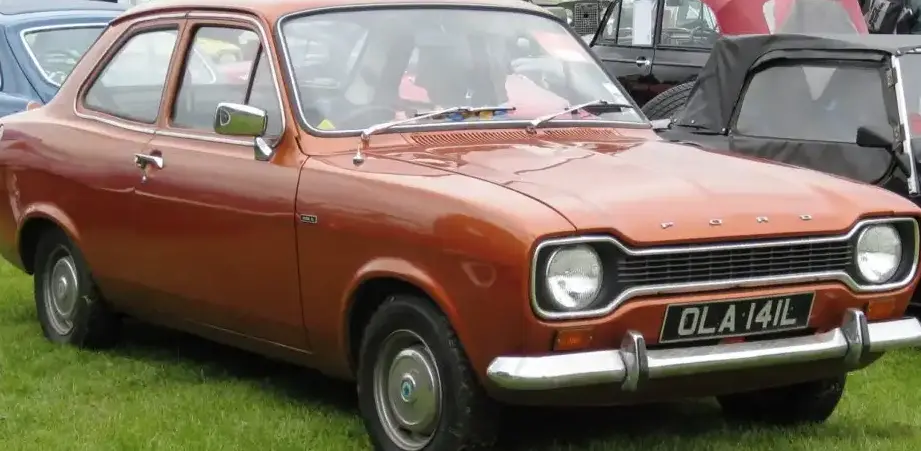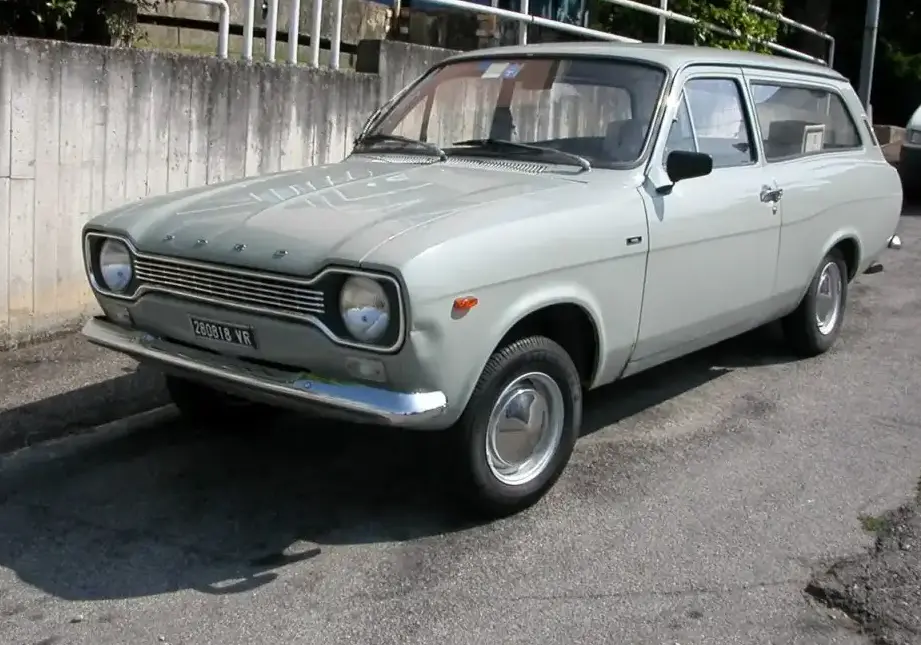
The Ford Escort IV, produced between 1986 and 1990, represented a significant evolution of Ford’s popular compact car. Within the Escort IV range, the 1.1-liter (50 horsepower) variant, designated by engine code GSG, occupied the entry-level position. This model was primarily aimed at buyers seeking economical transportation, prioritizing fuel efficiency and affordability over outright performance. It was a mainstay in the European market, particularly in the United Kingdom and Germany, where the Escort consistently ranked among the best-selling vehicles. The Escort IV, built on the GAF, AWF, and ABFT platforms, offered a practical and reliable solution for everyday driving needs, and the 1.1L model was a key component of its success.
Technical Specifications
| Brand | Ford |
| Model | Escort |
| Generation | Escort IV (GAF, AWF, ABFT) |
| Type (Engine) | 1.1 (50 Hp) |
| Start of Production | 1986 |
| End of Production | 1990 |
| Powertrain Architecture | Internal Combustion Engine |
| Body Type | Hatchback |
| Fuel Type | Petrol (Gasoline) |
| Power | 50 Hp |
| Engine Model/Code | GSG |
| Engine Aspiration | Naturally Aspirated |
Powertrain & Engine Architecture
The heart of the Escort IV 1.1 was the Ford GSG engine, a 1.1-liter inline-four cylinder petrol engine. This engine was a relatively simple design, reflecting the focus on cost-effectiveness. It featured a single overhead camshaft (SOHC) operating two valves per cylinder. Fuel delivery was managed by a single-point fuel injection system, a common feature for engines of this era aiming for improved efficiency compared to carbureted systems. The GSG engine produced 50 horsepower at approximately 5,000 rpm and 68 lb-ft of torque at 3,000 rpm. The engine’s relatively low compression ratio (typically around 8.8:1) contributed to its ability to run on lower octane fuel, further reducing running costs. The transmission offered was typically a four-speed manual, though a three-speed automatic was available as an option, albeit less common. The automatic transmission, while providing convenience, noticeably impacted the car’s acceleration and fuel economy.
Driving Characteristics
The Escort IV 1.1, particularly in its base specification, was not designed for spirited driving. Acceleration was modest, taking approximately 16-18 seconds to reach 60 mph. The engine felt strained at higher speeds, and overtaking required careful planning. The four-speed manual transmission offered a more engaging driving experience and allowed the driver to make better use of the engine’s limited power band. The optional three-speed automatic, while smooth, further dulled performance. Gear ratios were optimized for fuel economy rather than acceleration. Handling was typical of front-wheel-drive cars of the period – safe and predictable, but not particularly sporty. The suspension, consisting of MacPherson struts at the front and a twist-beam rear axle, provided a comfortable ride on most road surfaces, but body roll was noticeable during cornering. The steering was light and easy, making it well-suited for urban driving.
Equipment & Trim Levels
The Escort IV 1.1 typically came with a basic level of equipment. Standard features included cloth upholstery, a basic instrument cluster, and manually adjustable front seats. Power steering was not standard, but often available as an option. The interior was functional and durable, prioritizing practicality over luxury. Trim levels were relatively simple. The base model offered minimal frills, while higher trims, such as the ‘Popular’ or ‘LX’, added features like a radio, upgraded upholstery, and exterior trim enhancements. Optional extras included a sunroof, central locking, and electric front windows, but these were rarely specified on the entry-level 1.1 model due to cost considerations. The dashboard layout was straightforward, with clearly labeled controls and a focus on ease of use.
Chassis & Braking
The Escort IV utilized a front-wheel-drive layout with a monocoque chassis. The front suspension employed MacPherson struts with an anti-roll bar, while the rear suspension featured a twist-beam axle. Braking was typically accomplished with disc brakes at the front and drum brakes at the rear. The braking system was adequate for the car’s performance, but lacked the stopping power of more powerful Escort variants equipped with all-round disc brakes. The steering was a rack-and-pinion system, providing reasonably precise control. Tire sizes were typically 175/70 R14, chosen for a balance of comfort and fuel efficiency. The chassis was designed to provide a comfortable ride and acceptable handling, prioritizing practicality over sporty dynamics.
Market Reception & Comparison
The Escort IV 1.1 was generally well-received as an affordable and reliable mode of transportation. Critics acknowledged its modest performance but praised its fuel economy and low running costs. Compared to other engines in the Escort IV lineup, such as the 1.6-liter and 1.8-liter versions, the 1.1 was significantly less powerful. The 1.6-liter offered a noticeable performance improvement, while the 1.8-liter provided a more refined driving experience. The 1.9-liter diesel, while slower in acceleration, offered superior fuel economy. The 1.1L model was often compared to competitors like the Vauxhall Nova and Austin Metro, offering a similar level of affordability and practicality. In terms of reliability, the GSG engine proved to be generally robust, although regular maintenance was essential to prevent issues such as oil leaks and timing chain wear.
Legacy
The Ford Escort IV 1.1, while not a performance icon, played a crucial role in making the Escort one of the best-selling cars in Europe. The GSG engine, despite its simplicity, proved to be a durable and reliable unit when properly maintained. Today, the Escort IV 1.1 is a relatively affordable classic car, appealing to enthusiasts seeking a nostalgic driving experience or a simple and inexpensive project car. Parts availability is generally good, although some trim-specific components can be difficult to find. The 1.1L automatic variant, while less desirable than the manual version, offers a unique and comfortable driving experience for those seeking a classic car with a touch of convenience. Its enduring appeal lies in its affordability, simplicity, and the nostalgic connection it provides to a bygone era of automotive design.