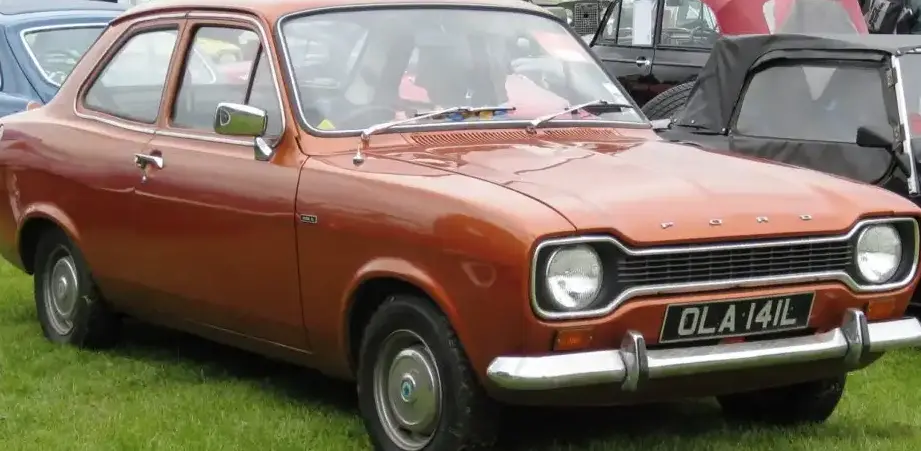
The Ford Escort IV, produced between 1985 and 1990, represented a significant evolution of Ford of Europe’s popular compact car. Within the Escort IV range (chassis codes GAF, AWF, and ABFT), the 1.1-liter variant, designated by engine code GSG, occupied the entry-level position. This model was primarily aimed at buyers seeking economical transportation, prioritizing fuel efficiency and affordability over outright performance. It served as the gateway into the Escort lineup, offering a practical and reliable option for a broad customer base, particularly in European markets where smaller displacement engines were favored due to taxation and fuel costs. The Escort IV itself was a crucial model for Ford, building upon the success of its predecessors and establishing a strong presence in the competitive European small family car segment.
Technical Specifications
| Brand | Ford |
| Model | Escort |
| Generation | Escort IV (GAF, AWF, ABFT) |
| Type (Engine) | 1.1 (GAF) (50 Hp) |
| Start of Production | 1985 |
| End of Production | 1990 |
| Powertrain Architecture | Internal Combustion Engine |
| Body Type | Hatchback |
| Fuel Type | Petrol (Gasoline) |
| Power | 50 Hp |
| Engine Model/Code | GSG |
| Engine Aspiration | Naturally Aspirated |
Powertrain & Engine Architecture
The heart of the Escort IV 1.1 was the Ford GSG engine, a 1.1-liter (1088cc) inline-four cylinder petrol engine. This engine was a relatively simple design, reflecting its focus on cost-effectiveness and reliability. It featured a single overhead camshaft (SOHC) operating two valves per cylinder. Fuel delivery was managed by a single-barrel carburetor, a common feature for engines of this era and displacement. The GSG engine produced a modest 50 horsepower at approximately 5,000 rpm, and around 68 lb-ft of torque at 3,000 rpm. This power was delivered to the front wheels through a four-speed manual transmission, although a three-speed automatic transmission was also offered as an option, albeit less common. The automatic transmission, while providing ease of use, further reduced the car’s acceleration performance. The engine block was constructed from cast iron, contributing to its durability, while the cylinder head was made of aluminum alloy to reduce weight. The GSG engine was known for its relatively simple maintenance requirements, making it a popular choice for first-time car owners and those seeking a low-cost vehicle.
Driving Characteristics
The driving experience in the Escort IV 1.1 was characterized by its light and nimble handling, but limited acceleration. With only 50 horsepower on tap, the 0 to 60 mph time was a leisurely one, typically exceeding 15 seconds. The four-speed manual transmission allowed drivers to make the most of the available power, but even with careful gear selection, overtaking maneuvers required planning. The optional three-speed automatic transmission further dulled performance, resulting in even slower acceleration and a less engaging driving experience. The suspension, consisting of MacPherson struts at the front and a twist-beam rear axle, provided a comfortable ride, absorbing bumps and imperfections in the road reasonably well. Steering was light and precise, making the Escort easy to maneuver in urban environments. While not a performance car by any means, the Escort IV 1.1 offered a practical and predictable driving experience, well-suited for everyday commuting and short trips.
Equipment & Trim Levels
The Escort IV 1.1 typically came with a basic level of equipment, reflecting its position as the entry-level model. Standard features generally included cloth upholstery, a basic instrument cluster, and manually operated windows and door locks. Central locking and electric windows were not typically offered on this trim level. The interior was functional and durable, prioritizing practicality over luxury. Optional extras included a radio, heated rear window, and upgraded interior trim. The exterior styling was relatively understated, with black plastic trim and steel wheels being common features. Higher trim levels within the Escort IV range, such as the 1.6L models, offered more luxurious appointments, including upgraded upholstery, alloy wheels, and additional convenience features. The 1.1L model was often seen as a blank canvas for those seeking a basic, affordable car that could be upgraded over time.
Chassis & Braking
The Escort IV featured a front-wheel-drive layout and a monocoque chassis construction. The front suspension utilized MacPherson struts, providing a good balance of ride comfort and handling. The rear suspension employed a twist-beam axle, a cost-effective and space-efficient design. Braking on the Escort IV 1.1 typically consisted of disc brakes at the front and drum brakes at the rear. The braking system was adequate for the car’s performance, but lacked the stopping power of more powerful Escort variants equipped with all-round disc brakes. The steering was a rack-and-pinion system, providing precise and responsive steering feel. The chassis was relatively lightweight, contributing to the car’s nimble handling characteristics. Stabilizer bars were often omitted on the base 1.1L model to further reduce costs.
Market Reception & Comparison
The Escort IV 1.1 received mixed reviews from automotive critics. While praised for its fuel efficiency and affordability, it was often criticized for its lack of performance. Compared to its siblings, such as the 1.6L and 1.8L models, the 1.1L variant felt significantly underpowered. The 1.6L offered a noticeable improvement in performance, while the 1.8L provided a more refined driving experience. The 1.9 TDI diesel variant, introduced later in the Escort IV’s production run, offered excellent fuel economy and strong low-end torque, but lacked the smoothness of the petrol engines. In terms of reliability, the Escort IV 1.1 proved to be a reasonably dependable car, with the GSG engine being known for its durability. However, the carburetor required periodic adjustment and maintenance. Fuel economy was a strong point, with the 1.1L engine achieving around 45-50 mpg in typical driving conditions.
Legacy
The Ford Escort IV 1.1, while not the most exciting variant in the lineup, played a crucial role in making the Escort accessible to a wider range of buyers. Its affordability and fuel efficiency made it a popular choice for first-time car owners and those seeking economical transportation. Today, the Escort IV 1.1 is a relatively rare sight on the roads, but it remains a popular choice among classic car enthusiasts and those seeking a nostalgic driving experience. The GSG engine, while simple in design, proved to be a durable and reliable powerplant. Parts availability can be a challenge, but many components are still available through specialist suppliers. The Escort IV 1.1 represents a significant chapter in Ford’s history, embodying the spirit of affordable and practical motoring of the 1980s.