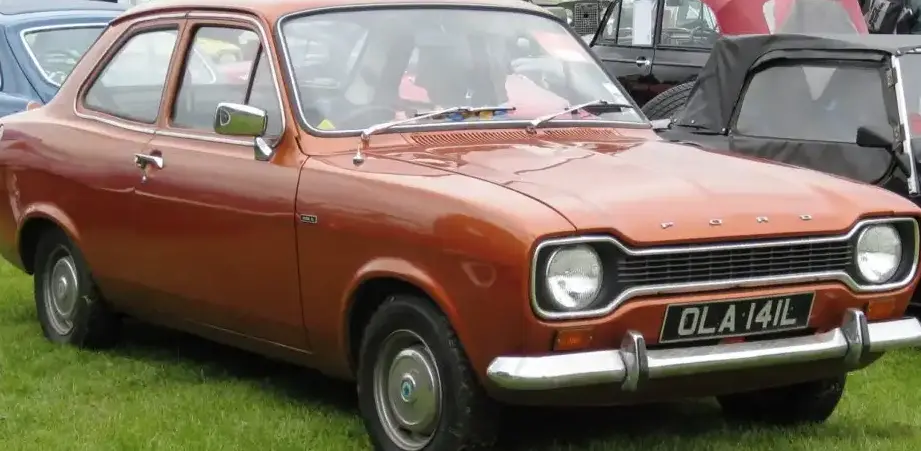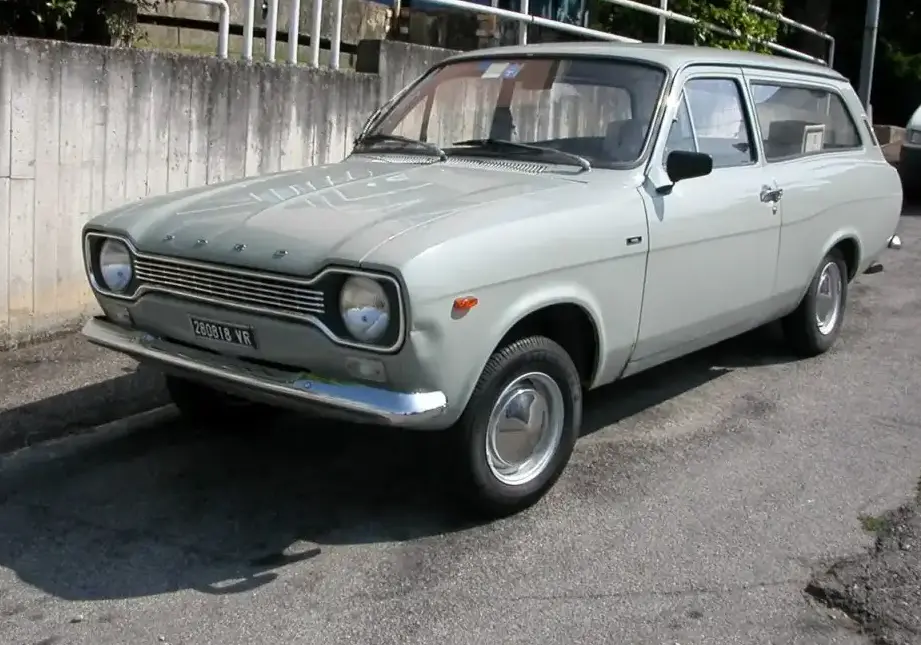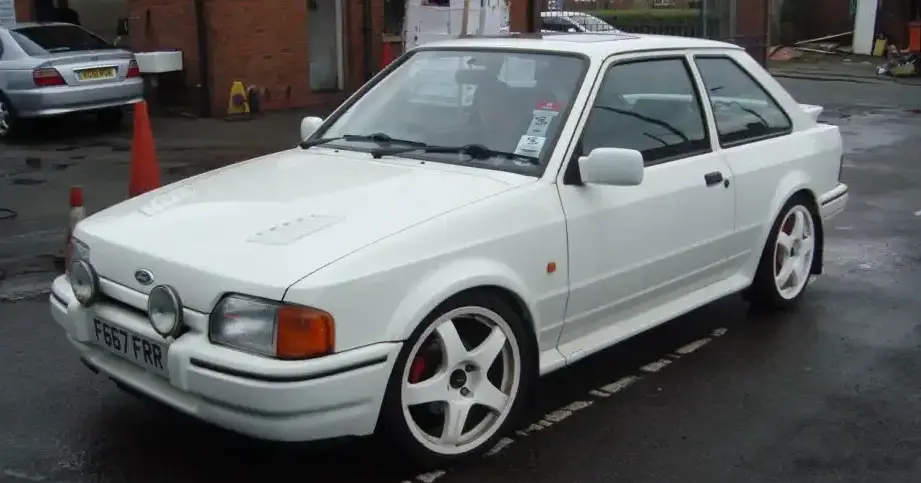
The Ford Escort IV, produced between 1986 and 1990, represented a significant evolution of Ford of Europe’s popular compact car. Within the Escort IV range (chassis codes GAF, AWF, and ABFT), the 1.4-liter, 73 horsepower variant occupied a crucial position as the entry-level model, offering affordable transportation to a broad customer base. This version was particularly important in markets where smaller displacement engines were favored due to taxation or fuel economy concerns. It served as the gateway into the Escort lineup, appealing to first-time buyers, families seeking economical motoring, and those prioritizing practicality over outright performance. The Escort IV itself was a key player in the competitive European small family car segment, facing rivals like the Vauxhall/Opel Astra, Volkswagen Golf, and Peugeot 205.
Technical Specifications
| Brand | Ford |
| Model | Escort |
| Generation | Escort IV (GAF, AWF, ABFT) |
| Type (Engine) | 1.4 (73 Hp) |
| Start of Production | 1986 |
| End of Production | 1990 |
| Powertrain Architecture | Internal Combustion Engine |
| Body Type | Hatchback |
| Fuel Type | Petrol (Gasoline) |
| Power | 73 Hp |
| Engine Model/Code | F6B, F6D, FUC |
| Engine Aspiration | Naturally Aspirated |
| Engine Oil Capacity | 3.5 l (3.7 US qt | 3.08 UK qt) |
| Coolant Capacity | 7.6 l (8.03 US qt | 6.69 UK qt) |
Powertrain & Engine Architecture
The 1.4-liter engine, designated with engine codes F6B, F6D, and FUC depending on the specific market and year, was a naturally aspirated, inline-four cylinder unit. It featured a single overhead camshaft (SOHC) design, operating two valves per cylinder. Fuel delivery was managed by a carburetor in earlier models, transitioning to single-point fuel injection in later iterations of the Escort IV. This injection system, while not as sophisticated as multi-point injection found in higher-spec Escorts, offered improvements in fuel economy and emissions compared to the carburetor. The engine’s relatively simple design prioritized reliability and ease of maintenance. The 73 horsepower output was achieved at approximately 5,500 rpm, with peak torque of around 88 lb-ft (120 Nm) delivered at 3,500 rpm. This engine was typically paired with a four-speed automatic transmission, although a five-speed manual gearbox was also available. The automatic transmission, while providing convenience, was known for its relatively slow shift times and tendency to hunt for gears, particularly under heavy load. It was a three-speed unit, designed for smooth, rather than sporty, operation.
Driving Characteristics
The Escort IV 1.4 Automatic offered a comfortable, if uninspiring, driving experience. Acceleration was modest, with a 0-60 mph time estimated around 14-16 seconds. The automatic transmission contributed to a relaxed driving style, but also limited responsiveness. The gear ratios were geared towards fuel efficiency rather than performance. Uphill climbs or overtaking maneuvers required careful planning and often necessitated a full throttle response, revealing the engine’s limited power reserves. Compared to the 1.6-liter versions of the Escort IV, or the later fuel-injected models, the 1.4 Automatic felt noticeably slower. The manual transmission variants of the 1.4 offered a more engaging driving experience and slightly improved performance, but the automatic was favored by buyers prioritizing ease of use. The suspension, while adequate, was tuned for comfort, resulting in a noticeable amount of body roll during cornering. Steering was light and easy, making it well-suited for urban driving.
Equipment & Trim Levels
The 1.4-liter Escort IV typically represented the base trim level. Standard equipment generally included cloth upholstery, a basic instrument cluster, and manual windows and door locks. Central locking and electric windows were usually optional extras. Interior plastics were durable but utilitarian, reflecting the car’s budget-conscious positioning. The dashboard layout was functional, with clearly labeled controls. Optional extras included a radio/cassette player, upgraded seat fabrics, and a sunroof. The exterior styling was relatively understated, with steel wheels and black plastic trim being common features. Higher trim levels, such as the Ghia, offered more luxurious appointments, including upgraded upholstery, alloy wheels, and additional features like power steering.
Chassis & Braking
The Escort IV utilized a MacPherson strut front suspension and a semi-independent twist beam rear suspension. This setup provided a reasonable balance between ride comfort and handling. The 1.4-liter models typically featured drum brakes on the rear wheels and disc brakes on the front. Braking performance was adequate for everyday driving, but lacked the stopping power of higher-spec Escorts equipped with all-round disc brakes. Stabilizer bars were often omitted on the base 1.4 models, contributing to increased body roll. The steering system was a rack-and-pinion setup, providing light and precise steering feel. The chassis was relatively lightweight, which helped to offset the engine’s modest power output.
Market Reception & Comparison
The Escort IV 1.4 Automatic was generally well-received as an affordable and practical family car. Critics praised its fuel economy and reliability, but noted its lack of performance. Compared to the 1.6-liter versions, the 1.4 offered significantly lower running costs but at the expense of driving enjoyment. The 1.6-liter models, particularly those with fuel injection, provided a more responsive and refined driving experience. However, they also came with a higher price tag. The 1.4 Automatic appealed to buyers who prioritized economy and ease of use over performance. It was a popular choice for city driving and short commutes. Fuel economy figures typically ranged from 32-38 mpg, depending on driving conditions.
Legacy
The Ford Escort IV 1.4 Automatic, while not a performance icon, remains a fondly remembered car for many. Its simple, robust engine and transmission proved to be relatively reliable, and parts availability remains good. Today, these Escorts are increasingly sought after by classic car enthusiasts and collectors, particularly well-maintained examples. While not commanding high prices, they represent an affordable entry point into classic Ford ownership. The 1.4-liter engine, while lacking the sophistication of more modern units, is relatively easy to maintain and repair. The automatic transmission, however, can be prone to wear and tear, and may require periodic servicing. Overall, the Escort IV 1.4 Automatic stands as a testament to Ford’s ability to produce affordable, practical, and reliable transportation for the masses.