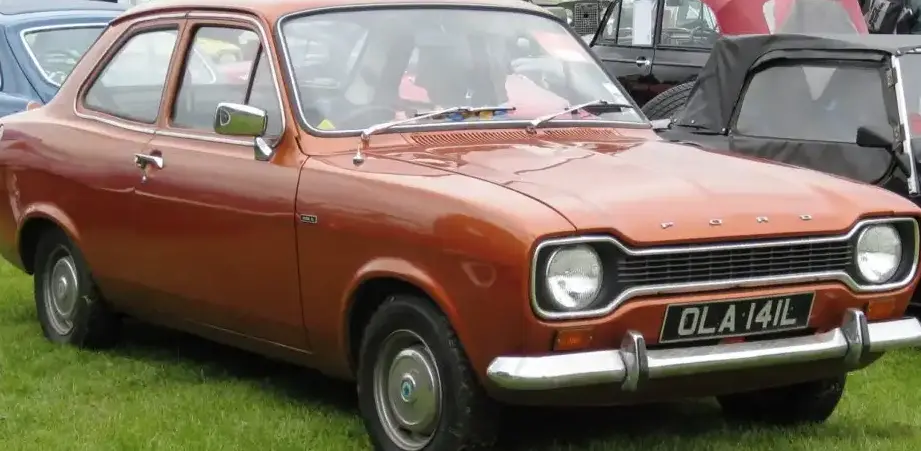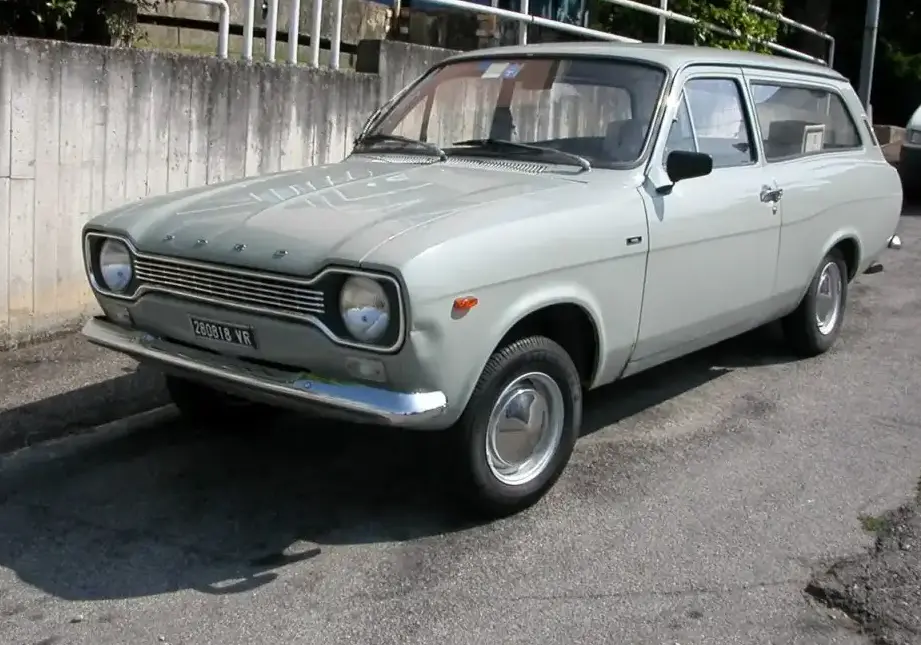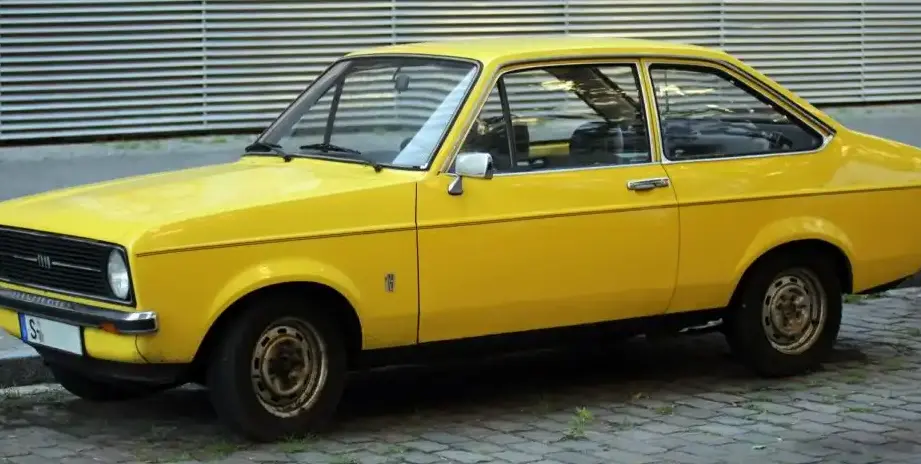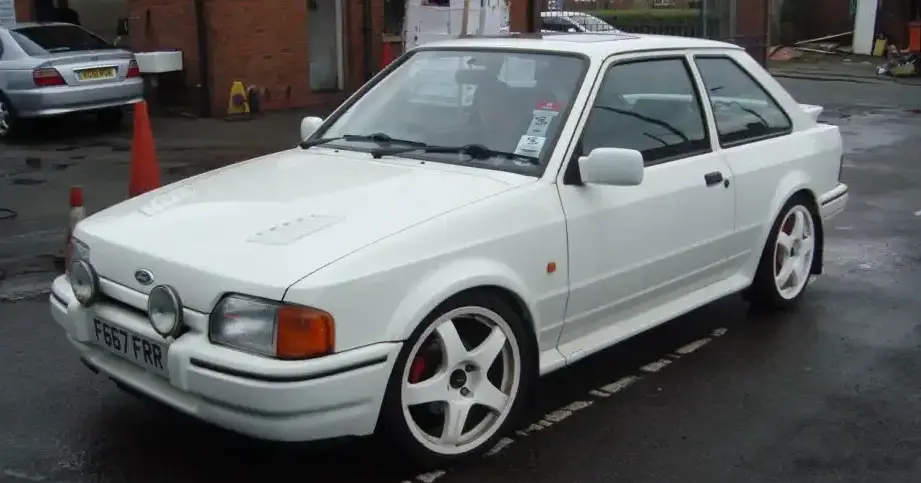
The Ford Escort IV, produced between 1986 and 1990, represented a significant evolution of Ford of Europe’s popular compact car. Within the Escort IV range (chassis codes GAF, AWF, and ABFT), the 1.4-liter, 75 horsepower variant occupied a crucial position as the entry-level model, offering affordable transportation to a broad customer base. This version was particularly important in markets where smaller, fuel-efficient vehicles were favored. It served as the gateway into the Escort lineup, appealing to first-time buyers, families seeking economical motoring, and those prioritizing practicality over outright performance. The Escort IV itself was a key player in the competitive European small family car segment, facing rivals like the Vauxhall/Opel Astra, Volkswagen Golf, and Peugeot 205.
Technical Specifications
| Brand | Ford |
| Model | Escort |
| Generation | Escort IV (GAF, AWF, ABFT) |
| Type (Engine) | 1.4 (75 Hp) |
| Start of Production | 1986 |
| End of Production | 1990 |
| Powertrain Architecture | Internal Combustion Engine |
| Body Type | Hatchback |
| Fuel Type | Petrol (Gasoline) |
| Power | 75 Hp |
| Engine Model/Code | FUA |
| Engine Aspiration | Naturally Aspirated |
| Engine Oil Capacity | 3.5 l (3.7 US qt | 3.08 UK qt) |
| Coolant Capacity | 7.6 l (8.03 US qt | 6.69 UK qt) |
Powertrain & Engine Architecture
The heart of the Escort IV 1.4 was the Ford FUA engine, a 1392cc inline-four cylinder petrol engine. This engine was a relatively simple design, utilizing a single overhead camshaft (SOHC) valvetrain with two valves per cylinder. Fuel delivery was managed by a single-point fuel injection system, a common feature for vehicles of this era aiming for a balance between cost and efficiency. While not as sophisticated as multi-point injection, it offered improvements over carbureted systems in terms of fuel economy and emissions. The FUA engine produced 75 horsepower at approximately 5,500 rpm and 88 lb-ft of torque at 3,500 rpm. The engine was known for its durability and relative ease of maintenance. The transmission paired with this engine was typically a four-speed manual, but a three-speed automatic transmission was also available, though less common. The automatic option, while providing convenience, noticeably impacted performance and fuel economy.
Driving Characteristics
The Escort IV 1.4, particularly in automatic guise, was not designed for spirited driving. Acceleration was modest, with a 0-60 mph time estimated around 14-16 seconds. The three-speed automatic transmission featured relatively widely spaced gear ratios, resulting in a noticeable delay in response when accelerating. The engine felt strained when pushed hard, and overtaking maneuvers required careful planning. Compared to the 1.6-liter versions of the Escort IV, the 1.4 offered significantly less power and torque. The manual transmission version provided a more engaging driving experience, allowing the driver to better utilize the available power. However, even with the manual, the 1.4 was primarily focused on providing economical and comfortable transportation rather than outright performance. The suspension, while adequate, was tuned for comfort, resulting in a slightly softer and less precise handling feel compared to sportier Escort variants.
Equipment & Trim Levels
The 1.4-liter Escort IV typically represented the base trim level. Standard equipment generally included cloth upholstery, a basic instrument cluster, and manual windows and door locks. Central locking and electric windows were usually optional extras. Interior plastics were durable but utilitarian. The dashboard layout was functional and straightforward, prioritizing ease of use over aesthetic appeal. Optional extras included a radio/cassette player, upgraded seat fabrics, and a sunroof. The Escort IV offered a range of body styles, including a three-door hatchback, a five-door hatchback, and a saloon (sedan). The 1.4 engine was available across all body styles, but the hatchback versions were the most popular.
Chassis & Braking
The Escort IV utilized a MacPherson strut front suspension and a semi-independent twist beam rear suspension. This setup provided a reasonable balance between ride comfort and handling. The front brakes were typically disc brakes, while the rear brakes were often drum brakes, particularly on the base 1.4 models. Higher trim levels and some later models featured rear disc brakes. Steering was rack and pinion, providing reasonably precise control. Stabilizer bars (anti-roll bars) were often optional on the 1.4, and their absence contributed to a slightly more pronounced body roll during cornering. The chassis was relatively lightweight, which helped to offset the modest power output of the 1.4 engine.
Market Reception & Comparison
The Escort IV 1.4 was generally well-received as an affordable and practical family car. Critics praised its fuel efficiency and durability, but noted its lack of performance. Compared to the higher-specification Escort models, such as the 1.6 and 1.8 versions, the 1.4 offered significantly less power and refinement. However, it was also considerably cheaper to purchase and operate. The 1.9-liter diesel versions of the Escort IV offered superior fuel economy but lacked the smoothness and refinement of the petrol engines. The automatic transmission version of the 1.4 was often criticized for its sluggish performance and reduced fuel economy. In terms of reliability, the FUA engine proved to be generally robust, although regular maintenance was essential to prevent issues such as oil leaks and timing chain wear.
Legacy
The Ford Escort IV 1.4, while not the most exciting version of the Escort IV, played a vital role in establishing the model as a popular choice in the European small family car market. Today, these cars are relatively rare and are becoming increasingly sought after by classic car enthusiasts. The FUA engine, while simple, is known for its durability and is relatively easy to repair. The availability of spare parts is generally good, although some components may be becoming increasingly difficult to find. A well-maintained Escort IV 1.4 can provide a reliable and enjoyable classic car experience, offering a glimpse into the motoring landscape of the late 1980s. The automatic transmission versions, while less desirable to enthusiasts, remain affordable and represent a convenient entry point into classic Ford ownership.