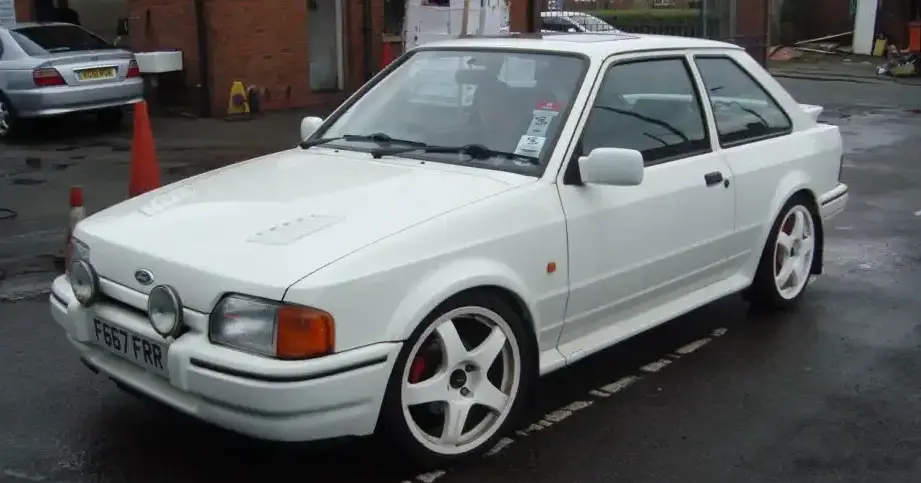
The Ford Escort IV 1.6 Turbo RS, produced between 1986 and 1990, represents a high-performance variant within the fourth generation of the popular Ford Escort. Designated with chassis codes GAF, AWF, and ABFT, this model was specifically engineered to deliver a more engaging driving experience and compete in the burgeoning hot hatch market of the late 1980s. It built upon the success of previous Escort RS models, offering a significant power upgrade over the standard Escort range. The 1.6 Turbo RS was primarily sold in Europe, particularly the United Kingdom, where it quickly gained a reputation for its spirited performance and rally-inspired handling.
Technical Specifications
| Brand | Ford |
| Model | Escort |
| Generation | Escort IV (GAF, AWF, ABFT) |
| Type (Engine) | 1.6 Turbo RS (132 Hp) |
| Start of Production | 1986 |
| End of Production | 1990 |
| Powertrain Architecture | Internal Combustion Engine |
| Body Type | Hatchback |
| Fuel Type | Petrol (Gasoline) |
| Power | 132 Hp |
| Engine Aspiration | Turbocharger |
Powertrain & Engine Architecture
The heart of the Escort IV 1.6 Turbo RS is its 1597cc, inline-four cylinder engine. This engine, based on the Ford Zetec architecture, was significantly modified with the addition of a Garrett T25 turbocharger and intercooler. The turbocharger boosted power output to 132 horsepower at 6000 rpm, and 148 lb-ft of torque at 3500 rpm – a substantial increase over the naturally aspirated engines available in the standard Escort IV range. Fuel delivery was managed by Bosch mechanical fuel injection, a system chosen for its reliability and responsiveness. The engine featured a single overhead camshaft (SOHC) design with two valves per cylinder. The compression ratio was set at 8.5:1 to accommodate the turbocharging system. The engine code varied depending on the specific market, but commonly included variations of the F8D code. The engine was paired exclusively with a five-speed manual transmission, chosen for its ability to handle the increased power and provide precise gear changes.
Driving Characteristics
The Escort IV 1.6 Turbo RS offered a noticeably different driving experience compared to its naturally aspirated counterparts. The turbocharger provided a surge of power in the mid-range, resulting in brisk acceleration. While not a drag racer, the RS model could achieve 0-60 mph times in around 7.8 seconds, making it competitive with other hot hatches of the era. The five-speed gearbox was well-matched to the engine’s powerband, allowing drivers to keep the engine in its optimal boost range. Handling was a key focus, with revised suspension geometry, stiffer springs, and a larger diameter anti-roll bar. This resulted in reduced body roll and improved cornering stability. The steering was direct and responsive, providing good feedback to the driver. Turbo lag was present, typical of turbochargers of that era, but manageable once familiar with the engine’s characteristics. The RS model felt significantly more planted and capable than the standard Escort, offering a genuinely engaging driving experience.
Equipment & Trim Levels
The Escort IV 1.6 Turbo RS was generally well-equipped for its time, although it wasn’t a luxury vehicle. Standard features included Recaro sports seats, providing excellent support during spirited driving. The interior featured a sporty three-spoke steering wheel and a revised instrument cluster with additional gauges, including a boost gauge to monitor turbocharger performance. Exterior styling cues included a distinctive front spoiler, rear spoiler, and side skirts, giving the RS model a more aggressive appearance. Alloy wheels were also standard. Optional extras included a sunroof, central locking, and upgraded audio systems. The interior trim was typically cloth upholstery, available in a range of colors. The RS trim level was positioned as the performance flagship of the Escort IV range, sitting above the standard models and the more economy-focused variants.
Chassis & Braking
The Escort IV 1.6 Turbo RS benefited from several chassis and braking upgrades compared to the standard Escort. The front suspension featured MacPherson struts with stiffer springs and dampers, while the rear suspension utilized a twist-beam axle with improved geometry. A larger diameter anti-roll bar was fitted to both the front and rear axles to reduce body roll. The braking system consisted of disc brakes on the front wheels and drum brakes on the rear wheels. While the rear drums were a cost-saving measure, the front discs provided adequate stopping power for most driving situations. The RS model also featured power steering as standard, making it easier to maneuver at low speeds.
Market Reception & Comparison
The Ford Escort IV 1.6 Turbo RS was generally well-received by automotive critics and enthusiasts. It was praised for its performance, handling, and sporty styling. However, some critics noted the presence of turbo lag and the relatively basic interior compared to some of its rivals. Compared to other hot hatches of the era, such as the Volkswagen Golf GTI and the Peugeot 205 GTI, the Escort RS offered a more raw and visceral driving experience. The Golf GTI was often considered more refined, while the Peugeot 205 GTI was renowned for its exceptional handling. The Escort RS offered a good balance of performance and affordability, making it a popular choice for those seeking a fun-to-drive hatchback. Fuel economy was reasonable for a turbocharged vehicle, averaging around 28-32 mpg. Reliability was generally good, although the turbocharger and fuel injection system required regular maintenance.
Legacy
The Ford Escort IV 1.6 Turbo RS remains a popular classic car today, particularly among Ford enthusiasts. Its combination of performance, affordability, and rally-inspired heritage has ensured its enduring appeal. The powertrain, while requiring periodic maintenance, is generally considered robust. Parts availability is reasonable, although some specific components can be difficult to find. The Escort RS has become a sought-after model in the used car market, with well-maintained examples commanding premium prices. It represents a significant chapter in the history of the Ford Escort and a testament to the brand’s commitment to performance and driving enjoyment. The 1.6 Turbo RS helped solidify the Escort’s reputation as a capable and versatile vehicle, and its influence can still be seen in Ford’s performance models today.