Technical Specifications
| Brand | Ford |
| Model | Escort |
| Generation | Escort IV Turnier (AWF, AVF) |
| Type (Engine) | 1.8 D (60 Hp) |
| Start of production | 1989 |
| End of production | 1990 |
| Powertrain Architecture | Internal Combustion engine |
| Body type | Station wagon (estate) |
| Fuel Type | Diesel |
| Power | 60 Hp |
| Engine Model/Code | RTA, RTB |
| Engine aspiration | Naturally aspirated engine |
| Engine oil capacity | 5 l (5.28 US qt | 4.4 UK qt) |
| Coolant capacity | 9.3 l (9.83 US qt | 8.18 UK qt) |
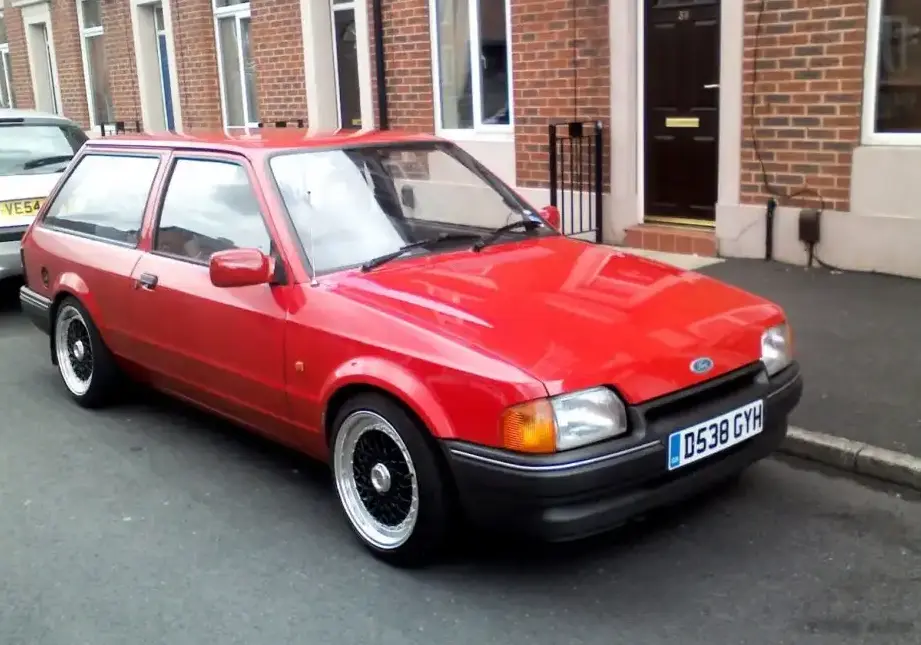
The Ford Escort IV Turnier 1.8 D, produced between 1989 and 1990, represented a practical and economical offering within the fourth generation Escort range (AWF, AVF). This station wagon, or ‘Tournier’ as it was marketed in some regions, was aimed at buyers prioritizing fuel efficiency and load-carrying capacity over outright performance. It occupied the lower end of the Escort IV Turnier lineup, serving as a budget-friendly option for families and commercial users. While the Escort IV was a significant update to the popular Escort line, the 1.8 D variant distinguished itself with its diesel powertrain, a common choice in Europe for its durability and low running costs.
Powertrain & Engine Architecture
The Escort IV Turnier 1.8 D was powered by Ford’s RTA or RTB diesel engine, a 1753cc inline-four cylinder unit. This engine was a naturally aspirated, indirect injection diesel, utilizing a Bosch rotary injection pump. Indirect injection, common for diesels of this era, meant the fuel was injected into a pre-chamber before entering the main combustion chamber, resulting in quieter operation but slightly reduced efficiency compared to direct injection systems. The engine featured a cast iron block and head, contributing to its robust and long-lasting nature. The valvetrain employed a single overhead camshaft (SOHC) operating two valves per cylinder. While not a high-performance engine, the RTA/RTB was known for its reliability and relatively simple construction, making it easier to maintain. The engine was typically paired with a four-speed manual transmission, though a three-speed automatic transmission was also available, albeit less common. The automatic transmission, a Ford-sourced unit, was geared towards economy rather than spirited driving. It featured a torque converter and a relatively simple planetary gearset, prioritizing smooth operation and fuel efficiency over quick shifts.
Driving Characteristics
The 1.8 D engine in the Escort IV Turnier produced a modest 60 horsepower and approximately 97 lb-ft of torque. This translated to a utilitarian driving experience. Acceleration was slow, particularly when fully loaded, and highway merging required careful planning. Zero to sixty mph times were typically in the 18-20 second range. The engine’s strength lay in its low-end torque, making it reasonably capable for hauling loads and navigating hilly terrain at lower speeds. The four-speed manual transmission allowed drivers to maximize the available power, while the optional automatic, though convenient, further diminished acceleration. Gear ratios were widely spaced, prioritizing fuel economy over responsiveness. Compared to the gasoline-powered Escort variants, such as the 1.6L or 1.9L models, the 1.8 D was significantly slower. However, it offered a substantial advantage in fuel consumption, a key consideration for many buyers at the time. Highway fuel economy could reach upwards of 50 mpg, while combined city/highway driving typically yielded around 45 mpg. The suspension, tuned for comfort and practicality, provided a reasonably compliant ride, although it wasn’t particularly sporty. Body roll was noticeable in corners, and the steering lacked the precision of more modern systems.
Equipment & Trim Levels
The Escort IV Turnier 1.8 D typically represented the base trim level within the Turnier range. Standard equipment was relatively sparse, reflecting its budget-oriented positioning. Interior upholstery was typically a durable cloth material, often in darker shades of grey or blue. The dashboard featured a simple layout with basic instrumentation, including a speedometer, fuel gauge, and temperature gauge. Power steering was not standard, requiring more effort at low speeds. Central locking and electric windows were generally optional extras, often bundled together in a package. The exterior trim was minimal, with black plastic bumpers and steel wheels being common features. Optional equipment could include a radio, upgraded interior trim, and a sunroof. The focus was on providing a functional and reliable vehicle rather than luxurious appointments. Some models included a rear window wiper, a practical addition for a station wagon.
Chassis & Braking
The Escort IV Turnier utilized a MacPherson strut front suspension and a semi-independent twist beam rear suspension. This setup provided a reasonable balance between ride comfort and handling. The 1.8 D variant, due to its lower power output and typically heavier engine, often featured slightly stiffer springs compared to the lighter gasoline models. Braking was typically accomplished with disc brakes on the front wheels and drum brakes on the rear. The braking system was adequate for normal driving conditions, but lacked the stopping power of more modern vehicles. Stabilizer bars were often omitted on the base trim level, further contributing to a less sporty handling characteristic. The steering was a recirculating ball system, providing a relatively direct feel but lacking the precision of rack-and-pinion steering. Tire sizes were typically 175/70R14, prioritizing fuel economy and ride comfort over grip.
Market Reception & Comparison
The Escort IV Turnier 1.8 D was generally well-received by buyers seeking an affordable and economical station wagon. Critics acknowledged its practicality and fuel efficiency, but often noted its lack of performance. Compared to other diesel-powered station wagons of the era, such as the Volkswagen Golf Estate or the Opel Astra Estate, the Escort offered a competitive price point and a reputation for reliability. The 1.8 D was often seen as a more sensible alternative to the higher-powered gasoline variants, particularly for those covering long distances or frequently carrying heavy loads. Fuel economy was a significant advantage, typically achieving around 45-50 mpg in mixed driving conditions. However, the diesel engine was noticeably noisier and produced more vibrations than its gasoline counterparts. Maintenance costs were generally lower due to the engine’s simplicity and durability. The 1.8 D offered a compelling value proposition for buyers prioritizing practicality and economy over driving excitement.
Legacy
The Ford Escort IV Turnier 1.8 D powertrain, while not renowned for its performance, has proven to be remarkably durable over the long term. Many examples remain on the road today, a testament to the engine’s robust construction and relatively simple design. In the used car market, these Escorts are often sought after by enthusiasts looking for a classic, affordable, and reliable vehicle. Parts availability is generally good, although some specific trim components may be difficult to find. The 1.8 D engine is known for its ability to withstand high mileage with proper maintenance. While not a collector’s item in the same vein as some of the higher-performance Escort variants, the 1.8 D Turnier represents a significant piece of Ford’s history and a practical choice for those seeking a classic station wagon. Its enduring popularity among those seeking a dependable and economical vehicle solidifies its place as a noteworthy variant within the Escort IV lineage.