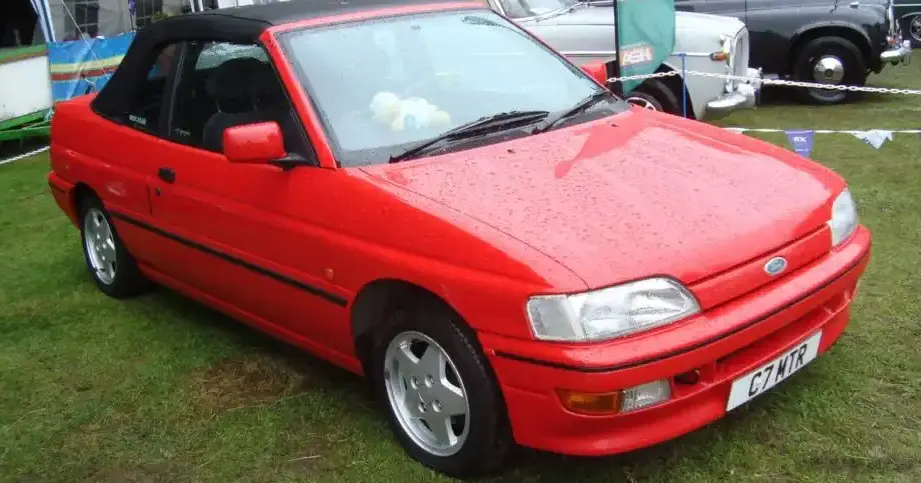
The Ford Escort V Cabriolet 1.6, produced between 1990 and 1992, represented a continuation of Ford’s popular Escort line in a stylish, open-top format. This variant, part of the fifth generation Escort (Mk V), was primarily aimed at the European market, offering a more affordable and accessible entry point into the convertible segment compared to larger, more luxurious offerings. It utilized the existing Escort V platform, known as the AL/AN series, and provided a practical and enjoyable driving experience with a focus on affordability and everyday usability. The 1.6-liter engine with 105 horsepower positioned it as a mid-range option within the Cabriolet lineup, offering a balance between performance and fuel economy.
Technical Specifications
| Brand | Ford |
| Model | Escort |
| Generation | Escort V Cabrio (ALL) |
| Type (Engine) | 1.6 (105 Hp) |
| Start of production | 1990 |
| End of production | 1992 |
| Powertrain Architecture | Internal Combustion engine |
| Body type | Cabriolet |
| Fuel Type | Petrol (Gasoline) |
| Power | 105 Hp |
| Engine Model/Code | LJF |
| Engine aspiration | Naturally aspirated engine |
| Engine oil capacity | 3.5 l (3.7 US qt | 3.08 UK qt) |
| Coolant capacity | 7.9 l (8.35 US qt | 6.95 UK qt) |
Powertrain & Engine Architecture
The Escort V Cabriolet 1.6 was powered by Ford’s LJF engine, a 1.6-liter inline-four cylinder gasoline engine. This engine was a naturally aspirated unit, meaning it did not employ forced induction like a turbocharger or supercharger. The LJF was a relatively simple design, utilizing a single overhead camshaft (SOHC) valvetrain operating two valves per cylinder. Fuel delivery was managed by Ford’s EEC-IV electronic fuel injection system, a common setup for Ford vehicles of the era. This system controlled fuel mixture based on inputs from various sensors, optimizing for both performance and emissions. The engine featured a cast iron block and an aluminum cylinder head, a common construction for durability and weight reduction. While not a high-performance engine, the LJF was known for its reliability and relatively easy maintenance. The engine’s 105 horsepower output was achieved at approximately 6000 rpm, with peak torque of around 137 Nm (101 lb-ft) delivered at 4000 rpm. The engine was typically paired with a four-speed automatic transmission, although a five-speed manual transmission was also available as an option. The automatic transmission was a Ford-sourced unit, designed for smooth operation and ease of use, prioritizing comfort over outright performance.
Driving Characteristics
The 1.6-liter engine and automatic transmission combination in the Escort V Cabriolet provided a comfortable, if not particularly sporty, driving experience. Acceleration was adequate for everyday driving, with a 0-60 mph time estimated around 11-12 seconds. The automatic transmission, while smooth, did detract from the overall responsiveness compared to the manual gearbox. Gear ratios were geared towards fuel efficiency and relaxed cruising rather than aggressive acceleration. The car felt relatively light and nimble, typical of the Escort platform, but the added weight of the convertible top mechanism and associated reinforcements did impact handling slightly compared to the hardtop versions. The suspension, consisting of MacPherson struts at the front and a twist-beam rear axle, provided a reasonable compromise between ride comfort and handling. The steering was light and easy, making it well-suited for urban driving. Compared to the higher-output 1.8-liter versions, the 1.6L automatic felt noticeably slower, particularly when accelerating uphill or overtaking. However, it offered better fuel economy and a more relaxed driving experience.
Equipment & Trim Levels
The Escort V Cabriolet 1.6 typically came with a reasonable level of standard equipment for its price point. Interior features included cloth upholstery, a basic instrument cluster, and a steering wheel. Power steering was usually standard, but air conditioning, electric windows, and central locking were often optional extras. The trim level varied depending on the market, but generally, the 1.6L model represented a mid-range offering. Optional extras included upgraded sound systems, alloy wheels, and a more luxurious interior trim. The convertible top was manually operated, although some later models may have featured an optional electric operation. The dashboard layout was typical of Ford designs from the early 1990s, with a functional and straightforward design. Safety features were relatively basic by modern standards, typically including seatbelts and a collapsible steering column.
Chassis & Braking
The Escort V Cabriolet utilized the standard Escort V chassis, which was reinforced to compensate for the lack of a fixed roof. The front suspension consisted of MacPherson struts with an anti-roll bar, while the rear suspension employed a twist-beam axle. Braking was typically accomplished with disc brakes at the front and drum brakes at the rear. The braking system was hydraulically assisted, providing adequate stopping power for everyday driving. The 1.6L model typically featured smaller diameter wheels and tires compared to the higher-performance versions, contributing to a slightly softer ride. Stabilizer bar thickness was standard for the Escort V range, providing a reasonable level of body control. The chassis was designed to provide a balance between comfort and handling, prioritizing ride quality over outright performance.
Market Reception & Comparison
The Escort V Cabriolet 1.6 was generally well-received by critics as an affordable and stylish convertible. It was praised for its practicality, ease of use, and relatively low running costs. However, it was also criticized for its lack of outright performance compared to some of its rivals. Compared to the 1.8-liter versions, the 1.6L automatic offered better fuel economy, with combined fuel consumption figures typically around 30-35 mpg. Reliability was generally good, although the automatic transmission could be prone to issues if not properly maintained. The 1.6L model was often seen as a good choice for drivers who prioritized comfort and affordability over performance. It competed with other small convertibles of the era, such as the Peugeot 205 Cabriolet and the Fiat Punto Cabriolet.
Legacy
The Ford Escort V Cabriolet 1.6 remains a popular choice among classic car enthusiasts today. The LJF engine is known for its durability and relatively simple maintenance requirements, making it a relatively affordable classic to own and operate. Parts availability is generally good, although some specific trim pieces may be difficult to find. The car’s simple design and relatively low complexity make it a good candidate for restoration projects. While not a particularly rare or valuable classic, the Escort V Cabriolet 1.6 represents a charming and affordable entry point into the world of classic convertibles. The automatic transmission, while not the most desirable option for performance enthusiasts, provides a comfortable and easy driving experience, making it well-suited for everyday use. Today, well-maintained examples command reasonable prices in the used car market, appealing to those seeking a nostalgic and enjoyable driving experience.