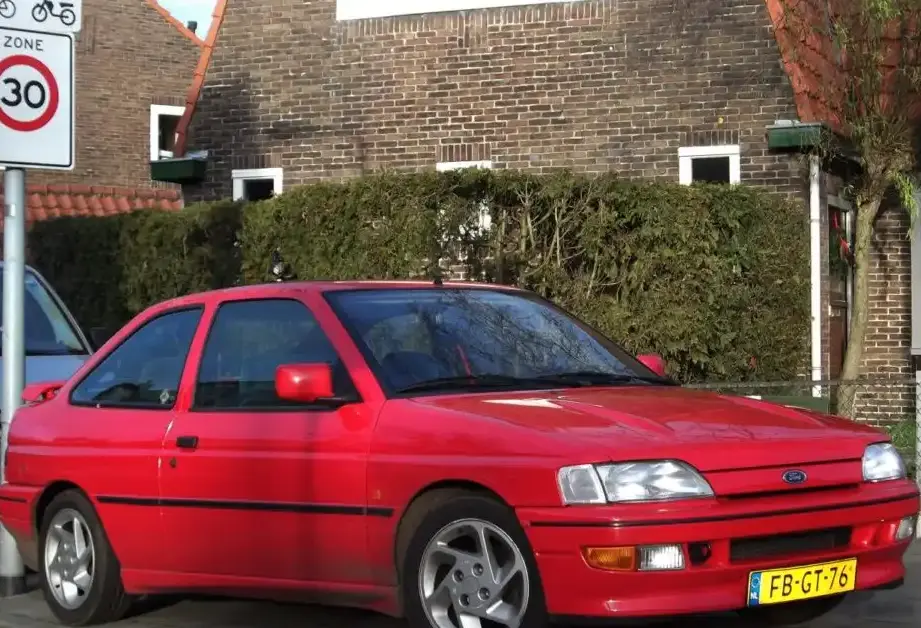
The Ford Escort V (GAL) 1.8 D, produced between 1990 and 1992, represents a specific variant within the fifth generation of the long-running Ford Escort. This model, powered by a naturally aspirated 1.8-liter diesel engine producing 60 horsepower, occupied the entry-level position in the Escort V lineup, primarily aimed at buyers prioritizing fuel economy and practicality over outright performance. It was a key offering in European markets where diesel engines were increasingly popular due to favorable taxation and fuel costs. The GAL platform, introduced in 1990, represented a significant update to the Escort, featuring revised styling, improved safety features, and updated mechanical components.
Technical Specifications
| Brand | Ford |
| Model | Escort |
| Generation | Escort V (GAL) |
| Type (Engine) | 1.8 D (60 Hp) |
| Start of production | 1990 |
| End of production | 1992 |
| Powertrain Architecture | Internal Combustion engine |
| Body type | Hatchback |
| Fuel Type | Diesel |
| Power | 60 Hp |
| Engine Model/Code | RTE, RTF, RTH |
| Engine aspiration | Naturally aspirated engine |
| Engine oil capacity | 5 l (5.28 US qt | 4.4 UK qt) |
| Coolant capacity | 9.3 l (9.83 US qt | 8.18 UK qt) |
Powertrain & Engine Architecture
The heart of the Escort V 1.8 D is the Ford RTE, RTF, or RTH diesel engine. This 1.8-liter, four-cylinder engine is a naturally aspirated, indirect injection diesel. Indirect injection, common for diesels of this era, involves injecting fuel into a pre-chamber where it partially combusts before entering the main cylinder, resulting in quieter operation but typically lower power output compared to direct injection systems. The engine utilizes a Bosch rotary injection pump, a reliable and widely used system for its time. The valvetrain consists of a single overhead camshaft operating two valves per cylinder. While not a technologically advanced engine by modern standards, it was known for its durability and relatively simple maintenance requirements. The engine’s modest 60 horsepower and approximately 85 lb-ft of torque were delivered to the front wheels through a four or five-speed manual transmission, or, as in this case, a three-speed automatic transmission. The automatic transmission was a Ford-sourced unit, designed for smooth but not particularly quick shifts, prioritizing fuel efficiency and ease of driving.
Driving Characteristics
The Escort V 1.8 D Automatic offered a decidedly unhurried driving experience. The combination of the low-output diesel engine and the three-speed automatic transmission resulted in leisurely acceleration. Zero to sixty mph times were likely in the 14-16 second range, making it unsuitable for drivers seeking spirited performance. However, the engine’s torque characteristics meant that it was reasonably capable of maintaining highway speeds, albeit with limited reserves for overtaking. The automatic transmission, while providing convenience, further reduced available power due to its inherent inefficiencies. Gear ratios were optimized for fuel economy rather than acceleration. Compared to the 1.6-liter gasoline versions of the Escort V, the 1.8 D Automatic was significantly slower. Even compared to the manual diesel versions, the automatic suffered a noticeable performance penalty. The focus was on providing a comfortable and economical mode of transport, rather than an engaging driving experience.
Equipment & Trim Levels
The 1.8 D Automatic typically represented a base or near-base trim level within the Escort V range. Standard equipment generally included cloth upholstery, a basic dashboard layout with analog gauges, and manual windows and door locks. Power steering was often optional, and air conditioning was rarely fitted to this trim level. The interior plastics were durable but utilitarian. Optional extras included a radio/cassette player, upgraded seat fabrics, and, on some markets, central locking. The exterior styling was consistent with other Escort V models, featuring a relatively boxy silhouette with integrated bumpers and a sloping rear hatch. Wheel covers were typically standard, with alloy wheels available as an optional upgrade. The overall impression was one of practicality and affordability, rather than luxury or sophistication.
Chassis & Braking
The Escort V utilized a MacPherson strut front suspension and a semi-independent twist beam rear suspension. This setup provided a reasonable balance between ride comfort and handling, although it wasn’t particularly sporty. The front suspension featured stabilizer bars to reduce body roll. Braking on the 1.8 D Automatic typically consisted of disc brakes on the front wheels and drum brakes on the rear. This configuration was common for lower-spec Escort V models, with higher trims often receiving rear disc brakes. The braking system was adequate for the car’s performance capabilities, but lacked the stopping power of more modern vehicles. Steering was typically unassisted or featured optional power steering, providing a direct but somewhat heavy feel. The chassis was designed to prioritize affordability and durability, rather than outright handling prowess.
Market Reception & Comparison
The Ford Escort V 1.8 D Automatic was generally well-received in markets where diesel vehicles were popular, such as the United Kingdom, Germany, and France. Critics praised its fuel economy and low running costs, but often criticized its lack of performance. Compared to the gasoline-powered Escort V models, the 1.8 D Automatic offered significantly better fuel economy, but at the expense of acceleration and refinement. Compared to other diesel-powered hatchbacks of the era, such as the Volkswagen Golf Diesel, the Escort V 1.8 D Automatic was often seen as a more affordable option, but with a slightly less refined driving experience. Reliability was generally good, although the diesel engine required regular maintenance to ensure longevity. The automatic transmission, while durable, was not known for its efficiency or responsiveness.
Legacy
The Ford Escort V 1.8 D Automatic, while not a particularly exciting vehicle, played an important role in providing affordable and economical transportation to a wide range of buyers. The RTE/RTF/RTH diesel engine proved to be a durable and reliable unit, and many examples are still on the road today. In the used car market, these Escorts are typically valued for their simplicity, low running costs, and relative ease of maintenance. They appeal to enthusiasts seeking a classic European hatchback or those looking for a practical and inexpensive vehicle. However, potential buyers should be aware of the age-related issues common to vehicles of this era, such as corrosion and wear and tear on suspension components. The 1.8 D Automatic represents a snapshot of automotive engineering from the early 1990s, prioritizing practicality and fuel efficiency over performance and luxury.