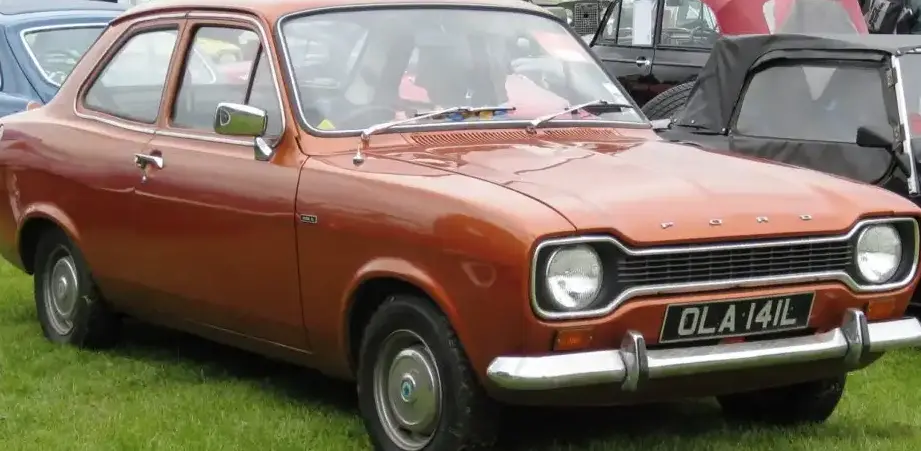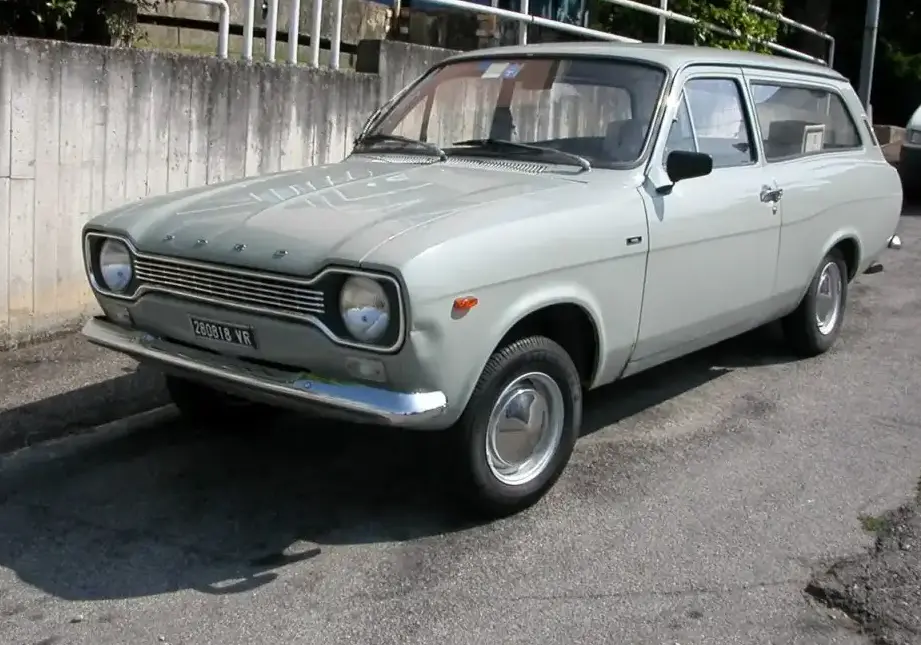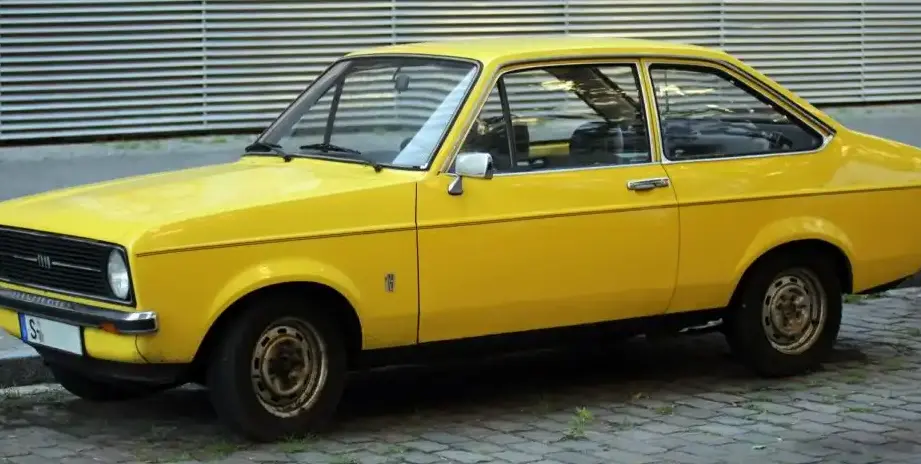
The Ford Escort VI, produced between 1990 and 1995, represented a significant evolution of Ford’s popular compact car. The 1.8 i 16V variant, available from 1992-1995, occupied a mid-range position within the Escort VI lineup, offering a balance between performance and affordability. This model, designated as the GAL series, was primarily aimed at the European market, where it competed with rivals like the Volkswagen Golf and Opel Astra. It was a crucial part of Ford’s strategy to offer a modern, well-equipped, and reliable family car.
Technical Specifications
| Brand | Ford |
| Model | Escort |
| Generation | Escort VI (GAL) |
| Type (Engine) | 1.8 i 16V (105 Hp) |
| Start of production | 1992 |
| End of production | 1995 |
| Powertrain Architecture | Internal Combustion engine |
| Body type | Sedan |
| Seats | 5 |
| Doors | 4 |
| Fuel consumption (combined) | 7.9 l/100 km |
| Fuel consumption (US mpg) | 29.8 US mpg |
| Fuel consumption (UK mpg) | 35.8 UK mpg |
| Fuel consumption (km/l) | 12.7 km/l |
| Fuel Type | Petrol (Gasoline) |
| Acceleration 0 – 100 km/h | 10.9 sec |
| Acceleration 0 – 62 mph | 10.9 sec |
| Acceleration 0 – 60 mph | 10.4 sec |
| Maximum speed | 187 km/h (116.2 mph) |
| Weight-to-power ratio | 10.6 kg/Hp |
| Weight-to-torque ratio | 7.3 kg/Nm |
| Power | 105 Hp @ 5500 rpm |
| Power per litre | 58.5 Hp/l |
| Torque | 153 Nm @ 4000 rpm (112.85 lb.-ft. @ 4000 rpm) |
| Engine layout | Front, Transverse |
| Engine Model/Code | RDA |
| Engine displacement | 1796 cm3 (109.6 cu. in.) |
| Number of cylinders | 4 |
| Engine configuration | Inline |
| Cylinder Bore | 80.6 mm (3.17 in.) |
| Piston Stroke | 88 mm (3.46 in.) |
| Compression ratio | 10:1 |
| Number of valves per cylinder | 4 |
| Fuel injection system | Multi-port manifold injection |
| Engine aspiration | Naturally aspirated engine |
| Valvetrain | DOHC |
| Engine oil capacity | 4.25 l (4.49 US qt | 3.74 UK qt) |
| Coolant capacity | 7 l (7.4 US qt | 6.16 UK qt) |
| Kerb Weight | 1110 kg (2447.13 lbs.) |
| Max. weight | 1625 kg (3582.51 lbs.) |
| Max load | 515 kg (1135.38 lbs.) |
| Trunk (boot) space – minimum | 490 l (17.3 cu. ft.) |
| Fuel tank capacity | 55 l (14.53 US gal | 12.1 UK gal) |
| Length | 4229 mm (166.5 in.) |
| Width | 1690 mm (66.54 in.) |
| Height | 1397 mm (55 in.) |
| Wheelbase | 2525 mm (99.41 in.) |
| Front track | 1440 mm (56.69 in.) |
| Rear track | 1462 mm (57.56 in.) |
| Drivetrain Architecture | Front wheel drive |
| Number of gears | 5 gears, manual transmission |
| Front suspension | Wishbone |
| Rear suspension | Coil spring |
| Front brakes | Ventilated discs |
| Rear brakes | Drum |
| Assisting systems | ABS (Anti-lock braking system) |
| Steering type | Steering rack and pinion |
| Power steering | Hydraulic Steering |
| Tires size | 175/70 R13 |
INTRODUCTION
The Ford Escort VI 1.8 i 16V, produced between 1992 and 1995, was a key variant within the GAL generation of the Escort. Positioned as a step up from the base 1.6L models, it offered increased performance and a more refined driving experience. The Escort VI represented a significant redesign of the Escort line, moving towards a more aerodynamic and modern aesthetic. Built on the 1HX0/A3 platform, it shared components with other Ford models of the era, contributing to economies of scale and improved parts availability. This particular engine and trim level aimed to appeal to drivers seeking a balance between fuel efficiency and spirited performance for everyday use.
Powertrain & Engine Architecture
At the heart of the Escort VI 1.8 i 16V lies the Ford RDA engine, a 1.8-liter inline-four cylinder powerplant. This engine featured a dual overhead camshaft (DOHC) valvetrain, operating 16 valves (four per cylinder) to optimize airflow and enhance performance. The RDA engine utilized multi-port fuel injection, delivering precise fuel metering for improved efficiency and reduced emissions. The 1.8L engine produced 105 horsepower at 5500 rpm and 153 Nm (113 lb-ft) of torque at 4000 rpm. The engine’s compression ratio was set at 10:1. The 1.8L engine was typically paired with a five-speed manual transmission, although a four-speed automatic transmission was also available, albeit less common. The automatic transmission, while offering convenience, did impact acceleration and fuel economy compared to the manual counterpart.
Driving Characteristics
The Escort VI 1.8 i 16V offered a noticeable improvement in performance over the lower-displacement models. While not a sports car, the 105 hp engine provided adequate power for comfortable cruising and overtaking maneuvers. The five-speed manual transmission allowed drivers to keep the engine in its optimal power band, resulting in responsive acceleration. The automatic transmission, while smooth, resulted in slightly slower acceleration times and a less engaging driving experience. Gear ratios were tuned for a balance between fuel economy and performance, with a relatively tall final drive. The suspension, while comfortable, was not particularly sporty, prioritizing ride quality over handling precision. Steering was light and precise, making the Escort easy to maneuver in urban environments.
Equipment & Trim Levels
The 1.8 i 16V trim typically included features such as power steering, central locking, and electric front windows. Interior upholstery was generally cloth, with options for upgraded materials available. Dashboard design was functional and straightforward, with clear instrumentation. Optional extras included a sunroof, alloy wheels, and an upgraded audio system. Higher trim levels, such as the Ghia, offered additional luxury features like leather upholstery and air conditioning. The base trim level offered a more spartan interior, focusing on practicality and affordability.
Chassis & Braking
The Escort VI utilized a front-wheel-drive layout with independent wishbone suspension at the front and a coil spring rear suspension. Front brakes were ventilated discs, providing good stopping power, while rear brakes were typically drum brakes on the standard models. ABS (Anti-lock Braking System) was available as an option, enhancing safety in emergency braking situations. The chassis was relatively lightweight, contributing to the car’s nimble handling. Stabilizer bars were fitted to both the front and rear axles to reduce body roll during cornering. Tire size was typically 175/70 R13, providing a good balance between comfort and grip.
Market Reception & Comparison
The Escort VI 1.8 i 16V was generally well-received by automotive critics. It was praised for its comfortable ride, decent performance, and relatively affordable price. Compared to the base 1.6L models, the 1.8L offered a significant improvement in power and refinement. However, it wasn’t as sporty as some of its rivals, such as the Volkswagen Golf GTI. The 1.8L automatic version was often criticized for its slower acceleration and reduced fuel economy compared to the manual transmission. The 1.9 TDI diesel variant offered superior fuel economy but lacked the 1.8L’s outright performance. Reliability was generally good, although some owners reported issues with the fuel injection system and electrical components.
Legacy
The Ford Escort VI 1.8 i 16V remains a popular choice among classic car enthusiasts and collectors. The RDA engine is known for its durability and relatively simple maintenance requirements. Parts availability is generally good, although some components may be becoming increasingly difficult to find. The automatic transmission, while less desirable than the manual, is still serviceable with proper maintenance. Today, these Escorts are often sought after as affordable and reliable classic cars, offering a nostalgic driving experience. Well-maintained examples command reasonable prices in the used car market, reflecting their enduring appeal and historical significance.