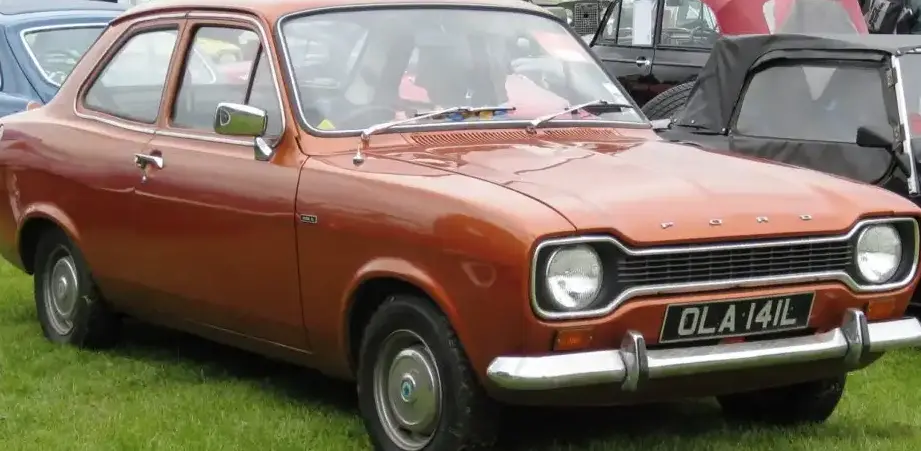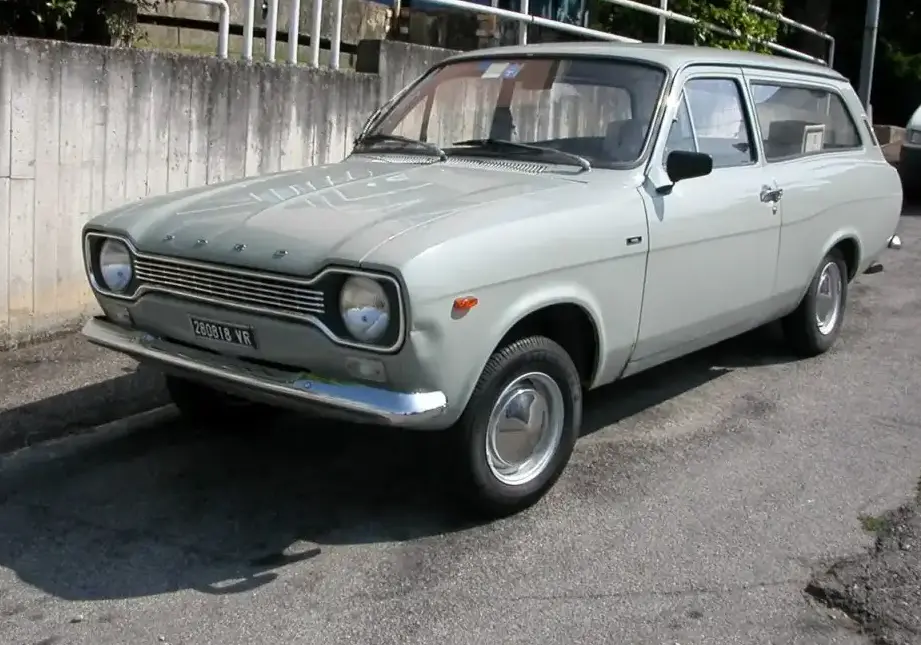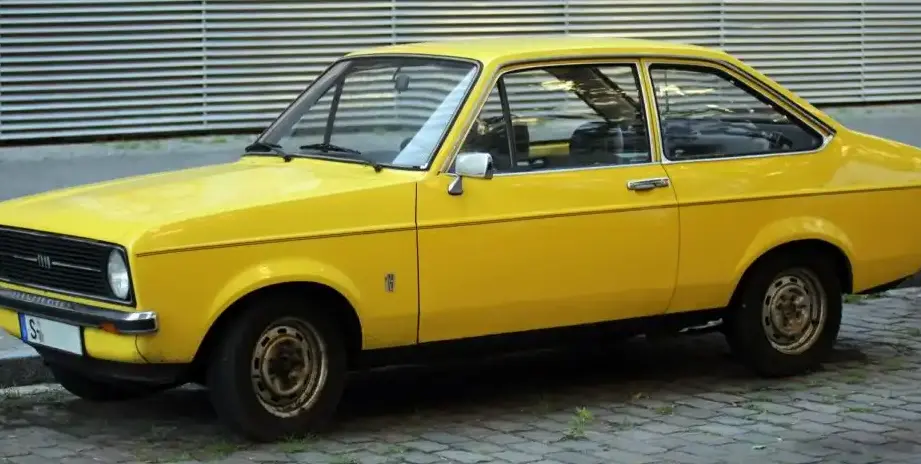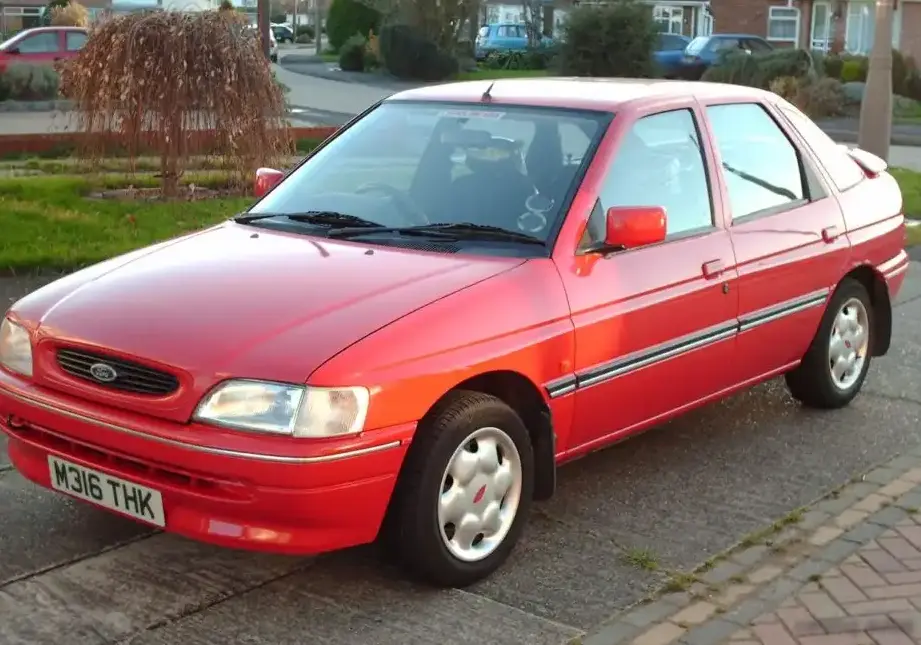
The Ford Escort VI Hatch, produced between 1993 and 1995, represented a significant evolution of Ford’s long-running Escort line. Within the GAL generation, the 1.3-liter (60 horsepower) variant occupied the entry-level position, aimed at budget-conscious buyers. This model, available in both 3-door and 5-door configurations, served as a practical and affordable family car in the European market, offering a balance between economy and usability. It was a key component of Ford’s strategy to provide a range of options within the Escort lineup, catering to diverse customer needs.
Technical Specifications
| Brand | Ford |
| Model | Escort |
| Generation | Escort VI Hatch (GAL) |
| Type (Engine) | 1.3 (60 Hp) |
| Start of production | 1993 |
| End of production | 1995 |
| Powertrain Architecture | Internal Combustion engine |
| Body type | Hatchback |
| Seats | 5 |
| Doors | 3/5 |
| Fuel consumption (combined) | 6.9 l/100 km (34.1 US mpg, 40.9 UK mpg, 14.5 km/l) |
| Fuel Type | Petrol (Gasoline) |
| Acceleration 0 – 100 km/h | 17.7 sec |
| Acceleration 0 – 62 mph | 17.7 sec |
| Acceleration 0 – 60 mph | 16.8 sec |
| Maximum speed | 153 km/h (95.07 mph) |
| Weight-to-power ratio | 16.7 kg/Hp, 60 Hp/tonne |
| Weight-to-torque ratio | 9.9 kg/Nm, 101 Nm/tonne |
| Power | 60 Hp @ 5000 rpm |
| Power per litre | 46.2 Hp/l |
| Torque | 101 Nm @ 2500 rpm (74.49 lb.-ft. @ 2500 rpm) |
| Engine layout | Front, Transverse |
| Engine Model/Code | J6A, J4B |
| Engine displacement | 1299 cm3 (79.27 cu. in.) |
| Number of cylinders | 4 |
| Engine configuration | Inline |
| Cylinder Bore | 74 mm (2.91 in.) |
| Piston Stroke | 75.5 mm (2.97 in.) |
| Compression ratio | 8.8:1 |
| Number of valves per cylinder | 2 |
| Fuel injection system | Single-point injection |
| Engine aspiration | Naturally aspirated engine |
| Engine oil capacity | 3.25 l (3.43 US qt | 2.86 UK qt) |
| Coolant | 7.1 l (7.5 US qt | 6.25 UK qt) |
| Kerb Weight | 1000 kg (2204.62 lbs.) |
| Max. weight | 1475 kg (3251.82 lbs.) |
| Max load | 475 kg (1047.2 lbs.) |
| Trunk (boot) space – minimum | 380 l (13.42 cu. ft.) |
| Trunk (boot) space – maximum | 735 l (25.96 cu. ft.) |
| Fuel tank capacity | 55 l (14.53 US gal | 12.1 UK gal) |
| Length | 4104 mm (161.57 in.) |
| Width | 1696 mm (66.77 in.) |
| Height | 1397 mm (55 in.) |
| Wheelbase | 2525 mm (99.41 in.) |
| Front track | 1440 mm (56.69 in.) |
| Rear (Back) track | 1462 mm (57.56 in.) |
| Drivetrain Architecture | The Internal combustion engine (ICE) drives the front wheels of the vehicle. |
| Drive wheel | Front wheel drive |
| Number of gears and type of gearbox | 5 gears, manual transmission |
| Front suspension | Wishbone |
| Rear suspension | Coil spring |
| Front brakes | Disc |
| Rear brakes | Drum |
| Assisting systems | ABS (Anti-lock braking system) |
| Steering type | Steering rack and pinion |
| Power steering | Hydraulic Steering |
| Tires size | 175/70 R13 |
Powertrain & Engine Architecture
The heart of the Escort VI 1.3 was the Ford J6A or J4B engine, a 1.3-liter inline-four cylinder petrol engine. This engine was a relatively simple design, featuring a single overhead camshaft (SOHC) and two valves per cylinder. The J6A and J4B codes denote slight variations in specification, often related to emissions control equipment. Fuel delivery was handled by a single-point fuel injection system, which, while less sophisticated than multi-point injection, contributed to reasonable fuel economy. The engine produced 60 horsepower at 5000 rpm and 74.49 lb-ft of torque at 2500 rpm. The engine’s relatively low compression ratio of 8.8:1 was a compromise between performance and the fuel quality available in various European markets. The engine was transversely mounted, driving the front wheels through a standard five-speed manual transmission.
Driving Characteristics
The 1.3-liter Escort was not designed for outright performance. Acceleration was leisurely, taking approximately 17.7 seconds to reach 62 mph. The engine’s torque peak at 2500 rpm meant that it felt reasonably responsive around town, but required frequent gear changes when attempting to accelerate quickly or maintain speed on inclines. The five-speed manual transmission was well-matched to the engine’s characteristics, offering a decent spread of ratios. Compared to the more powerful 1.6-liter or even the diesel variants, the 1.3 felt noticeably underpowered, particularly when fully loaded. However, its lighter weight and simpler mechanicals contributed to a nimble and forgiving driving experience.
Equipment & Trim Levels
The 1.3-liter Escort typically came with a basic level of equipment. Standard features generally included power steering, a basic stereo, and cloth upholstery. The interior was functional and durable, prioritizing practicality over luxury. Optional extras included electric front windows, a sunroof, and upgraded trim levels with more comfortable seats and additional features. The trim level often dictated the exterior detailing, with higher trims featuring body-colored bumpers and door handles. The focus was on providing a cost-effective package, making it an attractive option for first-time car buyers or those seeking a reliable and economical vehicle.
Chassis & Braking
The Escort VI utilized a relatively simple chassis design. Front suspension consisted of independent wishbones, while the rear employed a coil spring setup. The braking system featured disc brakes on the front wheels and drum brakes on the rear. ABS (Anti-lock Braking System) was often included as standard equipment, enhancing safety. The suspension was tuned for comfort, providing a reasonably smooth ride, although it could feel somewhat soft and prone to body roll during cornering. Stabilizer bars were typically smaller in diameter on the 1.3-liter models compared to higher-spec variants.
Market Reception & Comparison
The 1.3-liter Escort was generally well-received as an affordable and practical family car. Critics praised its fuel economy and reliability, but noted its lack of performance. Compared to the 1.6-liter versions, the 1.3 offered significantly lower running costs but at the expense of driving enjoyment. The diesel variants provided even better fuel economy but were often noisier and less refined. The 1.3’s main appeal lay in its low purchase price and relatively low maintenance costs, making it a popular choice for budget-conscious buyers.
Legacy
The Ford Escort VI 1.3, while not a performance icon, remains a fondly remembered car for many. Its simple mechanicals and robust construction contribute to a relatively good long-term reliability record. Today, these Escorts are increasingly sought after by classic car enthusiasts and collectors, particularly well-maintained examples. The 1.3-liter engine, while not particularly powerful, is known for its durability and ease of maintenance. Parts availability remains reasonably good, making it a viable option for those seeking a classic Ford that is relatively affordable to own and operate. It represents a significant era in Ford’s history, embodying the principles of practicality, affordability, and reliability.