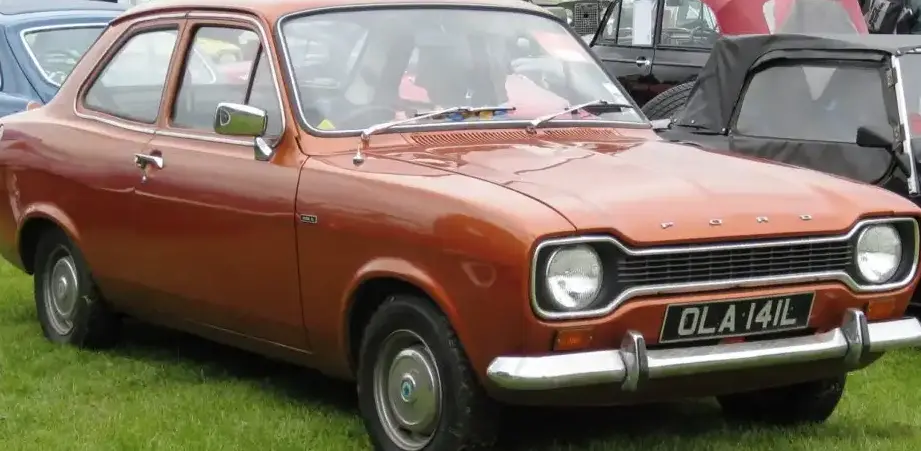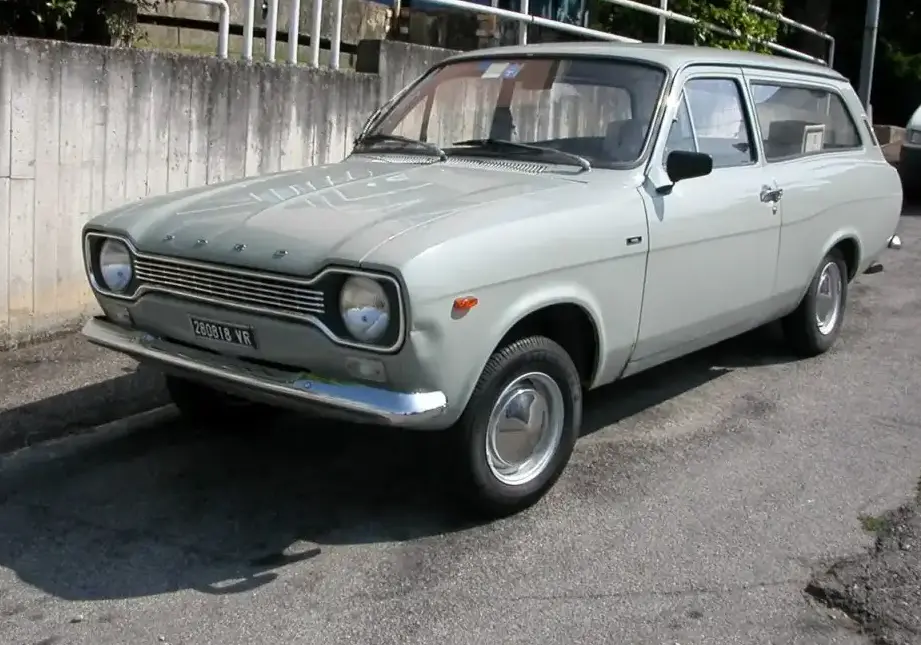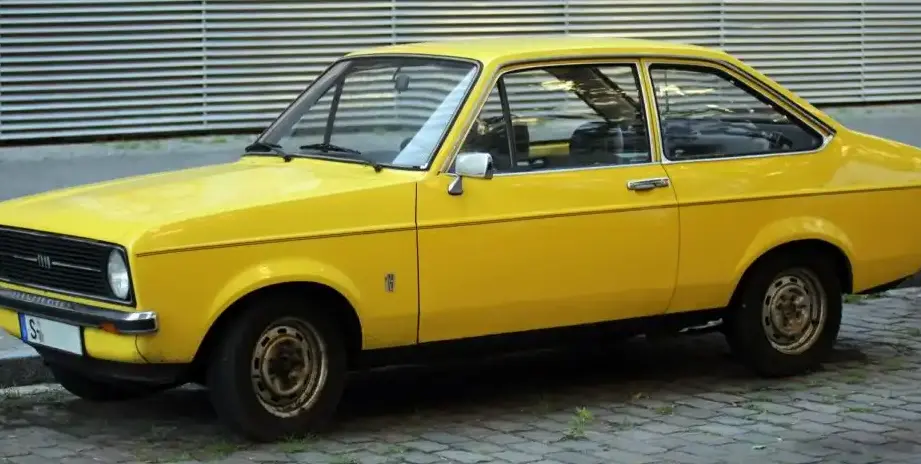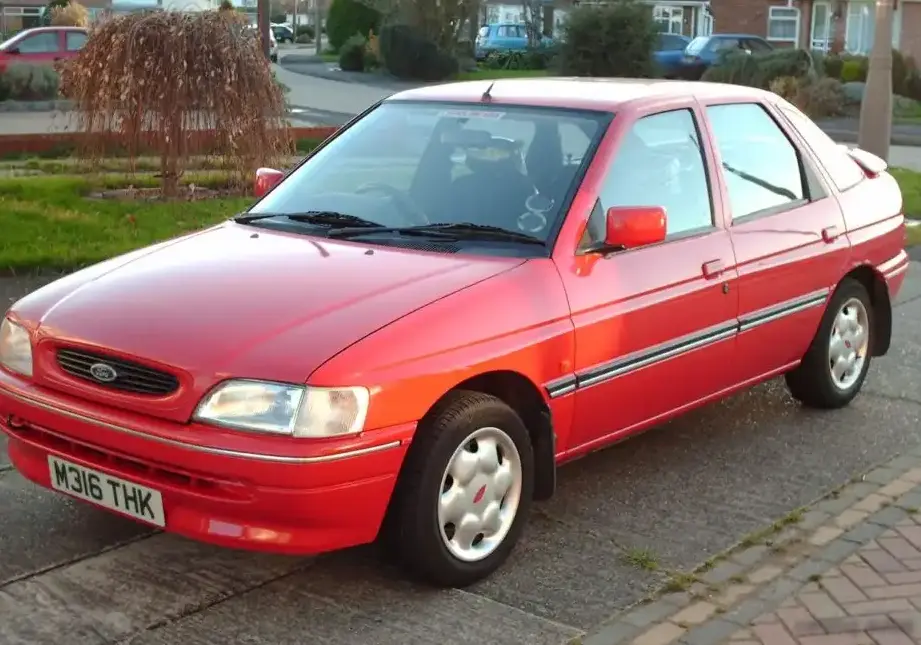
The Ford Escort VI Hatch (GAL) 2.0 i 16V RS 2000, produced between 1992 and 1996, represented a performance-oriented variant within the sixth generation of the popular Ford Escort. Built on the GAL platform, this model aimed to deliver a more engaging driving experience compared to the standard Escort trims. Positioned as a sporty offering, the RS 2000 slotted above base models and below potential future, even more focused performance versions, appealing to drivers seeking a balance of practicality and spirited performance in a compact hatchback. It was primarily marketed in Europe, where the Escort was a mainstay in the small family car segment.
Technical Specifications
| Brand | Ford |
| Model | Escort |
| Generation | Escort VI Hatch (GAL) |
| Type | 2.0 i 16V RS 2000 (150 Hp) |
| Start of production | 1992 |
| End of production | 1996 |
| Powertrain Architecture | Internal Combustion engine |
| Body type | Hatchback |
| Seats | 5 |
| Doors | 3 |
| Fuel Type | Petrol (Gasoline) |
| Acceleration 0 – 100 km/h | 8.7 sec |
| Acceleration 0 – 62 mph | 8.7 sec |
| Acceleration 0 – 60 mph | 8.3 sec |
| Maximum speed | 208 km/h (129.25 mph) |
| Weight-to-power ratio | 7.8 kg/Hp, 128.8 Hp/tonne |
| Weight-to-torque ratio | 6.1 kg/Nm, 163.1 Nm/tonne |
| Power | 150 Hp @ 6000 rpm |
| Power per litre | 75.1 Hp/l |
| Torque | 190 Nm @ 4500 rpm (140.14 lb.-ft. @ 4500 rpm) |
| Engine layout | Front, Transverse |
| Engine Model/Code | N7A |
| Engine displacement | 1998 cm3 (121.93 cu. in.) |
| Number of cylinders | 4 |
| Engine configuration | Inline |
| Cylinder Bore | 86 mm (3.39 in.) |
| Piston Stroke | 86 mm (3.39 in.) |
| Compression ratio | 10.3:1 |
| Number of valves per cylinder | 4 |
| Fuel injection system | Multi-port manifold injection |
| Engine aspiration | Naturally aspirated engine |
| Valvetrain | DOHC |
| Engine oil capacity | 4.5 l (4.76 US qt | 3.96 UK qt) |
| Coolant | 7.5 l (7.93 US qt | 6.6 UK qt) |
| Kerb Weight | 1165 kg (2568.39 lbs) |
| Max. weight | 1625 kg (3582.51 lbs) |
| Max load | 460 kg (1014.13 lbs) |
| Trunk (boot) space – minimum | 380 l (13.42 cu. ft.) |
| Trunk (boot) space – maximum | 735 l (25.96 cu. ft.) |
| Fuel tank capacity | 55 l (14.53 US gal | 12.1 UK gal) |
| Length | 4108 mm (161.73 in.) |
| Width | 1696 mm (66.77 in.) |
| Height | 1379 mm (54.29 in.) |
| Wheelbase | 2525 mm (99.41 in.) |
| Front track | 1443 mm (56.81 in.) |
| Rear (Back) track | 1439 mm (56.65 in.) |
| Drivetrain Architecture | The Internal combustion engine (ICE) drives the front wheels of the vehicle. |
| Drive wheel | Front wheel drive |
| Number of gears and type of gearbox | 5 gears, manual transmission |
| Front suspension | Wishbone |
| Rear suspension | Coil spring |
| Front brakes | Ventilated discs |
| Rear brakes | Disc |
| Assisting systems | ABS (Anti-lock braking system) |
| Steering type | Steering rack and pinion |
| Power steering | Hydraulic Steering |
| Tires size | 195/50 R15 V |
Powertrain & Engine Architecture
The heart of the Escort VI RS 2000 was the Ford N7A engine, a 1.998-liter inline-four cylinder powerplant. This engine featured a 16-valve dual overhead camshaft (DOHC) configuration, contributing to its relatively high output for its displacement. The N7A utilized multi-port fuel injection, a common technology in the early 1990s, for precise fuel delivery. The engine’s 150 horsepower at 6,000 rpm and 190 Nm (140 lb-ft) of torque at 4,500 rpm provided a noticeable performance boost over the lower-spec Escort models. The engine was transversely mounted, a space-saving configuration common in front-wheel-drive vehicles. The RS 2000 exclusively came with a five-speed manual transmission, designed to maximize the engine’s potential and provide a more engaging driving experience. This transmission featured gear ratios tailored for both acceleration and highway cruising.
Driving Characteristics
The 2.0 i 16V RS 2000 offered a significantly more dynamic driving experience than the base Escort models. The combination of the 150 hp engine and the five-speed manual transmission allowed for brisk acceleration, with 0-60 mph times around 8.3 seconds. While not a sports car by modern standards, this performance was competitive within its class in the early 1990s. The gear ratios were well-matched to the engine’s powerband, providing strong pull throughout the rev range. The RS 2000’s suspension, while based on the standard Escort setup, was typically firmer and lower, reducing body roll and improving handling. Compared to the lower-powered Escort variants, the RS 2000 felt more responsive and capable, particularly on winding roads. The absence of an automatic transmission option reinforced its focus on driver involvement.
Equipment & Trim Levels
The RS 2000 trim level included several features designed to enhance both the driving experience and the vehicle’s aesthetics. Standard equipment typically included sports seats with enhanced bolstering, a leather-wrapped steering wheel, and a unique instrument cluster. Exterior features often included a body-colored front spoiler, side skirts, and a rear spoiler. Alloy wheels were also standard, typically 15-inch in diameter. Optional extras could include power windows, central locking, and an upgraded audio system. The interior trim was generally more refined than the base Escort models, with higher-quality materials used throughout the cabin. The RS 2000 aimed to provide a sporty yet comfortable environment for both driver and passengers.
Chassis & Braking
The Escort VI RS 2000 utilized a MacPherson strut front suspension and a coil spring rear suspension. The suspension was tuned for a firmer ride and improved handling compared to the standard Escort. The braking system consisted of ventilated disc brakes on the front wheels and solid disc brakes on the rear wheels. Anti-lock Braking System (ABS) was standard, enhancing safety and control during hard braking. The steering was a rack-and-pinion system with hydraulic power assistance, providing precise and responsive steering feel. The RS 2000 typically featured a slightly wider track than the base Escort models, further contributing to its improved handling characteristics.
Market Reception & Comparison
The Escort VI RS 2000 was generally well-received by automotive critics. It was praised for its lively performance, engaging handling, and relatively affordable price. Compared to other hot hatches of the era, such as the Volkswagen Golf GTI and the Peugeot 205 GTI, the RS 2000 offered a competitive package. While it may not have possessed the outright performance of some rivals, it provided a good balance of practicality, affordability, and driving enjoyment. Fuel economy was reasonable for a performance-oriented vehicle, typically around 30-35 mpg. Reliability was generally good, although the 16-valve engine required regular maintenance to ensure optimal performance. The RS 2000 appealed to drivers who wanted a sporty and capable hatchback without sacrificing everyday usability.
Legacy
The Ford Escort VI RS 2000 remains a popular choice among classic car enthusiasts. The N7A engine, while not known for being exceptionally durable, is generally reliable if properly maintained. Parts availability is reasonable, although some components may be becoming increasingly difficult to find. The RS 2000’s relatively simple mechanical design makes it a relatively easy car to work on for experienced DIY mechanics. Today, well-maintained examples command a premium in the used car market, reflecting their desirability and the growing interest in 1990s performance cars. The RS 2000 represents a significant chapter in the Escort’s history, showcasing Ford’s commitment to providing engaging and affordable performance vehicles.