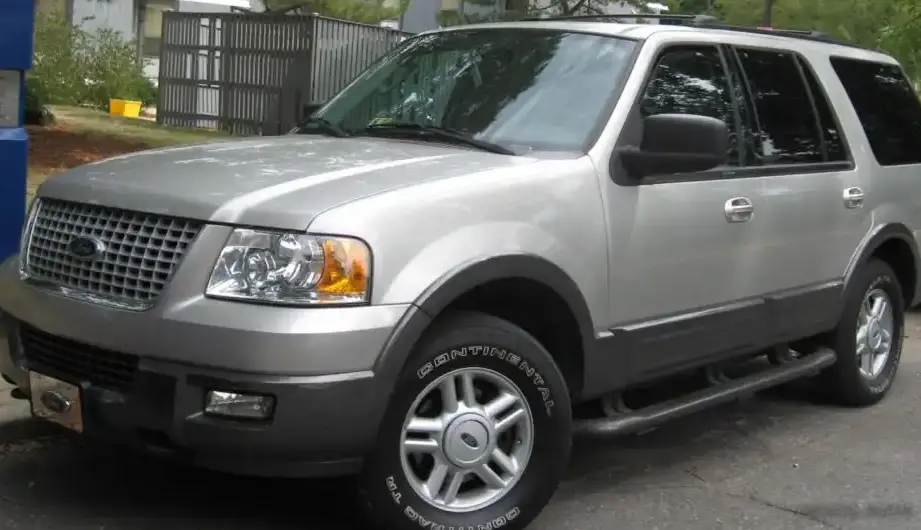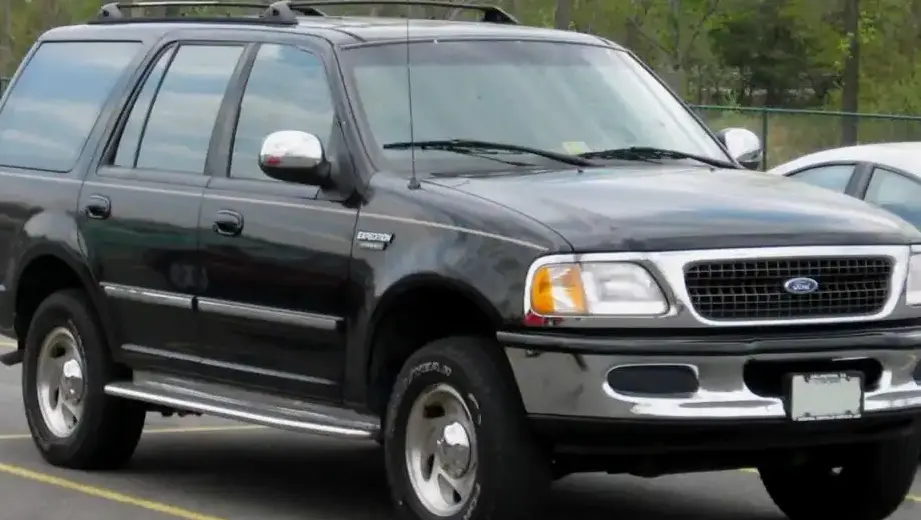
The Ford Expedition, introduced in 1997 as a replacement for the Ford Bronco II and the full-size Bronco, quickly became a cornerstone of Ford’s SUV lineup. The first generation, designated the U173, spanned from 1997 to 2003. Among the various engine and drivetrain configurations offered, the 5.4-liter V8 paired with a four-speed automatic transmission represents a popular and well-regarded combination, particularly for those needing substantial towing capacity and interior space. This variant was positioned as a mid-to-upper trim level, offering a balance between capability and comfort. Production of this specific configuration ran from 1999 through 2003.
Technical Specifications
| Brand | Ford |
| Model | Expedition |
| Generation | Expedition I (U173) |
| Type (Engine) | 5.4 i V8 16V (264 Hp) |
| Start of production | 1999 year |
| End of production | 2003 year |
| Powertrain Architecture | Internal Combustion engine |
| Body type | SUV |
| Seats | 5 |
| Doors | 5 |
| Fuel consumption (urban) | 19.6 l/100 km (12 US mpg, 14.4 UK mpg, 5.1 km/l) |
| Fuel consumption (extra urban) | 14.7 l/100 km (16 US mpg, 19.2 UK mpg, 6.8 km/l) |
| Fuel Type | Petrol (Gasoline) |
| Acceleration 0 – 100 km/h | 10 sec |
| Acceleration 0 – 62 mph | 10 sec |
| Acceleration 0 – 60 mph | 9.5 sec |
| Maximum speed | 165 km/h (102.53 mph) |
| Weight-to-power ratio | 9.7 kg/Hp, 103.3 Hp/tonne |
| Weight-to-torque ratio | 5.4 kg/Nm, 185.5 Nm/tonne |
| Power | 264 Hp @ 4500 rpm |
| Power per litre | 48.9 Hp/l |
| Torque | 474 Nm @ 2500 rpm (349.6 lb.-ft. @ 2500 rpm) |
| Engine layout | Front, Longitudinal |
| Engine Model/Code | Triton |
| Engine displacement | 5398 cm3 (329.41 cu. in.) |
| Number of cylinders | 8 |
| Engine configuration | V-engine |
| Cylinder Bore | 90.2 mm (3.55 in.) |
| Piston Stroke | 105.7 mm (4.16 in.) |
| Compression ratio | 9:1 |
| Number of valves per cylinder | 2 |
| Fuel injection system | Multi-port manifold injection |
| Engine aspiration | Naturally aspirated engine |
| Valvetrain | OHC |
| Engine oil capacity | 5.7 l (6.02 US qt | 5.02 UK qt) |
| Coolant | 19.7 l (20.82 US qt | 17.33 UK qt) |
| Kerb Weight | 2555 kg (5632.81 lbs.) |
| Max. weight | 3357 kg (7400.92 lbs.) |
| Max load | 802 kg (1768.11 lbs.) |
| Trunk (boot) space – minimum | 1725 l (60.92 cu. ft.) |
| Trunk (boot) space – maximum | 3131 l (110.57 cu. ft.) |
| Fuel tank capacity | 113 l (29.85 US gal | 24.86 UK gal) |
| Length | 5198 mm (204.65 in.) |
| Width | 1996 mm (78.58 in.) |
| Height | 1992 mm (78.43 in.) |
| Wheelbase | 3023 mm (119.02 in.) |
| Front track | 1661 mm (65.39 in.) |
| Rear (Back) track | 1664 mm (65.51 in.) |
| Drivetrain Architecture | The Internal combustion engine (ICE) drives the rear wheels of the vehicle. |
| Drive wheel | Rear wheel drive |
| Number of gears and type of gearbox | 4 gears, automatic transmission |
| Front suspension | Torsion |
| Rear suspension | Several levers and rods |
| Front brakes | Ventilated discs |
| Rear brakes | Disc |
| Assisting systems | ABS (Anti-lock braking system) |
| Steering type | Steering rack and pinion |
| Power steering | Hydraulic Steering |
| Tires size | 265/70 R17 |
Powertrain & Engine Architecture
The heart of this Expedition variant is Ford’s 5.4-liter Triton V8 engine. This engine, part of the Triton family, is a three-valve-per-cylinder design, utilizing a 90-degree V-configuration. The engine employs multi-port fuel injection, delivering fuel directly to each intake port for optimized combustion. The 4.6L and 5.4L Triton engines were known for their robust construction and relatively simple design, contributing to their longevity. The engine’s output of 264 horsepower at 4500 rpm and 474 lb-ft of torque at 2500 rpm provided ample power for towing and hauling. Paired with the engine is a four-speed automatic transmission (4R70W), chosen for its durability and ability to handle the engine’s torque output. This transmission featured electronic control for smoother shifting and improved fuel efficiency compared to earlier designs.
Driving Characteristics
The 5.4L V8 and four-speed automatic combination in the Expedition delivered a driving experience focused on effortless power and comfortable cruising. Acceleration to 60 mph took approximately 9.5 seconds, respectable for a full-size SUV of this era. The automatic transmission’s gear ratios were tuned for maximizing torque at lower speeds, making it ideal for towing trailers or navigating challenging terrain. Compared to the smaller 4.6L V8 option, the 5.4L provided noticeably more power, especially when fully loaded. While not as sporty as some competitors, the Expedition offered a smooth and stable ride, thanks to its robust chassis and well-tuned suspension. The four-speed automatic, while reliable, lacked the refinement and fuel efficiency of more modern transmissions with additional gears.
Equipment & Trim Levels
The 5.4L Expedition typically came equipped with a generous list of standard features. These included air conditioning, power windows and locks, a CD player, and cloth upholstery. Higher trim levels, such as the Eddie Bauer edition, added leather upholstery, woodgrain interior trim, upgraded audio systems, and automatic climate control. Optional extras included a power sunroof, rear-seat entertainment system, and a towing package. The interior design was functional and spacious, prioritizing comfort and practicality over outright luxury. The third-row seating, while somewhat cramped for adults, provided additional passenger capacity when needed.
Chassis & Braking
The Expedition’s chassis was a body-on-frame construction, providing a robust and durable platform. The front suspension utilized torsion bars, while the rear suspension employed a multi-link setup with coil springs. This configuration offered a good balance between ride comfort and load-carrying capacity. Braking duties were handled by ventilated disc brakes at the front and solid discs at the rear. Anti-lock braking system (ABS) was standard, enhancing safety and control during emergency braking situations. The steering system was a hydraulic rack-and-pinion setup, providing responsive and precise steering feel.
Market Reception & Comparison
The 5.4L Expedition was generally well-received by automotive critics and consumers alike. It was praised for its spacious interior, powerful engine, and impressive towing capacity. However, some critics noted its relatively poor fuel economy compared to smaller SUVs. Compared to the 4.6L V8 version, the 5.4L offered a significant performance advantage, but at a higher price point. In terms of reliability, the 5.4L Triton engine proved to be generally dependable, although some owners reported issues with spark plug breakage and timing chain tensioner failure. Overall, the 5.4L Expedition represented a compelling option for families and individuals needing a large, capable SUV.
Legacy
Today, the first-generation Ford Expedition, particularly the 5.4L V8 models, are becoming increasingly popular among collectors and enthusiasts. Their robust construction and relatively simple mechanicals make them relatively easy to maintain and repair. While fuel economy remains a concern, the 5.4L engine’s ample power and towing capacity continue to appeal to those needing a capable workhorse. The used market values for well-maintained examples are steadily increasing, reflecting their growing desirability. The 5.4L Triton engine, despite its known issues, remains a popular choice for engine swaps and restorations, ensuring its continued presence in the automotive landscape.