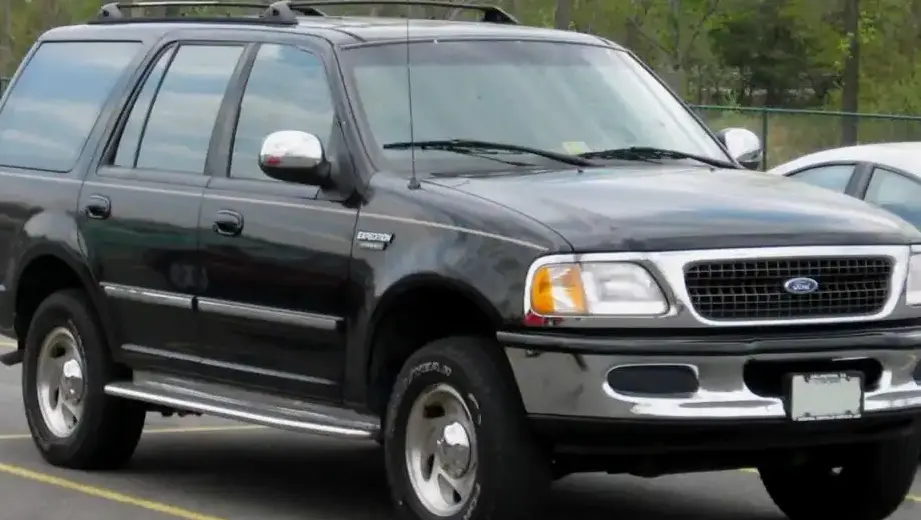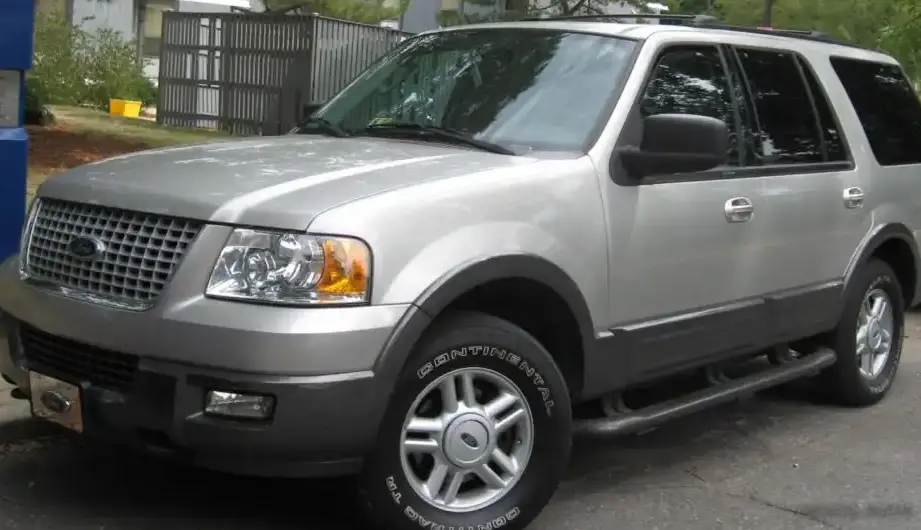
The Ford Expedition II 4.6 i V8 16V 4WD (235 Hp) represents a mid-cycle refresh of the first-generation Ford Expedition, produced for the 2003 and 2004 model years. Positioned as a large, body-on-frame SUV, the Expedition II aimed to provide spacious family transportation with enhanced capability, particularly for towing and navigating varied terrain. This variant, equipped with the 4.6-liter V8 engine and a four-speed automatic transmission, occupied a middle ground in the Expedition lineup, offering a balance between performance and affordability compared to the higher-output 5.4-liter engine option. It was primarily sold in the North American market, competing with vehicles like the Chevrolet Tahoe and GMC Yukon.
Technical Specifications
| Brand | Ford |
| Model | Expedition |
| Generation | Expedition II |
| Type (Engine) | 4.6 i V8 16V 4WD (235 Hp) |
| Start of production | 2003 |
| End of production | 2004 |
| Powertrain Architecture | Internal Combustion engine |
| Body type | SUV |
| Seats | 8 |
| Doors | 5 |
| Fuel consumption (urban) | 16.8 l/100 km (14 US mpg, 16.8 UK mpg) |
| Fuel consumption (extra urban) | 13.1 l/100 km (18 US mpg, 21.6 UK mpg) |
| Fuel Type | Petrol (Gasoline) |
| Acceleration 0 – 100 km/h | 10.5 sec |
| Acceleration 0 – 62 mph | 10.5 sec |
| Acceleration 0 – 60 mph | 10 sec |
| Maximum speed | 170 km/h (105.63 mph) |
| Weight-to-power ratio | 11 kg/Hp, 90.7 Hp/tonne |
| Weight-to-torque ratio | 6.6 kg/Nm, 152.1 Nm/tonne |
| Power | 235 Hp @ 4750 rpm |
| Power per litre | 51.1 Hp/l |
| Torque | 394 Nm @ 3450 rpm (290.6 lb.-ft. @ 3450 rpm) |
| Engine layout | Front, Longitudinal |
| Engine displacement | 4601 cm3 (280.77 cu. in.) |
| Number of cylinders | 8 |
| Engine configuration | V-engine |
| Cylinder Bore | 90.2 mm (3.55 in.) |
| Piston Stroke | 90 mm (3.54 in.) |
| Compression ratio | 9.4:1 |
| Number of valves per cylinder | 2 |
| Fuel injection system | Multi-port manifold injection |
| Engine aspiration | Naturally aspirated engine |
| Engine oil capacity | 5.7 l (6.02 US qt | 5.02 UK qt) |
| Coolant | 16.1 l (17.01 US qt | 14.17 UK qt) |
| Kerb Weight | 2590 kg (5709.97 lbs.) |
| Max. weight | 3130 kg (6900.47 lbs.) |
| Max load | 540 kg (1190.5 lbs.) |
| Trunk (boot) space – minimum | 571 l (20.16 cu. ft.) |
| Trunk (boot) space – maximum | 1723 l (60.85 cu. ft.) |
| Fuel tank capacity | 106 l (28 US gal | 23.32 UK gal) |
| Length | 5228 mm (205.83 in.) |
| Width | 2000 mm (78.74 in.) |
| Height | 1971 mm (77.6 in.) |
| Wheelbase | 3023 mm (119.02 in.) |
| Front track | 1702 mm (67.01 in.) |
| Rear (Back) track | 1709 mm (67.28 in.) |
| Drive wheel | All wheel drive (4×4) |
| Number of gears and type of gearbox | 4 gears, automatic transmission |
| Front suspension | Double wishbone |
| Rear suspension | Double wishbone |
| Front brakes | Ventilated discs |
| Rear brakes | Ventilated discs |
| Assisting systems | ABS (Anti-lock braking system) |
| Tires size | 265/70 R17 |
INTRODUCTION
The Ford Expedition II 4.6 i V8 16V 4WD (235 Hp) was a key offering in Ford’s full-size SUV lineup during its 2003-2004 production run. Built on the U246 platform (shared with the Lincoln Navigator), the Expedition II represented a significant upgrade over its predecessor, offering increased interior space, improved ride quality, and enhanced safety features. The “II” designation signified the second generation of the Expedition, which debuted in 1997. This particular variant, with its 4.6-liter V8 and automatic transmission, was designed to appeal to buyers seeking a capable and comfortable SUV without the higher price tag associated with the 5.4-liter engine option. It served as a workhorse for families and those needing to tow boats, trailers, or other recreational equipment.
Powertrain & Engine Architecture
At the heart of the Expedition II 4.6 i V8 was Ford’s 4.6-liter Modular V8 engine, specifically the version designated as the Triton family. This engine, utilizing a 90-degree V-angle, featured a cast iron block with aluminum cylinder heads. The engine employed a single overhead camshaft (SOHC) design with two valves per cylinder. Fuel delivery was managed by a multi-port fuel injection system, providing precise fuel metering for optimal performance and efficiency. The 4.6L engine produced 235 horsepower at 4750 rpm and 290 lb-ft of torque at 3450 rpm. Paired with this engine was a four-speed automatic transmission (4R70W), chosen for its durability and smooth shifting characteristics. This transmission was a common choice for Ford’s truck and SUV applications during this period. The 4R70W featured electronic control for improved shift quality and adaptability to driving conditions.
Driving Characteristics
The 4.6-liter V8 and four-speed automatic combination in the Expedition II delivered adequate, though not exhilarating, performance. Acceleration from 0-60 mph took approximately 10 seconds, making it competitive with other full-size SUVs of the era. The automatic transmission provided smooth and predictable shifts, but lacked the responsiveness of a manual transmission. The gear ratios were optimized for towing and cruising, rather than outright acceleration. Compared to the 5.4-liter Expedition, the 4.6-liter model felt noticeably less powerful, especially when fully loaded or towing a trailer. However, the 4.6-liter engine offered better fuel economy, albeit still relatively low by modern standards. The four-wheel-drive system provided enhanced traction in slippery conditions, making it suitable for light off-road use.
Equipment & Trim Levels
The Expedition II 4.6 i V8 4WD typically came standard with features such as air conditioning, power windows and locks, a CD player, and cloth upholstery. Higher trim levels, like the XLT and Eddie Bauer, added features like leather upholstery, heated seats, a premium sound system, and woodgrain interior trim. Optional extras included a DVD entertainment system, power-adjustable pedals, and a sunroof. Safety features included anti-lock brakes (ABS) and front airbags. The interior design was functional and spacious, with seating for up to eight passengers. The third-row seats could be folded flat to create a larger cargo area.
Chassis & Braking
The Expedition II utilized a traditional body-on-frame construction, providing a robust and durable platform. The suspension consisted of independent double wishbone suspension at the front and a solid rear axle with leaf springs. This setup prioritized ride comfort and load-carrying capacity over sporty handling. Braking duties were handled by ventilated disc brakes at all four wheels, providing adequate stopping power for the vehicle’s weight. The ABS system helped to prevent wheel lockup during hard braking, enhancing stability and control.
Market Reception & Comparison
The Ford Expedition II 4.6 i V8 4WD was generally well-received by critics and consumers alike. It was praised for its spacious interior, comfortable ride, and strong towing capacity. However, some reviewers noted that the 4.6-liter engine felt underpowered when compared to the 5.4-liter option. Fuel economy was also a common criticism, as expected for a vehicle of this size and weight. Compared to the 5.4-liter Expedition, the 4.6-liter model offered a lower purchase price and slightly better fuel efficiency, making it a more attractive option for budget-conscious buyers. The 4.6L also tended to have fewer issues with spark plug ejection, a known problem with some of the 5.4L engines.
Legacy
The Ford Expedition II 4.6 i V8 4WD has proven to be a relatively reliable vehicle, with many examples still on the road today. The 4.6-liter engine is known for its durability, although regular maintenance is essential to prevent issues such as oil leaks and timing chain wear. The four-speed automatic transmission is also generally reliable, but may require servicing at higher mileages. In the used car market, these Expeditions are often sought after by buyers looking for a spacious and capable SUV at an affordable price. While not as desirable as the higher-output 5.4-liter models, the 4.6-liter version remains a viable option for those prioritizing value and practicality.