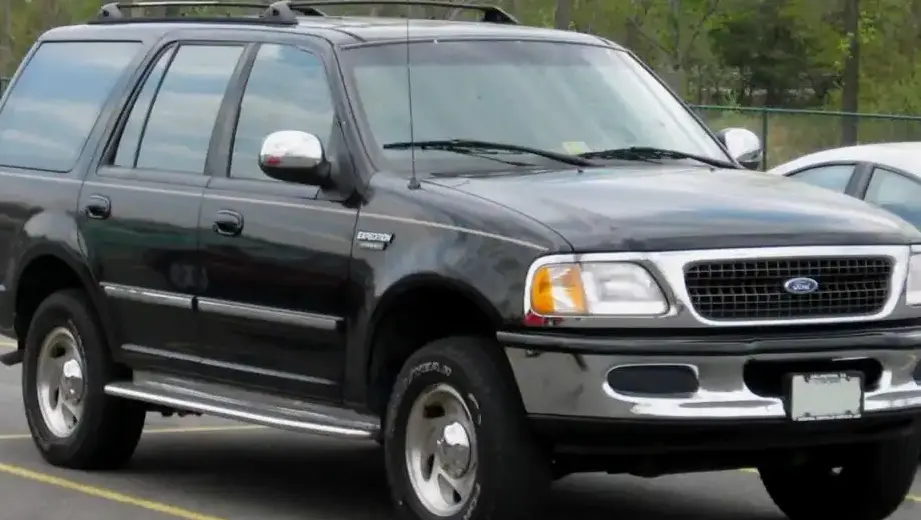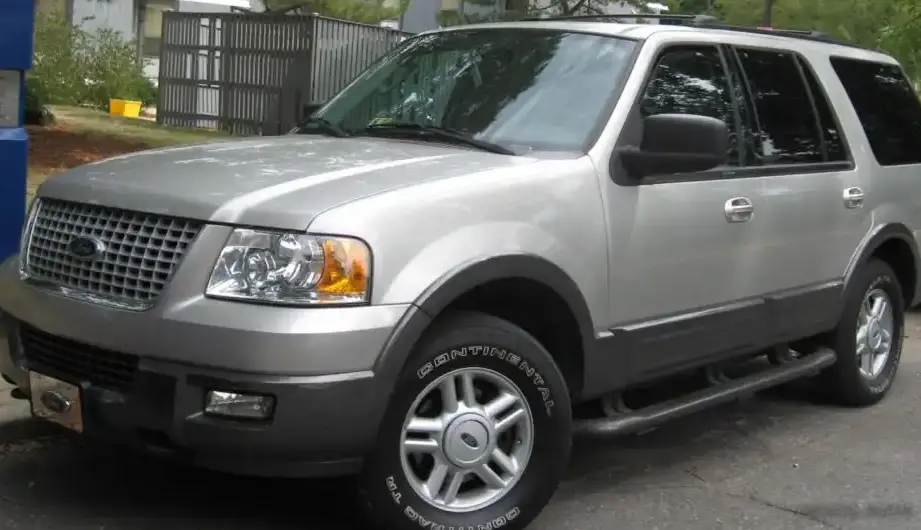
The Ford Expedition II 5.4 i V8 24V (300 Hp) Automatic, produced from 2005 to 2006, represents a significant iteration of Ford’s full-size SUV. Positioned as a substantial offering within the second generation (2003-2017) Expedition lineup, this variant catered to buyers needing considerable towing capacity and interior space. It was a key player in the American SUV market, competing directly with the Chevrolet Tahoe and GMC Yukon. The “II” designation, primarily used in European and some international markets, denoted a slightly refined version of the North American Expedition, often with minor equipment differences. This particular configuration, pairing the 5.4-liter Triton V8 with a four-speed automatic transmission, aimed for a balance between power and usability for families and those engaged in recreational activities.
Technical Specifications
| Brand | Ford |
| Model | Expedition |
| Generation | Expedition II |
| Type (Engine) | 5.4 i V8 24V (300 Hp) Automatic |
| Start of production | 2005 |
| End of production | 2006 |
| Powertrain Architecture | Internal Combustion engine |
| Body type | SUV |
| Seats | 7-9 |
| Doors | 5 |
| Fuel consumption (economy) – urban (EPA) | 16.8 l/100 km (14 US mpg, 16.8 UK mpg) |
| Fuel consumption (economy) – extra urban (EPA) | 12.4 l/100 km (19 US mpg, 22.8 UK mpg) |
| Fuel Type | Petrol (Gasoline) |
| Weight-to-power ratio | 8.1 kg/Hp, 123.6 Hp/tonne |
| Weight-to-torque ratio | 4.9 kg/Nm, 203.9 Nm/tonne |
| Power | 300 Hp @ 5000 rpm |
| Power per litre | 55.5 Hp/l |
| Torque | 495 Nm @ 3750 rpm (365.09 lb.-ft. @ 3750 rpm) |
| Engine layout | Front, Longitudinal |
| Engine Model/Code | Triton |
| Engine displacement | 5408 cm3 (330.02 cu. in.) |
| Number of cylinders | 8 |
| Engine configuration | V-engine |
| Cylinder Bore | 90.2 mm (3.55 in.) |
| Piston Stroke | 105.8 mm (4.17 in.) |
| Compression ratio | 9.8:1 |
| Number of valves per cylinder | 3 |
| Fuel injection system | Multi-port manifold injection |
| Engine aspiration | Naturally aspirated engine |
| Valvetrain | SOHC, VCT |
| Engine oil capacity | 6.6 l (6.97 US qt | 5.81 UK qt) |
| Coolant | 18.4 l (19.44 US qt | 16.19 UK qt) |
| Kerb Weight | 2428 kg (5352.82 lbs.) |
| Max. weight | 3220 kg (7098.88 lbs.) |
| Max load | 792 kg (1746.06 lbs.) |
| Trunk (boot) space – minimum | 586 l (20.69 cu. ft.) |
| Trunk (boot) space – maximum | 3129 l (110.5 cu. ft.) |
| Fuel tank capacity | 106 l (28 US gal | 23.32 UK gal) |
| Permitted trailer load with brakes (12%) | 4037 kg (8900.06 lbs.) |
| Length | 5228 mm (205.83 in.) |
| Width | 2000 mm (78.74 in.) |
| Width with mirrors folded | 2029 mm (79.88 in.) |
| Width including mirrors | 2392 mm (94.17 in.) |
| Height | 1948 mm (76.69 in.) |
| Wheelbase | 3023 mm (119.02 in.) |
| Front track | 1701 mm (66.97 in.) |
| Rear (Back) track | 1708 mm (67.24 in.) |
| Front overhang | 980 mm (38.58 in.) |
| Rear overhang | 1226 mm (48.27 in.) |
| Ride height (ground clearance) | 224 mm (8.82 in.) |
| Minimum turning circle (turning diameter) | 11.9 m (39.04 ft.) |
| Approach angle | 22.5° |
| Departure angle | 21.9° |
| Ramp-over (brakeover) angle | 19.2° |
| Drivetrain Architecture | The Internal combustion engine (ICE) drives the rear wheels of the vehicle. |
| Drive wheel | Rear wheel drive |
| Number of gears and type of gearbox | 4 gears, automatic transmission |
| Front suspension | Double wishbone, Transverse stabilizer, Air Suspension – Optional |
| Rear suspension | Double wishbone, Transverse stabilizer, Air Suspension – Optional |
| Front brakes | Ventilated discs, 330 mm |
| Rear brakes | Ventilated discs, 343 mm |
| Assisting systems | ABS (Anti-lock braking system) |
| Steering type | Steering rack and pinion |
| Power steering | Hydraulic Steering |
| Tires size | 265/70 R17 |
| Wheel rims size | 17 |
Powertrain & Engine Architecture
The heart of this Expedition II variant is Ford’s 5.4-liter Triton V8 engine. This engine, designated within the Ford family as part of the Triton series, is a three-valve-per-cylinder (24V) design featuring a single overhead camshaft (SOHC) and variable valve timing (VCT). The multi-port fuel injection system delivers fuel directly to each cylinder, optimizing combustion. The engine’s architecture prioritizes low-end torque, crucial for towing and hauling. The 9.8:1 compression ratio strikes a balance between efficiency and performance. Paired with this engine is a four-speed automatic transmission, a common choice for full-size SUVs of this era. While not as sophisticated as modern transmissions with more gears, it provided adequate performance for everyday driving and towing needs. The transmission was designed for durability and reliability, capable of handling the substantial torque output of the Triton V8.
Driving Characteristics
The 5.4L V8 and four-speed automatic combination in the Expedition II delivered a capable, if not particularly sporty, driving experience. Acceleration was adequate for a vehicle of its size and weight, but it wasn’t designed for quick bursts of speed. The four-speed automatic, while reliable, lacked the refinement and efficiency of newer transmissions. Gear changes were noticeable, and the transmission sometimes hunted for the right gear under heavy load. The focus was on providing smooth, predictable power delivery, making it well-suited for towing trailers or navigating challenging terrain. Compared to the higher-output versions of the Triton V8 found in other Expedition trims, this variant offered a more relaxed driving experience, prioritizing fuel economy and ease of use over outright performance. Manual transmission options were available on other Expedition trims, offering a more engaging driving experience, but the automatic was favored by the majority of buyers in this segment.
Equipment & Trim Levels
The Expedition II 5.4 i V8 Automatic typically came with a respectable level of standard equipment. This included features like air conditioning, power windows and locks, a basic audio system, and cloth upholstery. Higher trim levels, such as the XLT and Limited, added features like leather upholstery, upgraded audio systems, power-adjustable seats, and alloy wheels. Optional extras included a DVD entertainment system, a navigation system, and the aforementioned air suspension for the rear, enhancing ride comfort and load-leveling capabilities. The interior design was functional and spacious, prioritizing practicality over luxury. The third-row seating was a key selling point, providing seating for up to nine passengers.
Chassis & Braking
The Expedition II utilized a body-on-frame construction, providing a robust and durable platform. The suspension system consisted of independent double wishbones at the front and a solid rear axle with leaf springs. Air suspension was available as an option, particularly on higher trim levels, offering adjustable ride height and improved load-leveling. Braking duties were handled by ventilated disc brakes on all four wheels, providing adequate stopping power for a vehicle of its size. An anti-lock braking system (ABS) was standard, enhancing safety and control during emergency braking situations. The steering system was a hydraulic rack-and-pinion setup, offering responsive and predictable handling.
Market Reception & Comparison
The Ford Expedition II 5.4 i V8 Automatic was generally well-received by critics and consumers alike. It was praised for its spacious interior, strong towing capacity, and comfortable ride. However, some critics noted the relatively low fuel economy and the lack of refinement compared to newer SUVs. Compared to the smaller V6 engine option, the 5.4L V8 offered significantly more power and torque, making it the preferred choice for those who frequently towed or hauled heavy loads. Compared to the higher-output versions of the 5.4L V8, this variant offered a more affordable price point and slightly better fuel economy, making it a popular choice for families and everyday drivers.
Legacy
The Ford Expedition II 5.4 i V8 Automatic, while not the most technologically advanced SUV of its time, remains a popular choice in the used car market. The Triton V8 engine, while known for potential spark plug issues in some years, is generally considered reliable when properly maintained. The four-speed automatic transmission is also known for its durability. These vehicles are often sought after by those needing a capable and affordable full-size SUV for towing, hauling, or family transportation. The Expedition II’s robust construction and spacious interior have ensured its continued relevance in the used car market, making it a practical and dependable option for budget-conscious buyers.