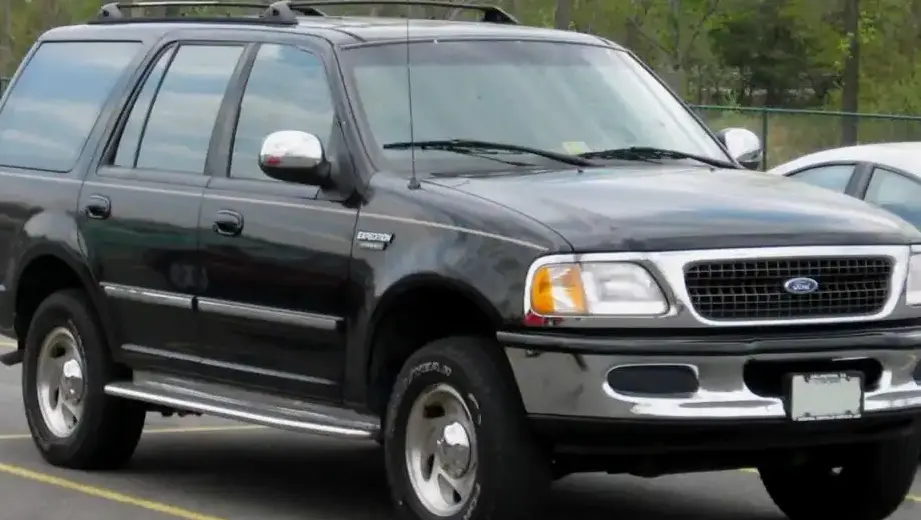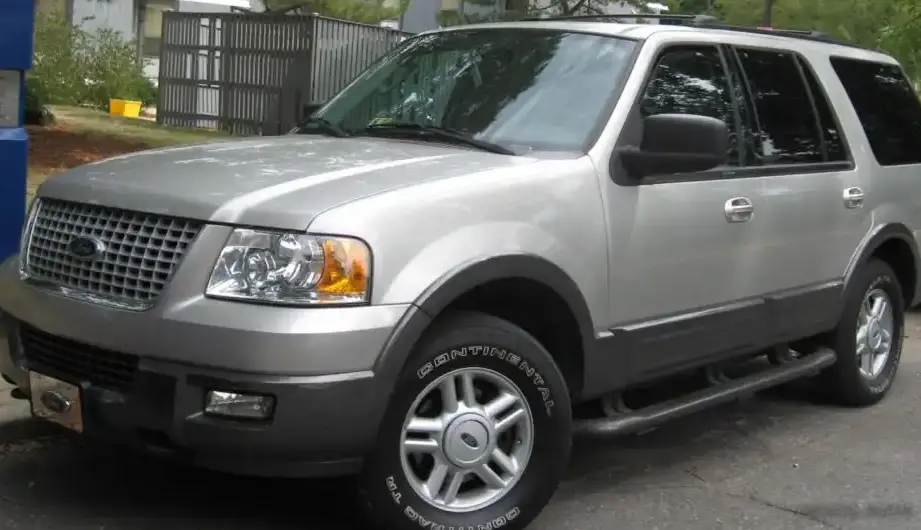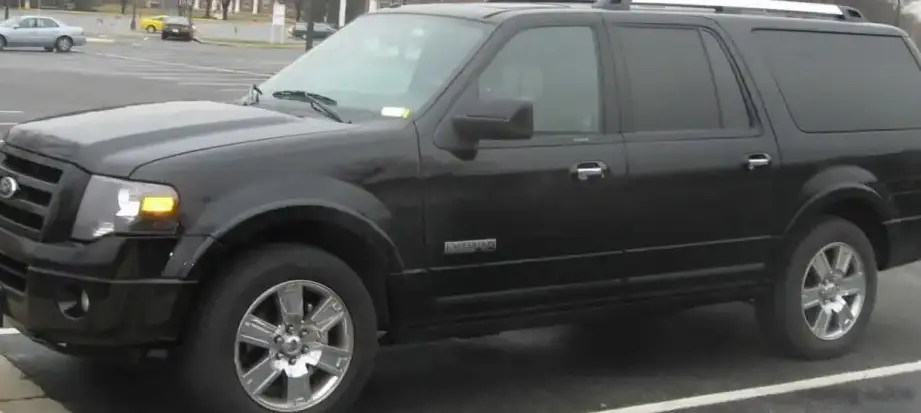
The Ford Expedition III EL (U354), specifically equipped with the 5.4-liter V8 engine producing 310 horsepower and paired with an automatic transmission, represents a significant iteration in Ford’s full-size SUV lineage. Produced from July 2008 through August 2014, this variant occupied a key position within the third generation (2007-2014) of the Expedition, offering a balance of power, space, and capability for American families. The “EL” designation signifies the extended length wheelbase, providing substantially increased cargo capacity compared to the standard Expedition. This model was primarily aimed at the North American market, where large SUVs remained popular for their towing capacity, passenger space, and perceived safety.
Technical Specifications
| Brand | Ford |
| Model | Expedition |
| Generation | Expedition III EL (U354) |
| Type (Engine) | 5.4 V8 (310 Hp) Flex Fuel Automatic |
| Start of production | July, 2008 |
| End of production | August, 2014 |
| Powertrain Architecture | Internal Combustion engine |
| Body type | SUV |
| Seats | 7-8 |
| Doors | 5 |
| Fuel consumption (economy) – urban (EPA) | 16.8 l/100 km (14 US mpg, 16.8 UK mpg, 6 km/l) |
| Fuel consumption (economy) – extra urban (EPA) | 11.8 l/100 km (19.9 US mpg, 23.9 UK mpg, 8.5 km/l) |
| Fuel consumption (economy) – combined (EPA) | 14.7 l/100 km (16 US mpg, 19.2 UK mpg, 6.8 km/l) |
| Fuel Type | Petrol / Ethanol – E85 |
| Weight-to-power ratio | 8.6 kg/Hp, 116.9 Hp/tonne |
| Weight-to-torque ratio | 5.4 kg/Nm, 186.7 Nm/tonne |
| Power | 310 Hp @ 5100 rpm |
| Power per litre | 57.3 Hp/l |
| Torque | 495 Nm @ 3600 rpm (365.09 lb.-ft. @ 3600 rpm) |
| Engine layout | Front, Longitudinal |
| Engine Model/Code | Triton |
| Engine displacement | 5408 cm3 (330.02 cu. in.) |
| Number of cylinders | 8 |
| Engine configuration | V-engine |
| Cylinder Bore | 90.2 mm (3.55 in.) |
| Piston Stroke | 105.8 mm (4.17 in.) |
| Compression ratio | 9.8:1 |
| Number of valves per cylinder | 3 |
| Fuel injection system | Multi-port manifold injection |
| Engine aspiration | Naturally aspirated engine |
| Valvetrain | SOHC, VCT |
| Engine oil capacity | 6.6 l (6.97 US qt | 5.81 UK qt) |
| Coolant | 15.5 l (16.38 US qt | 13.64 UK qt) |
| Kerb Weight | 2651 kg (5844.45 lbs.) |
| Max. weight | 3420 kg (7539.81 lbs.) |
| Max load | 769 kg (1695.35 lbs.) |
| Trunk (boot) space – minimum | 1206 l (42.59 cu. ft.) |
| Trunk (boot) space – maximum | 3704 l (130.81 cu. ft.) |
| Fuel tank capacity | 127 l (33.55 US gal | 27.94 UK gal) |
| Permitted trailer load with brakes (12%) | 4037 kg (8900.06 lbs.) |
| Length | 5621 mm (221.3 in.) |
| Width | 2002 mm (78.82 in.) |
| Width with mirrors folded | 2024 mm (79.69 in.) |
| Width including mirrors | 2332 mm (91.81 in.) |
| Height | 1974 mm (77.72 in.) |
| Wheelbase | 3327 mm (130.98 in.) |
| Front track | 1702 mm (67.01 in.) |
| Rear (Back) track | 1707 mm (67.2 in.) |
| Front overhang | 996 mm (39.21 in.) |
| Rear overhang | 1298 mm (51.1 in.) |
| Ride height (ground clearance) | 221 mm (8.7 in.) |
| Minimum turning circle (turning diameter) | 13.4 m (43.96 ft.) |
| Approach angle | 23.1° |
| Departure angle | 20.1° |
| Ramp-over (brakeover) angle | 17.6° |
| Drivetrain Architecture | The Internal combustion engine (ICE) drives the rear wheels of the vehicle. |
| Drive wheel | Rear wheel drive |
| Number of gears and type of gearbox | 6 gears, automatic transmission |
| Front suspension | Coil spring, Double wishbone, Transverse stabilizer |
| Rear suspension | Independent multi-link spring suspension with stabilizer, Air Suspension – Optional |
| Front brakes | Ventilated discs |
| Rear brakes | Ventilated discs |
| Assisting systems | ABS (Anti-lock braking system) |
| Steering type | Steering rack and pinion |
| Power steering | Hydraulic Steering |
| Tires size | 255/70 R18; 275/55 R20 |
| Wheel rims size | 18; 20 |
Powertrain & Engine Architecture
The heart of this Expedition variant is Ford’s 5.4-liter Triton V8 engine. This engine, designated as the 3V due to its three valves per cylinder, utilizes a 90-degree V-configuration. The engine employs multi-port fuel injection and a single overhead camshaft (SOHC) design with variable valve timing (VCT) on both intake and exhaust valves. This VCT system optimizes engine performance and fuel efficiency across a wider RPM range. The engine is capable of running on regular gasoline or E85 flex fuel. The automatic transmission used is a 6-speed unit, offering smooth shifts and optimized gear ratios for both towing and everyday driving. This transmission was designed to handle the substantial torque output of the 5.4L engine.
Driving Characteristics
The 5.4L V8 and 6-speed automatic combination in the Expedition EL provided adequate, though not exhilarating, performance. Acceleration from 0-60 mph typically took around 7.5-8.5 seconds. The automatic transmission was tuned for comfort and towing, resulting in relatively conservative shift points. Compared to the more powerful 6.2L V8 option, this 5.4L felt less responsive, particularly when fully loaded or towing a trailer. However, the 5.4L offered a smoother and quieter driving experience than the diesel options available in some markets. The extended wheelbase of the EL model contributed to a comfortable ride, absorbing bumps effectively, but also resulted in a larger turning radius.
Equipment & Trim Levels
The 5.4L V8/automatic configuration was typically offered in mid-range Expedition EL trims, such as the XLT and Limited. Standard features included tri-zone automatic climate control, a six-speaker audio system, power windows and locks, and keyless entry. Higher trims, like the Limited, added leather upholstery, heated front seats, a premium audio system, and power-adjustable pedals. Optional extras included a rear-seat entertainment system, navigation, and a sunroof. The interior design focused on practicality and durability, with ample storage space and comfortable seating for up to eight passengers.
Chassis & Braking
The Expedition EL utilized a body-on-frame construction, providing a robust platform for towing and off-road capability. The front suspension featured an independent double wishbone setup with coil springs and a stabilizer bar. The rear suspension was initially a solid axle with coil springs and a stabilizer bar, but later models offered an optional independent multi-link suspension with air suspension for improved ride quality. Braking duties were handled by ventilated discs on all four wheels, coupled with an anti-lock braking system (ABS). The braking system was adequate for the vehicle’s weight, but required a firm pedal input during hard stops.
Market Reception & Comparison
The 5.4L V8 Expedition EL was generally well-received by consumers seeking a large, capable SUV. Critics praised its spacious interior, comfortable ride, and strong towing capacity. However, fuel economy was a common complaint, averaging around 16 mpg combined. Compared to the 6.2L V8, the 5.4L offered a lower price point and slightly better fuel economy, making it a more attractive option for budget-conscious buyers. The 5.4L also proved to be more reliable than some of the earlier iterations of the Triton engine, though valve train issues could still occur with insufficient oil maintenance.
Legacy
The Ford Expedition III EL with the 5.4L V8 and automatic transmission remains a popular choice in the used car market. While not the most fuel-efficient option, its reliability and spaciousness make it a practical choice for families and those needing a capable tow vehicle. Regular maintenance, particularly oil changes, is crucial to prevent valve train issues. These Expeditions are often found with high mileage, but well-maintained examples can provide many more years of service. The 5.4L Triton engine, while having its quirks, is generally considered a durable powerplant when properly cared for, solidifying the Expedition EL’s place as a capable and long-lasting full-size SUV.