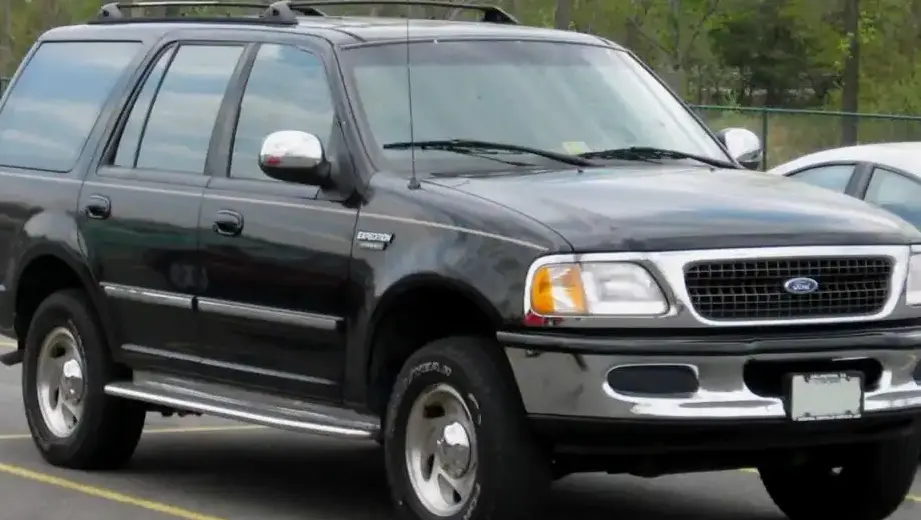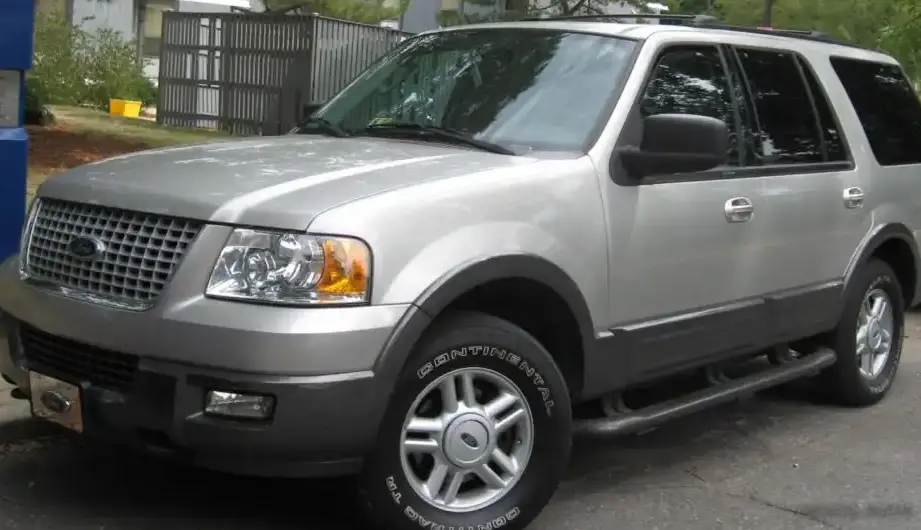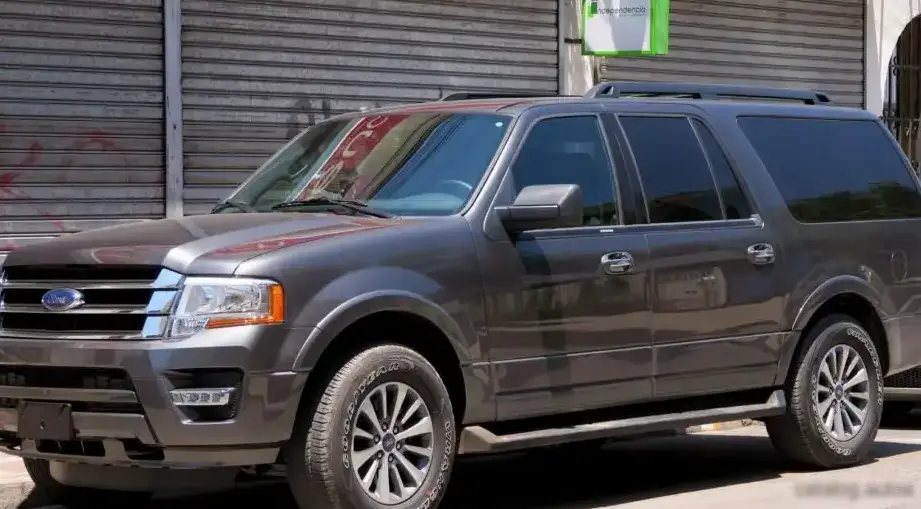
The Ford Expedition III EL, specifically the facelifted version produced from 2014 to 2017 (designated U3542), represented a significant evolution of Ford’s full-size SUV. This iteration of the Expedition, built on the U354 platform, aimed to balance spaciousness, capability, and a more modern driving experience. Among the various engine and drivetrain configurations offered, the 3.5 EcoBoost V6 paired with the 4×4 SelectShift automatic transmission stands out as a popular and powerful choice. This variant occupied a premium position within the Expedition lineup, offering a substantial increase in performance over the base V6 models while remaining more accessible than the extended-length MAX versions.
Technical Specifications
| Brand | Ford |
| Model | Expedition |
| Generation | Expedition III EL (U3542, facelift 2014) |
| Type (Engine) | 3.5 EcoBoost V6 (365 Hp) 4×4 SelectShift |
| Start of production | August, 2014 |
| End of production | July, 2017 |
| Powertrain Architecture | Internal Combustion engine |
| Body type | SUV |
| Seats | 7-8 |
| Doors | 5 |
| Fuel consumption (economy) – urban (EPA) | 16.8 l/100 km (14 US mpg, 16.8 UK mpg, 6 km/l) |
| Fuel consumption (economy) – extra urban (EPA) | 11.8 l/100 km (19.9 US mpg, 23.9 UK mpg, 8.5 km/l) |
| Fuel consumption (economy) – combined (EPA) | 14.7 l/100 km (16 US mpg, 19.2 UK mpg, 6.8 km/l) |
| Fuel Type | Petrol (Gasoline) |
| Weight-to-power ratio | 7.6 kg/Hp, 132.1 Hp/tonne |
| Weight-to-torque ratio | 4.9 kg/Nm, 205.9 Nm/tonne |
| Power | 365 Hp @ 5000 rpm |
| Power per litre | 104.4 Hp/l |
| Torque | 569 Nm @ 2500 rpm (419.67 lb.-ft. @ 2500 rpm) |
| Engine layout | Front, Longitudinal |
| Engine Model/Code | EcoBoost |
| Engine displacement | 3496 cm3 (213.34 cu. in.) |
| Number of cylinders | 6 |
| Engine configuration | V-engine |
| Cylinder Bore | 92.5 mm (3.64 in.) |
| Piston Stroke | 86.7 mm (3.41 in.) |
| Compression ratio | 10:1 |
| Number of valves per cylinder | 4 |
| Fuel injection system | Direct injection |
| Engine aspiration | Twin-Turbo, Intercooler |
| Valvetrain | DOHC, Ti-VCT |
| Engine oil capacity | 5.7 l (6.02 US qt | 5.02 UK qt) |
| Coolant | 17 l (17.96 US qt | 14.96 UK qt) |
| Kerb Weight | 2763 kg (6091.37 lbs.) |
| Max. weight | 3489 kg (7691.93 lbs.) |
| Max load | 726 kg (1600.56 lbs.) |
| Trunk (boot) space – minimum | 1206 l (42.59 cu. ft.) |
| Trunk (boot) space – maximum | 3704 l (130.81 cu. ft.) |
| Fuel tank capacity | 127 l (33.55 US gal | 27.94 UK gal) |
| Permitted trailer load with brakes (12%) | 4128 kg (9100.68 lbs.) |
| Length | 5609 mm (220.83 in.) |
| Width | 2001 mm (78.78 in.) |
| Width with mirrors folded | 2024 mm (79.69 in.) |
| Width including mirrors | 2331 mm (91.77 in.) |
| Height | 1973 mm (77.68 in.) |
| Wheelbase | 3327 mm (130.98 in.) |
| Front track | 1702 mm (67.01 in.) |
| Rear (Back) track | 1707 mm (67.2 in.) |
| Front overhang | 986 mm (38.82 in.) |
| Rear overhang | 1298 mm (51.1 in.) |
| Ride height (ground clearance) | 203 mm (7.99 in.) |
| Minimum turning circle (turning diameter) | 13.9 m (45.6 ft.) |
| Approach angle | 22.5° |
| Departure angle | 20.3° |
| Ramp-over (brakeover) angle | 15.3° |
| Drivetrain Architecture | The Internal combustion engine (ICE) drives the rear wheels permanently, and the front wheels are driven through an electrically or mechanically operated clutch if necessary. |
| Drive wheel | All wheel drive (4×4) |
| Number of gears and type of gearbox | 6 gears, automatic transmission SelectShift |
| Front suspension | Coil spring, Double wishbone, Transverse stabilizer |
| Rear suspension | Independent multi-link spring suspension with stabilizer |
| Front brakes | Ventilated discs, 350×34 mm |
| Rear brakes | Ventilated discs, 334.5×22 mm |
| Assisting systems | ABS (Anti-lock braking system) |
| Steering type | Steering rack and pinion |
| Power steering | Electric Steering |
| Tires size | 265/70 R17; 275/65 R18; 275/55 R20; 285/45 R22 |
| Wheel rims size | 7.5J x 17; 8J x 17; 8.5J x 18; 8.5J x 20; 9.5J x 22 |
INTRODUCTION
The 2014-2017 Ford Expedition III EL with the 3.5 EcoBoost V6 and 4×4 SelectShift automatic transmission represented a significant step forward for the full-size SUV segment. Building upon the foundation of the U354 platform, this variant offered a compelling blend of power, space, and technology. The “EL” designation indicates the extended length body style, providing increased cargo capacity behind the third row. This particular configuration was positioned as a premium offering, appealing to buyers who needed substantial towing capacity and passenger space without sacrificing modern amenities and a relatively refined driving experience. It was a direct competitor to vehicles like the Chevrolet Tahoe and GMC Yukon.
Powertrain & Engine Architecture
At the heart of this Expedition variant lies the 3.5-liter EcoBoost V6 engine. This engine, internally designated as a member of the EcoBoost family, utilizes a twin-turbocharged configuration to deliver a substantial 365 horsepower at 5000 rpm and 420 lb-ft of torque at 2500 rpm. The engine employs direct fuel injection, maximizing combustion efficiency and power output. The valvetrain features double overhead camshafts (DOHC) with variable valve timing (Ti-VCT), further optimizing performance across the rev range. The 3.5 EcoBoost engine is a longitudinal mounted engine. The SelectShift 6-speed automatic transmission is specifically tuned to handle the engine’s high output. This transmission offers a blend of smooth shifting and responsive performance, with a manual shift mode for greater driver control. The 4×4 system utilizes an electronically controlled clutch to engage the front wheels when traction is needed, providing enhanced stability in various driving conditions.
Driving Characteristics
The 3.5 EcoBoost-equipped Expedition EL delivers a noticeably different driving experience compared to the base V6 models. The twin-turbochargers provide strong acceleration, particularly in the mid-range, making highway merging and overtaking maneuvers effortless. While not a sports car, the Expedition feels surprisingly agile for its size. The 6-speed automatic transmission is well-matched to the engine’s powerband, providing smooth and timely shifts. The 4×4 system enhances traction in inclement weather and off-road situations. However, the substantial weight of the vehicle (over 6,000 lbs) is always present, and fuel economy suffers as a result. Compared to manual transmission Expeditions (which were less common), the automatic offers greater convenience but slightly less direct control.
Equipment & Trim Levels
The 3.5 EcoBoost 4×4 Expedition EL typically came standard with a generous array of features. These included leather upholstery, tri-zone automatic climate control, a rearview camera, and a basic infotainment system with a touchscreen display. Higher trim levels, such as the Limited and Platinum, added features like heated and ventilated front seats, a premium sound system, navigation, and advanced safety technologies such as blind-spot monitoring and adaptive cruise control. Optional extras included a power-folding third-row seat, a panoramic sunroof, and a rear-seat entertainment system.
Chassis & Braking
The Expedition EL utilizes a body-on-frame construction, providing a robust and durable platform. The front suspension consists of an independent double wishbone setup with coil springs and a transverse stabilizer bar. The rear suspension employs an independent multi-link design, also with coil springs and a stabilizer bar. This configuration aims to balance ride comfort and handling. Braking duties are handled by ventilated discs on all four wheels, providing ample stopping power. The ABS (Anti-lock Braking System) is standard, enhancing safety during emergency braking situations.
Market Reception & Comparison
The 3.5 EcoBoost Expedition EL was generally well-received by automotive critics. The engine was praised for its strong performance and relatively smooth operation. The spacious interior and ample cargo capacity were also highlighted as key strengths. However, some reviewers noted the vehicle’s large size and relatively poor fuel economy. Compared to the naturally aspirated V6 and V8 options, the EcoBoost engine offered a significant performance advantage, but at a higher price point. The EcoBoost also required more diligent maintenance, particularly regarding oil changes and spark plug replacement.
Legacy
The 3.5 EcoBoost engine has proven to be a relatively reliable powertrain when properly maintained. While some early EcoBoost engines experienced issues with timing chain tensioners, these problems were largely addressed in later model years. Today, the 2014-2017 Expedition EL with the 3.5 EcoBoost remains a popular choice in the used car market, particularly among buyers who need a large, capable SUV with strong towing capacity. Its combination of power, space, and features continues to make it a competitive option in its class. Regular maintenance, including oil changes and inspection of the turbochargers, is crucial to ensuring the long-term reliability of this powertrain.