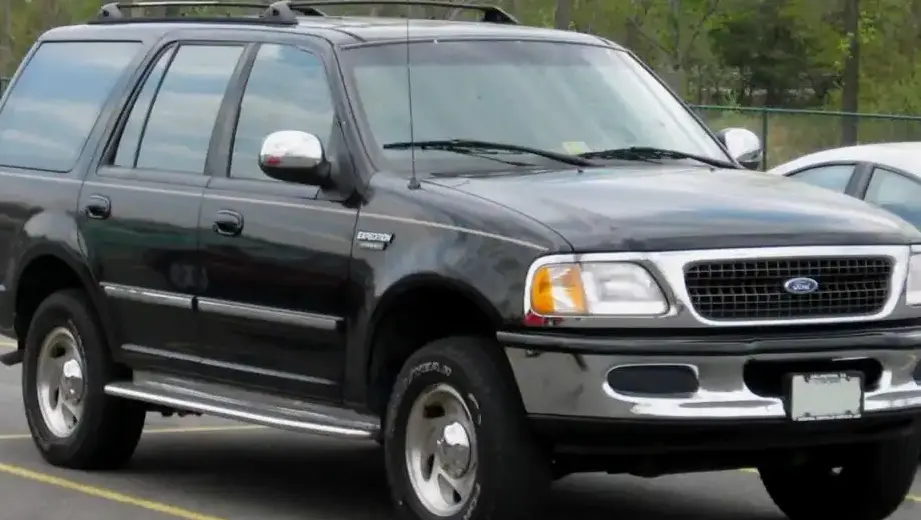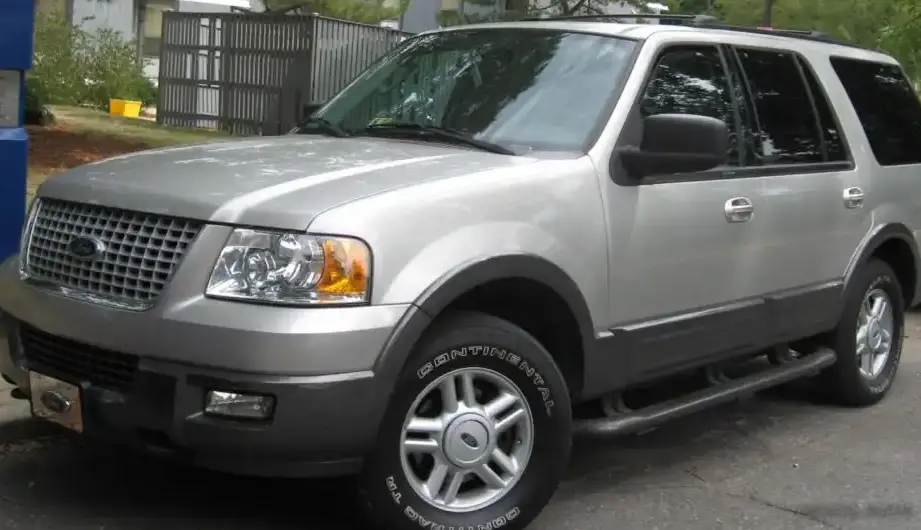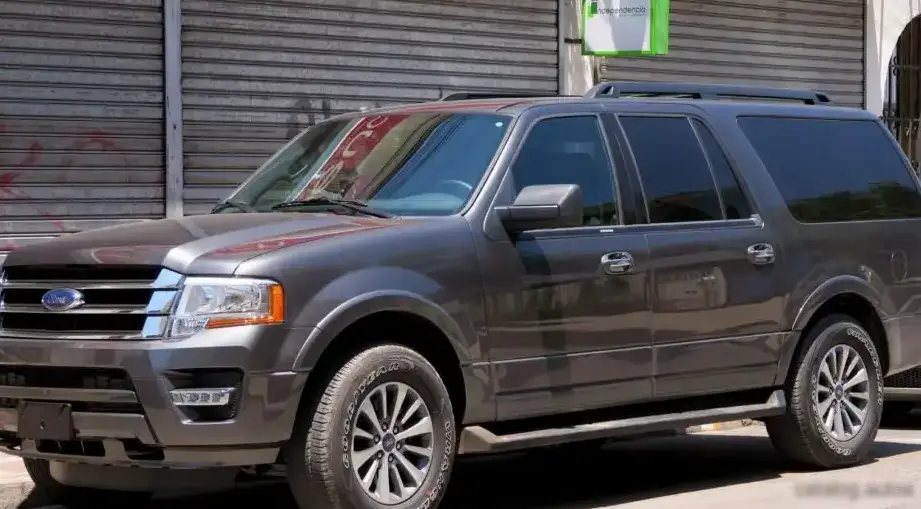
The Ford Expedition III EL, specifically the facelifted version produced from 2014 to 2017 (designated U3542), represented a significant evolution of Ford’s full-size SUV. This generation, built on the U354 platform, aimed to balance the demands of a large family vehicle with improved fuel efficiency and modern technology. Among the various engine and drivetrain options offered, the 3.5 EcoBoost V6 paired with the SelectShift automatic transmission became a popular choice, offering a compelling blend of power and capability. This variant positioned itself as a mid-to-upper range offering, appealing to buyers who desired strong performance without the cost or fuel economy penalties of heavier-duty configurations.
Technical Specifications
| Brand | Ford |
| Model | Expedition |
| Generation | Expedition III EL (U3542, facelift 2014) |
| Type (Engine) | 3.5 EcoBoost V6 (365 Hp) SelectShift |
| Start of production | August, 2014 |
| End of production | July, 2017 |
| Powertrain Architecture | Internal Combustion engine |
| Body type | SUV |
| Seats | 7-8 |
| Doors | 5 |
| Fuel consumption (economy) – urban (EPA) | 15.7 l/100 km (15 US mpg, 18 UK mpg, 6.4 km/l) |
| Fuel consumption (economy) – extra urban (EPA) | 11.8 l/100 km (19.9 US mpg, 23.9 UK mpg, 8.5 km/l) |
| Fuel consumption (economy) – combined (EPA) | 13.8 l/100 km (17 US mpg, 20.5 UK mpg, 7.2 km/l) |
| Fuel Type | Petrol (Gasoline) |
| Weight-to-power ratio | 7.3 kg/Hp, 137.8 Hp/tonne |
| Weight-to-torque ratio | 4.7 kg/Nm, 214.8 Nm/tonne |
| Power | 365 Hp @ 5000 rpm |
| Power per litre | 104.4 Hp/l |
| Torque | 569 Nm @ 2500 rpm (419.67 lb.-ft. @ 2500 rpm) |
| Engine layout | Front, Longitudinal |
| Engine Model/Code | EcoBoost |
| Engine displacement | 3496 cm3 (213.34 cu. in.) |
| Number of cylinders | 6 |
| Engine configuration | V-engine |
| Cylinder Bore | 92.5 mm (3.64 in.) |
| Piston Stroke | 86.7 mm (3.41 in.) |
| Compression ratio | 10:1 |
| Number of valves per cylinder | 4 |
| Fuel injection system | Direct injection |
| Engine aspiration | Twin-Turbo, Intercooler |
| Valvetrain | DOHC, Ti-VCT |
| Engine oil capacity | 5.7 l (6.02 US qt | 5.02 UK qt) |
| Coolant | 17 l (17.96 US qt | 14.96 UK qt) |
| Kerb Weight | 2649 kg (5840.05 lbs.) |
| Max. weight | 3384 kg (7460.44 lbs.) |
| Max load | 735 kg (1620.4 lbs.) |
| Trunk (boot) space – minimum | 1206 l (42.59 cu. ft.) |
| Trunk (boot) space – maximum | 3704 l (130.81 cu. ft.) |
| Fuel tank capacity | 127 l (33.55 US gal | 27.94 UK gal) |
| Permitted trailer load with brakes (12%) | 4173 kg (9199.89 lbs.) |
| Length | 5609 mm (220.83 in.) |
| Width | 2001 mm (78.78 in.) |
| Width with mirrors folded | 2024 mm (79.69 in.) |
| Width including mirrors | 2331 mm (91.77 in.) |
| Height | 1973 mm (77.68 in.) |
| Wheelbase | 3327 mm (130.98 in.) |
| Front track | 1702 mm (67.01 in.) |
| Rear (Back) track | 1707 mm (67.2 in.) |
| Front overhang | 986 mm (38.82 in.) |
| Rear overhang | 1298 mm (51.1 in.) |
| Ride height (ground clearance) | 211 mm (8.31 in.) |
| Minimum turning circle (turning diameter) | 13.9 m (45.6 ft.) |
| Approach angle | 22.5° |
| Departure angle | 20.4° |
| Ramp-over (brakeover) angle | 15.8° |
| Drivetrain Architecture | The Internal combustion engine (ICE) drives the rear wheels of the vehicle. |
| Drive wheel | Rear wheel drive |
| Number of gears and type of gearbox | 6 gears, automatic transmission SelectShift |
| Front suspension | Coil spring, Double wishbone, Transverse stabilizer |
| Rear suspension | Independent multi-link spring suspension with stabilizer |
| Front brakes | Ventilated discs, 350×34 mm |
| Rear brakes | Ventilated discs, 334.5×22 mm |
| Assisting systems | ABS (Anti-lock braking system) |
| Steering type | Steering rack and pinion |
| Power steering | Electric Steering |
| Tires size | 265/70 R17; 275/65 R18; 275/55 R20; 285/45 R22 |
| Wheel rims size | 7.5J x 17; 8J x 17; 8.5J x 18; 8.5J x 20; 9.5J x 22 |
INTRODUCTION
The 2014-2017 Ford Expedition III EL, equipped with the 3.5-liter EcoBoost V6 and SelectShift automatic transmission, was a key offering in Ford’s full-size SUV lineup. The “EL” designation signifies the extended length wheelbase, providing increased cargo capacity and third-row passenger space. This variant was positioned as a strong contender against rivals like the Chevrolet Tahoe and GMC Yukon, offering a more modern powertrain and a focus on improved fuel economy compared to traditional V8-powered competitors. The facelift introduced in 2015 brought updated styling and interior refinements, further enhancing the Expedition’s appeal.
Powertrain & Engine Architecture
At the heart of this Expedition variant lies Ford’s 3.5-liter EcoBoost V6 engine, internally designated as the third generation of the EcoBoost family. This engine utilizes a 60-degree V-configuration with direct fuel injection and twin turbochargers. The twin-turbo setup, coupled with intercooling, allows for a broad torque curve and minimizes turbo lag. The engine’s Ti-VCT (Twin Independent Variable Camshaft Timing) system optimizes valve timing for improved performance and efficiency. The SelectShift 6-speed automatic transmission, a crucial component of this powertrain, offers smooth and responsive shifting. It features a manual shift mode allowing drivers to exert more control over gear selection. The transmission was designed to handle the high torque output of the EcoBoost engine and contribute to overall fuel efficiency.
Driving Characteristics
The 365 horsepower and 420 lb-ft of torque delivered by the 3.5 EcoBoost V6 provided the Expedition with ample power for towing, hauling passengers, and everyday driving. While not as immediately responsive as some naturally aspirated V8 engines, the EcoBoost’s twin-turbochargers deliver a strong surge of power once boosted. The SelectShift transmission is well-tuned, providing smooth upshifts and downshifts. Compared to the base V6 engine offered in some Expedition trims, the EcoBoost variant offered a noticeable performance advantage. The gear ratios in the 6-speed automatic were optimized for both acceleration and highway cruising. While the EcoBoost didn’t quite match the raw towing capacity of the higher-output, heavy-duty versions of the Expedition, it provided a very capable and refined driving experience.
Equipment & Trim Levels
The 3.5 EcoBoost Expedition EL was typically offered in XLT, Limited, and King Ranch trim levels. Standard features on the XLT included tri-zone automatic climate control, a rearview camera, and a basic infotainment system. The Limited trim added leather upholstery, heated front seats, power-adjustable pedals, and a more advanced infotainment system with navigation. The top-of-the-line King Ranch trim featured premium leather, unique exterior styling cues, and a host of luxury features. Optional extras across all trims included a power-folding third-row seat, a Blu-Ray rear entertainment system, and a panoramic sunroof.
Chassis & Braking
The Expedition III EL utilized a body-on-frame construction, providing a robust and durable platform. The front suspension featured an independent double-wishbone design with coil springs and a stabilizer bar, while the rear suspension employed an independent multi-link setup with coil springs and a stabilizer bar. This suspension configuration aimed to balance ride comfort with handling stability. Braking duties were handled by ventilated discs on all four wheels, providing adequate stopping power for a vehicle of this size and weight. The inclusion of ABS (Anti-lock Braking System) was standard.
Market Reception & Comparison
The 3.5 EcoBoost Expedition EL received generally positive reviews from automotive critics. The engine was praised for its strong performance and improved fuel economy compared to traditional V8 engines. However, some reviewers noted that the EcoBoost engine could be more complex and potentially more expensive to repair than a naturally aspirated V8. Compared to the base V6 Expedition, the EcoBoost variant offered a significant performance upgrade, making it a more appealing option for buyers who frequently tow or haul heavy loads. Fuel economy, while improved over V8 models, remained relatively low compared to smaller SUVs.
Legacy
The 3.5 EcoBoost engine has proven to be a relatively reliable powertrain in the Expedition, although some owners have reported issues with spark plug fouling and turbocharger failures. Regular maintenance, including oil changes and spark plug replacements, is crucial for ensuring long-term reliability. On the used car market, the 2014-2017 Expedition III EL with the 3.5 EcoBoost engine holds its value reasonably well, particularly in well-maintained condition. Its combination of space, power, and features continues to make it a popular choice for families and those needing a capable full-size SUV.