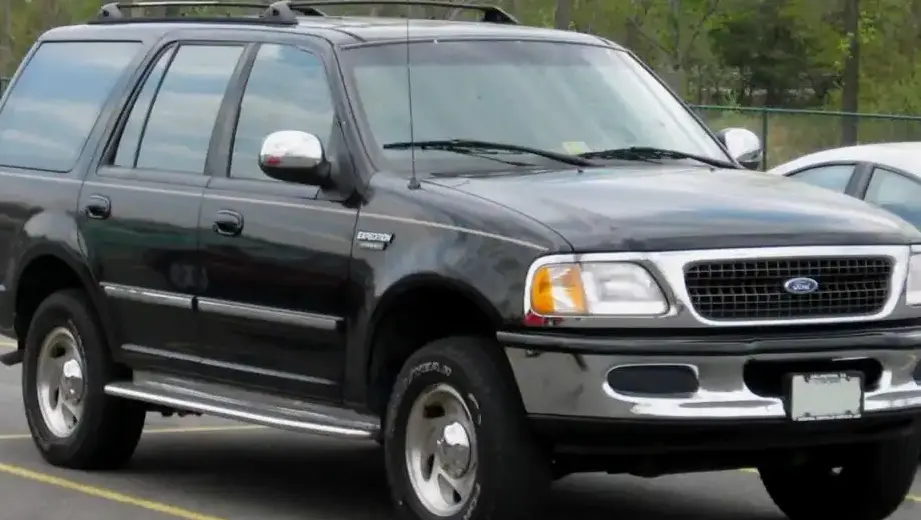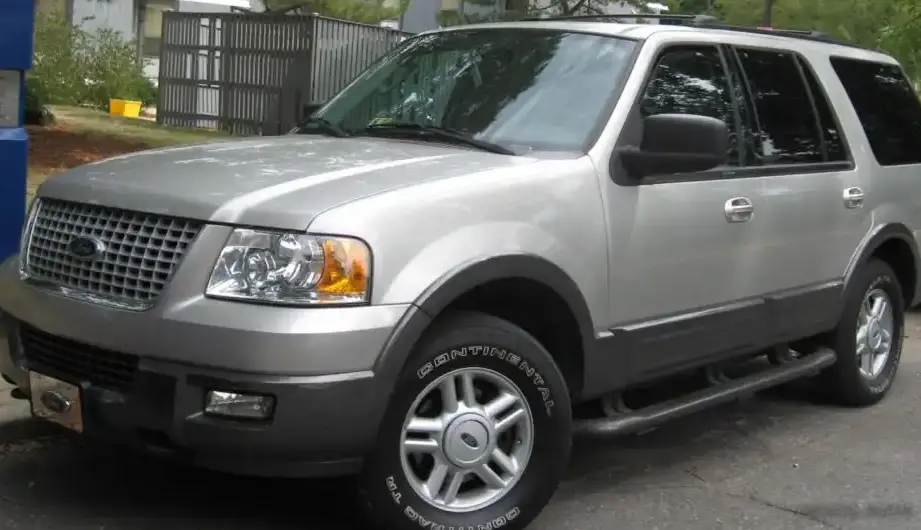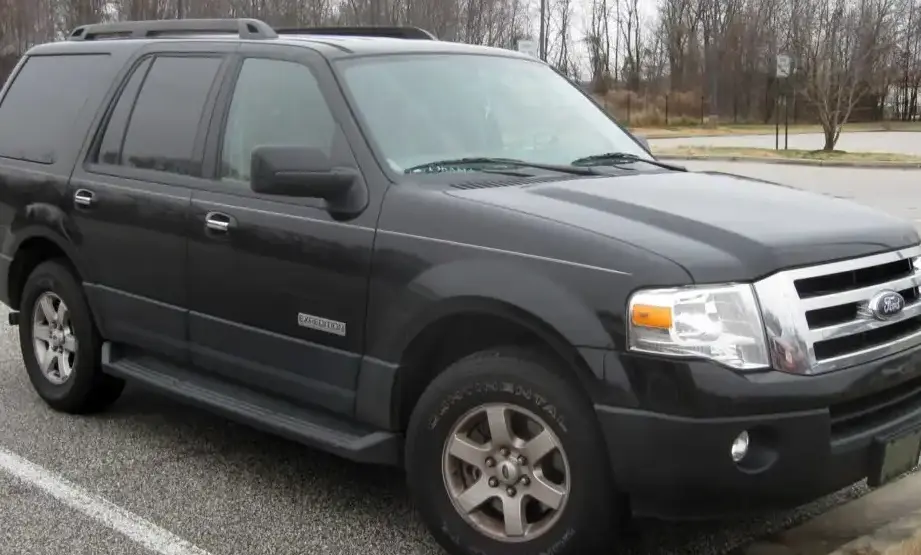
The Ford Expedition III (U324) 5.4 V8 4×4 Automatic, produced from 2006 to 2008, represented a significant evolution in Ford’s full-size SUV offerings. Positioned as a premium trim within the third generation Expedition lineup, it catered to buyers needing substantial towing capacity, interior space, and all-weather capability. This variant occupied a space between the base V6 models and the more luxurious, often shorter-wheelbase, Expedition EL trims. It was a key player in the American full-size SUV market, competing directly with the Chevrolet Tahoe, GMC Yukon, and Dodge Durango.
Technical Specifications
| Brand | Ford |
| Model | Expedition |
| Generation | Expedition III (U324) |
| Type (Engine) | 5.4 V8 (300 Hp) 4×4 Automatic |
| Start of production | August, 2006 |
| End of production | July, 2008 |
| Powertrain Architecture | Internal Combustion engine |
| Body type | SUV |
| Seats | 5-9 |
| Doors | 5 |
| Fuel Type | Petrol (Gasoline) |
| Power | 300 Hp @ 5000 rpm |
| Power per litre | 55.5 Hp/l |
| Torque | 495 Nm @ 3750 rpm / 365.09 lb.-ft. @ 3750 rpm |
| Engine layout | Front, Longitudinal |
| Engine Model/Code | Triton |
| Engine displacement | 5408 cm3 / 330.02 cu. in. |
| Number of cylinders | 8 |
| Engine configuration | V-engine |
| Cylinder Bore | 90.2 mm / 3.55 in. |
| Piston Stroke | 105.8 mm / 4.17 in. |
| Compression ratio | 9.85:1 |
| Number of valves per cylinder | 3 |
| Fuel injection system | Multi-port manifold injection |
| Engine aspiration | Naturally aspirated engine |
| Valvetrain | SOHC, VCT |
| Engine oil capacity | 6.6 l / 6.97 US qt | 5.81 UK qt |
| Coolant | 19.5 l / 20.61 US qt | 17.16 UK qt |
| Trunk (boot) space – minimum | 527 l / 18.61 cu. ft. |
| Trunk (boot) space – maximum | 3067 l / 108.31 cu. ft. |
| Fuel tank capacity | 106 l / 28 US gal | 23.32 UK gal |
| Permitted trailer load with brakes (12%) | 4082 kg / 8999.27 lbs. |
| Length | 5245 mm / 206.5 in. |
| Width | 2002 mm / 78.82 in. |
| Width with mirrors folded | 2024 mm / 79.69 in. |
| Width including mirrors | 2332 mm / 91.81 in. |
| Height | 1961 mm / 77.2 in. |
| Wheelbase | 3023 mm / 119.02 in. |
| Front overhang | 996 mm / 39.21 in. |
| Rear overhang | 1227 mm / 48.31 in. |
| Ride height (ground clearance) | 221 mm / 8.7 in. |
| Approach angle | 22.6° |
| Departure angle | 21.5° |
| Ramp-over (brakeover) angle | 18.3° |
| Drivetrain Architecture | The Internal combustion engine (ICE) drives the rear wheels permanently, and the front wheels are driven through an electrically or mechanically operated clutch if necessary. |
| Drive wheel | All wheel drive (4×4) |
| Number of gears and type of gearbox | 6 gears, automatic transmission |
| Front suspension | Coil spring, Double wishbone, Transverse stabilizer |
| Rear suspension | Independent multi-link spring suspension with stabilizer, Air Suspension – Optional |
| Front brakes | Ventilated discs |
| Rear brakes | Ventilated discs |
| Assisting systems | ABS (Anti-lock braking system) |
| Steering type | Steering rack and pinion |
| Power steering | Hydraulic Steering |
| Tires size | 265/70 R17; 255/70 R18; 275/55 R20 |
| Wheel rims size | 17; 18; 20 |
INTRODUCTION
The 2006-2008 Ford Expedition III, specifically the 5.4 V8 4×4 Automatic variant, was built on the U324 platform, shared with the Lincoln Navigator. This generation represented a move towards a more refined and capable full-size SUV. The U324 platform brought with it a fully independent rear suspension, a significant upgrade from the solid rear axle of previous Expeditions, improving ride quality and handling. This particular trim level aimed to provide a balance of power, capability, and comfort for families and those needing to tow substantial loads. It was a popular choice in regions where inclement weather and varied terrain were common.
Powertrain & Engine Architecture
At the heart of this Expedition variant lies Ford’s 5.4-liter Triton V8 engine. This engine, designated as the 3V due to its three valves per cylinder, produced 300 horsepower at 5000 rpm and 495 Nm (365 lb-ft) of torque at 3750 rpm. The Triton engine family was known for its robust construction and relatively simple design, though it did have some well-documented issues with spark plug breakage. The engine utilized multi-port fuel injection and a single overhead camshaft (SOHC) design with variable valve timing (VCT) to optimize performance and fuel efficiency. The 5.4L engine was longitudinally mounted in the chassis. Paired with this engine was a six-speed automatic transmission, a significant upgrade from the four-speed units found in earlier Expeditions. This transmission offered smoother shifts and improved fuel economy. The 4×4 system employed an electronically controlled transfer case, allowing the driver to switch between 2WD, 4WD High, and 4WD Low.
Driving Characteristics
The 5.4L V8 and six-speed automatic combination provided adequate, though not exhilarating, performance. Acceleration from 0 to 60 mph was typically in the 7.5-8.5 second range. The six-speed transmission helped keep the engine in its optimal power band, providing reasonable responsiveness for highway merging and passing maneuvers. Compared to the base V6 Expedition, the 5.4L offered significantly more power and torque, making it a much better choice for towing. However, it wasn’t as nimble or fuel-efficient as the smaller engine. The independent rear suspension contributed to a more comfortable ride, especially on uneven surfaces, but the Expedition’s substantial weight (over 5,500 lbs) was always noticeable. The automatic transmission, while improved, wasn’t as engaging as a manual transmission, and some drivers found the shift points to be somewhat conservative.
Equipment & Trim Levels
The 5.4L 4×4 Automatic Expedition typically came standard with features such as air conditioning, power windows and locks, a CD player, and cloth upholstery. Higher trim levels, such as the XLT and Limited, added features like leather upholstery, heated seats, a premium sound system, and a power liftgate. Optional extras included a navigation system, rear-seat entertainment system, and power-adjustable pedals. The interior design was functional and spacious, with seating for up to nine passengers depending on the configuration. The third-row seats were typically a 60/40 split-folding bench, providing flexibility for cargo and passenger needs.
Chassis & Braking
The Expedition III utilized a body-on-frame construction, providing a robust and durable platform. The front suspension consisted of an independent double wishbone setup with coil springs and a transverse stabilizer bar. The rear suspension was an independent multi-link design, also with coil springs and a stabilizer bar. Air suspension was available as an option on some trims, further enhancing ride comfort and allowing for adjustable ride height. Braking duties were handled by ventilated discs on all four wheels, coupled with an anti-lock braking system (ABS). The braking system was generally effective, but the Expedition’s weight required a firm pedal effort.
Market Reception & Comparison
The 2006-2008 Ford Expedition 5.4L 4×4 Automatic received generally positive reviews. Critics praised its spacious interior, comfortable ride, and strong towing capacity. However, some reviewers noted its relatively poor fuel economy and somewhat uninspired handling. Compared to the V6 Expedition, the 5.4L offered a significant performance advantage, but at the cost of increased fuel consumption. Compared to the Chevrolet Tahoe and GMC Yukon, the Expedition offered a more comfortable ride due to its independent rear suspension, but some competitors offered more refined interiors. Reliability was generally good, although the 5.4L Triton engine was known for potential spark plug issues and occasional camshaft phaser failures.
Legacy
The Ford Expedition III 5.4L 4×4 Automatic remains a popular choice in the used car market, particularly for those seeking a capable and spacious SUV at a reasonable price. While the 5.4L Triton engine requires regular maintenance to prevent potential issues, it is generally a durable and reliable powertrain. The independent rear suspension of this generation Expedition significantly improved ride quality and handling compared to previous models, making it a more comfortable and enjoyable vehicle to drive. Today, these Expeditions are often found being used for towing boats, campers, and other recreational vehicles, continuing to serve as versatile family haulers.