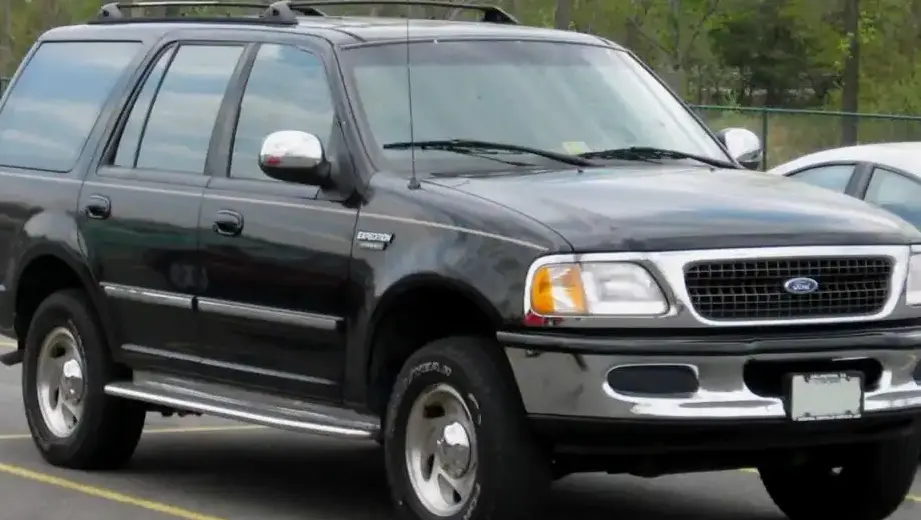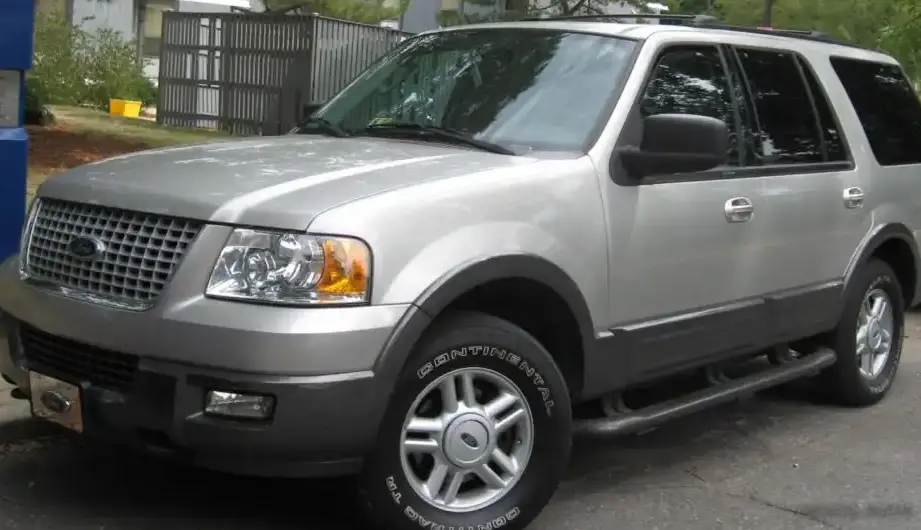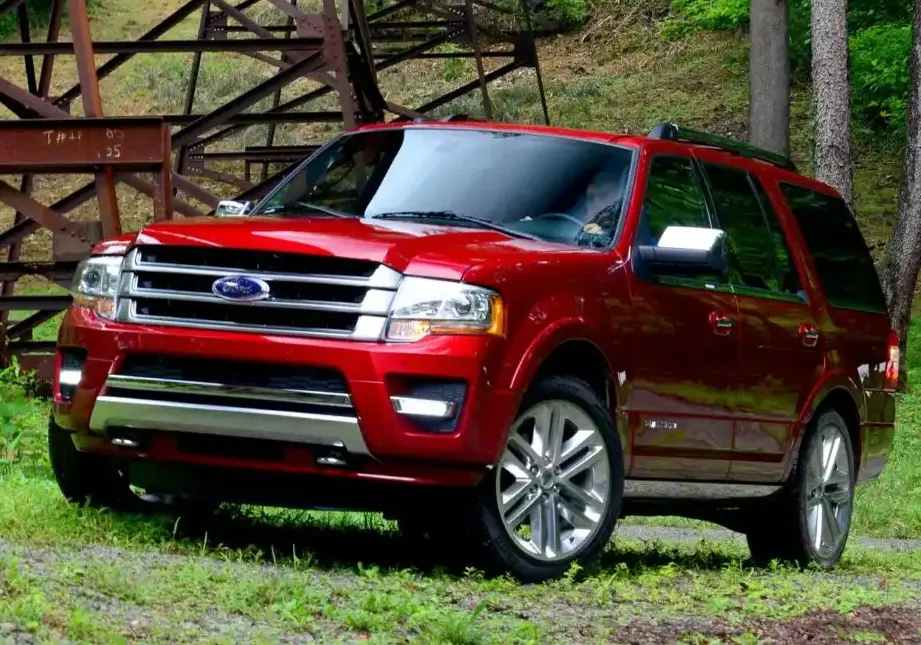
The Ford Expedition III, specifically the facelifted model produced from 2014 to 2017, represented a significant evolution in Ford’s full-size SUV offerings. This generation, designated as the U3242, built upon the success of its predecessors, offering increased space, improved technology, and a more refined driving experience. Among the various configurations available, the 3.5 EcoBoost V6 with 365 horsepower paired with the 4×4 SelectShift automatic transmission stands out as a popular and well-regarded option. This variant occupied a premium position within the Expedition lineup, offering a balance of power, capability, and comfort for families and those needing substantial towing capacity.
Technical Specifications
| Brand | Ford |
| Model | Expedition |
| Generation | Expedition III (U3242, facelift 2014) |
| Type (Engine) | 3.5 EcoBoost V6 (365 Hp) 4×4 SelectShift |
| Start of production | August, 2014 |
| End of production | July, 2017 |
| Powertrain Architecture | Internal Combustion engine |
| Body type | SUV |
| Seats | 7-8 |
| Doors | 5 |
| Fuel consumption (economy) – urban (EPA) | 15.7 l/100 km (15 US mpg, 18 UK mpg, 6.4 km/l) |
| Fuel consumption (economy) – extra urban (EPA) | 11.8 l/100 km (19.9 US mpg, 23.9 UK mpg, 8.5 km/l) |
| Fuel consumption (economy) – combined (EPA) | 13.8 l/100 km (17 US mpg, 20.5 UK mpg, 7.2 km/l) |
| Fuel Type | Petrol (Gasoline) |
| Weight-to-power ratio | 7.2 kg/Hp, 139 Hp/tonne |
| Weight-to-torque ratio | 4.6 kg/Nm, 216.7 Nm/tonne |
| Power | 365 Hp @ 5000 rpm |
| Power per litre | 104.4 Hp/l |
| Torque | 569 Nm @ 2500 rpm (419.67 lb.-ft. @ 2500 rpm) |
| Engine layout | Front, Longitudinal |
| Engine Model/Code | EcoBoost |
| Engine displacement | 3496 cm3 (213.34 cu. in.) |
| Number of cylinders | 6 |
| Engine configuration | V-engine |
| Cylinder Bore | 92.5 mm (3.64 in.) |
| Piston Stroke | 86.7 mm (3.41 in.) |
| Compression ratio | 10:1 |
| Number of valves per cylinder | 4 |
| Fuel injection system | Direct injection |
| Engine aspiration | Twin-Turbo, Intercooler |
| Valvetrain | DOHC, Ti-VCT |
| Engine oil capacity | 5.7 l (6.02 US qt | 5.02 UK qt) |
| Coolant | 17 l (17.96 US qt | 14.96 UK qt) |
| Kerb Weight | 2626 kg (5789.34 lbs.) |
| Max. weight | 3374 kg (7438.4 lbs.) |
| Max load | 748 kg (1649.06 lbs.) |
| Trunk (boot) space – minimum | 528 l (18.65 cu. ft.) |
| Trunk (boot) space – maximum | 3065 l (108.24 cu. ft.) |
| Fuel tank capacity | 106 l (28 US gal | 23.32 UK gal) |
| Permitted trailer load with brakes (12%) | 4173 kg (9199.89 lbs.) |
| Length | 5233 mm (206.02 in.) |
| Width | 2001 mm (78.78 in.) |
| Width with mirrors folded | 2024 mm (79.69 in.) |
| Width including mirrors | 2331 mm (91.77 in.) |
| Height | 1960 mm (77.17 in.) |
| Wheelbase | 3022 mm (118.98 in.) |
| Front track | 1702 mm (67.01 in.) |
| Rear (Back) track | 1707 mm (67.2 in.) |
| Front overhang | 986 mm (38.82 in.) |
| Rear overhang | 1226 mm (48.27 in.) |
| Ride height (ground clearance) | 204 mm (8.03 in.) |
| Minimum turning circle (turning diameter) | 12.8 m (41.99 ft.) |
| Approach angle | 22.2° |
| Departure angle | 21.7° |
| Ramp-over (brakeover) angle | 16.3° |
| Drivetrain Architecture | The Internal combustion engine (ICE) drives the rear wheels permanently, and the front wheels are driven through an electrically or mechanically operated clutch if necessary. |
| Drive wheel | All wheel drive (4×4) |
| Number of gears and type of gearbox | 6 gears, automatic transmission SelectShift |
| Front suspension | Coil spring, Double wishbone, Transverse stabilizer |
| Rear suspension | Independent multi-link spring suspension with stabilizer |
| Front brakes | Ventilated discs, 350×34 mm |
| Rear brakes | Ventilated discs, 334.5×22 mm |
| Assisting systems | ABS (Anti-lock braking system) |
| Steering type | Steering rack and pinion |
| Power steering | Electric Steering |
| Tires size | 265/70 R17; 275/65 R18; 275/55 R20; 285/45 R22 |
| Wheel rims size | 7.5J x 17; 8J x 17; 8.5J x 18; 8.5J x 20; 9.5J x 22 |
Powertrain & Engine Architecture
The heart of this Expedition variant is the 3.5-liter EcoBoost V6 engine. This engine, part of Ford’s EcoBoost family, utilizes a twin-turbocharged configuration to deliver a substantial 365 horsepower and 569 lb-ft of torque. The engine code is generally identified as part of the broader EcoBoost family, and specific calibrations varied slightly year to year. Direct fuel injection is employed for precise fuel delivery, maximizing efficiency and power output. The engine features a double overhead camshaft (DOHC) valvetrain with variable valve timing (Ti-VCT) on both intake and exhaust valves, further optimizing performance across the rev range. The 6-speed SelectShift automatic transmission is specifically tuned to handle the high torque output of the EcoBoost engine. This transmission offers smooth shifts and allows for manual gear selection, providing drivers with greater control when needed. The SelectShift feature allows for a more engaging driving experience than a traditional automatic.
Driving Characteristics
The 3.5 EcoBoost V6 equipped Expedition delivers a markedly different driving experience compared to lower-powered engine options. The abundant torque, readily available from 2500 rpm, provides effortless acceleration and strong towing capability. While not a sports car, the Expedition feels surprisingly agile for its size, thanks to the responsive engine and well-tuned suspension. The 6-speed automatic transmission is generally smooth and responsive, although some drivers noted occasional hunting for the right gear in certain situations. Compared to the naturally aspirated V8 engines previously offered, the EcoBoost provides a more refined and efficient driving experience. The 4×4 system provides enhanced traction in various conditions, making it suitable for both on-road and light off-road use.
Equipment & Trim Levels
The 3.5 EcoBoost 4×4 typically came in higher trim levels, such as the Limited or Platinum. Standard features included leather upholstery, heated and ventilated front seats, a premium sound system, and a comprehensive suite of safety technologies. The Limited trim offered features like power-folding mirrors, rear parking sensors, and a power liftgate. The Platinum trim added even more luxury, including premium leather, wood trim, and a panoramic sunroof. Optional extras included a rear-seat entertainment system, adaptive cruise control, and a blind-spot monitoring system.
Chassis & Braking
The Expedition III utilizes a body-on-frame construction, providing a robust and durable platform. The front suspension features an independent double wishbone setup with coil springs and a transverse stabilizer bar, while the rear suspension employs an independent multi-link design with coil springs and a stabilizer bar. This configuration provides a comfortable ride and good handling characteristics. Braking duties are handled by ventilated discs on all four wheels, providing ample stopping power. The ABS (Anti-lock Braking System) is standard, enhancing safety during emergency braking situations.
Market Reception & Comparison
The 3.5 EcoBoost Expedition was generally well-received by critics and consumers alike. The engine was praised for its power and efficiency, offering a compelling alternative to traditional V8 engines. Fuel economy, while not exceptional for a full-size SUV, was noticeably better than V8-powered competitors. Compared to other trims in the Expedition lineup, the EcoBoost variant commanded a higher price but offered a superior driving experience and greater capability. Some critics noted the complexity of the EcoBoost engine and its potential for higher maintenance costs compared to simpler engines.
Legacy
The 3.5 EcoBoost engine has proven to be a reliable and durable powertrain when properly maintained. While some early EcoBoost engines experienced issues with timing chain guides, these problems were largely addressed in later model years. Today, the 2014-2017 Expedition with the 3.5 EcoBoost engine holds its value reasonably well in the used car market. Its combination of power, space, and features makes it a popular choice for families and those needing a capable and comfortable SUV. Regular maintenance, including oil changes and timely servicing of the turbochargers, is crucial for ensuring the long-term reliability of this powertrain.