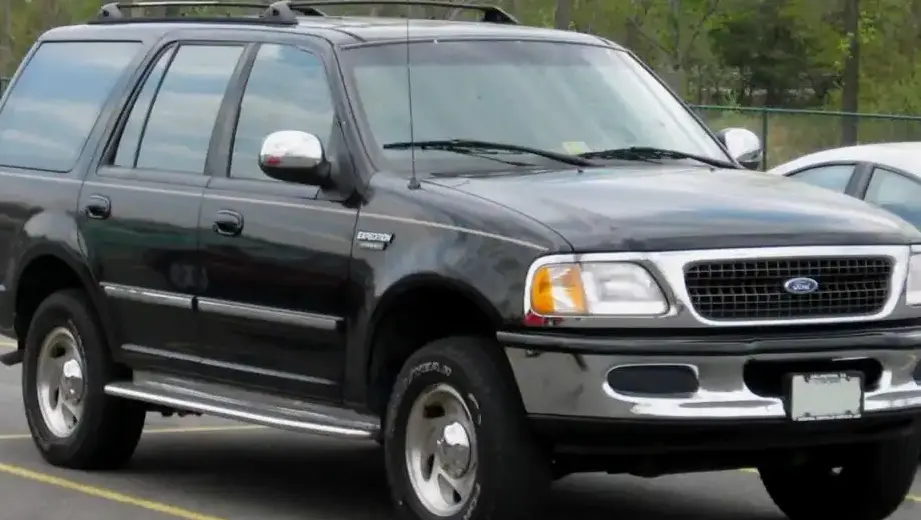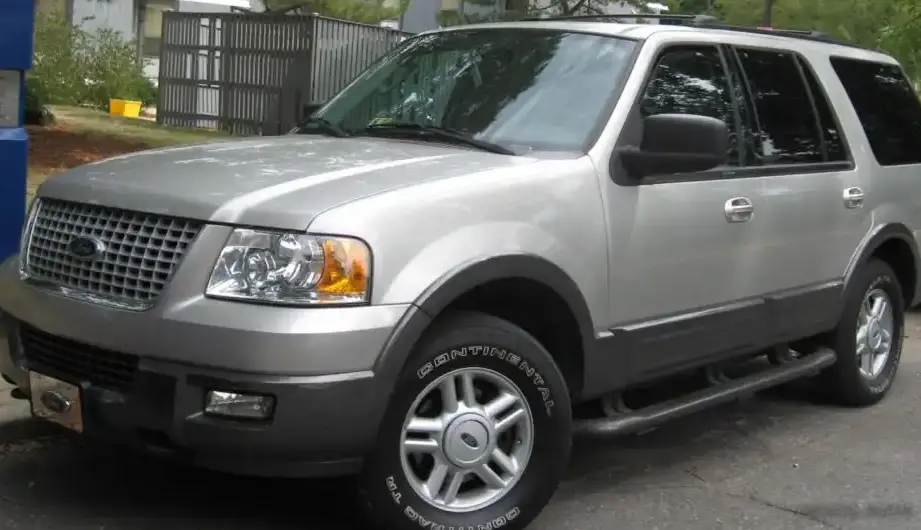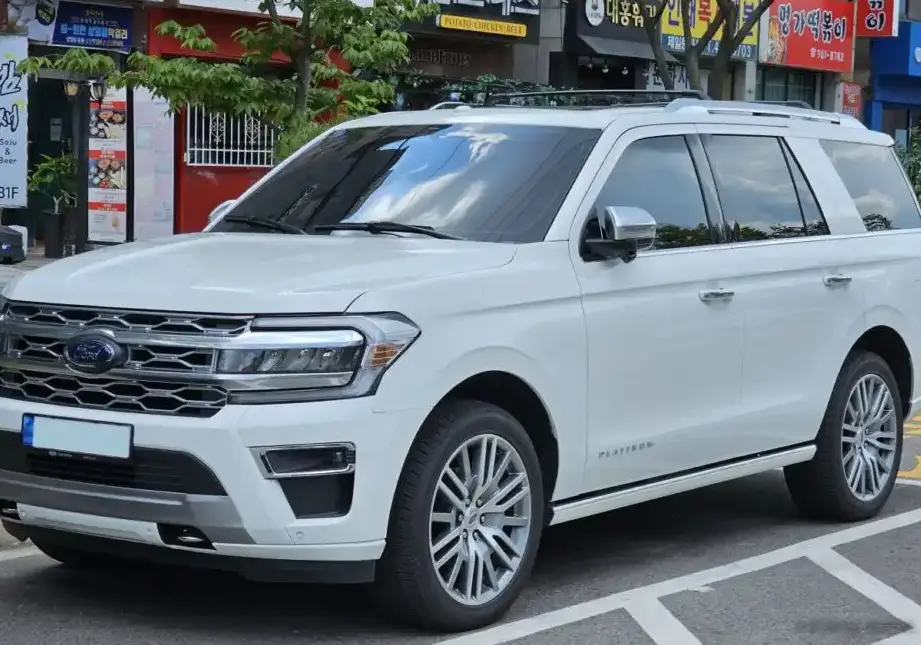
The Ford Expedition IV, specifically the facelifted U553 model produced from 2021 to 2024, represents the fourth generation of Ford’s full-size SUV. Positioned as a premium offering within the Expedition lineup, the 3.5 EcoBoost V6 (380 hp) with the SelectShift 10-speed automatic transmission was a popular configuration, aimed at buyers needing substantial towing capacity and a refined driving experience. This variant occupied the mid-to-upper range of the Expedition trims, offering a balance between performance, luxury, and capability. It served as a direct competitor to vehicles like the Chevrolet Tahoe and GMC Yukon in the North American market.
Technical Specifications
| Brand | Ford |
| Model | Expedition |
| Generation | Expedition IV (U553, facelift 2021) |
| Type (Engine) | 3.5 EcoBoost V6 (380 Hp) SelectShift |
| Start of production | 2021 |
| End of production | 2024 |
| Powertrain Architecture | Internal Combustion engine |
| Body type | SUV |
| Seats | 5-8 |
| Doors | 5 |
| Fuel consumption (economy) – urban (EPA) | 13.8 l/100 km (17 US mpg, 20.5 UK mpg, 7.2 km/l) |
| Fuel consumption (economy) – extra urban (EPA) | 10.2 l/100 km (23.1 US mpg, 27.7 UK mpg, 9.8 km/l) |
| Fuel consumption (economy) – combined (EPA) | 12.4 l/100 km (19 US mpg, 22.8 UK mpg, 8.1 km/l) |
| Fuel Type | Petrol (Gasoline) |
| Weight-to-power ratio | 6.4 kg/Hp, 156.1 Hp/tonne |
| Weight-to-torque ratio | 3.8 kg/Nm, 261.6 Nm/tonne |
| Power | 380 Hp @ 5000 rpm |
| Power per litre | 108.7 Hp/l |
| Torque | 637 Nm @ 2250 rpm (469.83 lb.-ft. @ 2250 rpm) |
| Engine layout | Front, Longitudinal |
| Engine Model/Code | EcoBoost |
| Engine displacement | 3497 cm3 (213.4 cu. in.) |
| Number of cylinders | 6 |
| Engine configuration | V-engine |
| Cylinder Bore | 92.5 mm (3.64 in.) |
| Piston Stroke | 86.6 mm (3.41 in.) |
| Compression ratio | 10.5:1 |
| Number of valves per cylinder | 4 |
| Fuel injection system | Direct injection |
| Engine aspiration | Twin-Turbo, Intercooler |
| Valvetrain | DOHC, TI-VCT |
| Engine oil capacity | 5.7 l (6.02 US qt | 5.02 UK qt) |
| Coolant | 14.6 l (15.43 US qt | 12.85 UK qt) |
| Kerb Weight | 2435 kg (5368.26 lbs.) |
| Trunk (boot) space – minimum | 546 l (19.28 cu. ft.) |
| Trunk (boot) space – maximum | 2968 l (104.81 cu. ft.) |
| Fuel tank capacity | 87.8 l (23.19 US gal | 19.31 UK gal) |
| Permitted trailer load with brakes (12%) | 2722 kg (6000.98 lbs.) |
| Length | 5333 mm (209.96 in.) |
| Width | 2029 mm (79.88 in.) |
| Width with mirrors folded | 2124 mm (83.62 in.) |
| Width including mirrors | 2373 mm (93.43 in.) |
| Height | 1945 mm (76.57 in.) |
| Wheelbase | 3112 mm (122.52 in.) |
| Front track | 1717 mm (67.6 in.) |
| Rear (Back) track | 1707 mm (67.2 in.) |
| Front overhang | 971 mm (38.23 in.) |
| Rear overhang | 1251 mm (49.25 in.) |
| Ride height (ground clearance) | 250 mm (9.84 in.) |
| Approach angle | 23.4° |
| Departure angle | 22.2° |
| Ramp-over (brakeover) angle | 21.5° |
| Drivetrain Architecture | The Internal combustion engine (ICE) drives the rear wheels of the vehicle. |
| Drive wheel | Rear wheel drive |
| Number of gears and type of gearbox | 10 gears, automatic transmission SelectShift |
| Front suspension | Double wishbone, Transverse stabilizer |
| Rear suspension | Independent multi-link spring suspension with stabilizer |
| Front brakes | Ventilated discs |
| Rear brakes | Ventilated discs |
| Assisting systems | ABS (Anti-lock braking system) |
| Steering type | Steering rack and pinion |
| Power steering | Electric Steering |
| Tires size | 265/70 R17; 275/65 R18 |
| Wheel rims size | 17; 18 |
Powertrain & Engine Architecture
The heart of this Expedition variant is Ford’s 3.5-liter EcoBoost V6 engine. This engine, part of Ford’s EcoBoost family, utilizes a twin-turbocharged configuration to deliver a substantial 380 horsepower and 637 lb-ft of torque. The engine employs direct fuel injection, maximizing combustion efficiency and power output. The valvetrain features a Double Overhead Camshaft (DOHC) design with Twin Independent Variable Camshaft Timing (TI-VCT), allowing for precise control of valve timing to optimize performance across the engine’s operating range. The engine code is generally associated with the broader EcoBoost family, rather than a specific alphanumeric designation like older Ford engines.
Paired with the engine is Ford’s 10-speed SelectShift automatic transmission. This transmission is designed to provide smooth and responsive shifting, while also contributing to improved fuel economy. The wide range of gear ratios allows the engine to operate in its optimal power band more frequently. The SelectShift functionality allows drivers to manually select gears if desired, offering a degree of control over the driving experience.
Driving Characteristics
The 3.5 EcoBoost V6 with the 10-speed automatic delivers a noticeably different driving experience compared to lower-powered Expedition trims. Acceleration is brisk, and the engine provides ample torque for effortless highway cruising and towing. The 10-speed transmission helps keep the engine in its sweet spot, minimizing turbo lag and maximizing responsiveness. While not a sports car, the Expedition feels surprisingly agile for its size. Compared to the base naturally aspirated V6, the EcoBoost offers a significant performance advantage. The automatic transmission, while generally smooth, can occasionally exhibit some hunting for the right gear, particularly during moderate acceleration.
Equipment & Trim Levels
The 3.5 EcoBoost Expedition typically came standard with features like a leather-trimmed interior, tri-zone automatic climate control, a power liftgate, and a comprehensive infotainment system with Apple CarPlay and Android Auto compatibility. Higher trim levels added features such as premium sound systems, heated and ventilated front seats, and advanced driver-assistance systems like adaptive cruise control and lane-keeping assist. Optional extras included a panoramic sunroof, power-folding running boards, and a rear-seat entertainment system.
Chassis & Braking
The Expedition IV utilizes a body-on-frame construction, providing a robust and durable platform. The suspension consists of an independent front suspension with double wishbones and a transverse stabilizer, and an independent multi-link rear suspension with a stabilizer. This setup aims to balance ride comfort with handling stability. Braking duties are handled by ventilated discs on all four wheels, providing ample stopping power. The anti-lock braking system (ABS) is standard, enhancing safety during emergency braking situations.
Market Reception & Comparison
The 3.5 EcoBoost Expedition was generally well-received by critics and consumers alike. The engine was praised for its strong performance and relatively good fuel economy for a vehicle of its size. However, some reviewers noted that the ride quality could be firm, particularly on rough roads. Compared to the base V6 model, the EcoBoost offered a significant upgrade in performance, but at a higher price point. Fuel economy, while improved over older V8-powered Expeditions, remained a concern for some buyers, given the vehicle’s size and weight.
Legacy
The 3.5 EcoBoost engine has proven to be a reliable and durable powertrain in the Expedition. While some early EcoBoost engines experienced issues with timing chain guides, these problems were largely addressed in later model years. The 10-speed automatic transmission has also proven to be generally reliable. As a result, well-maintained 2021-2024 Expedition models with the 3.5 EcoBoost engine continue to hold their value in the used car market, appealing to buyers seeking a capable and comfortable full-size SUV.