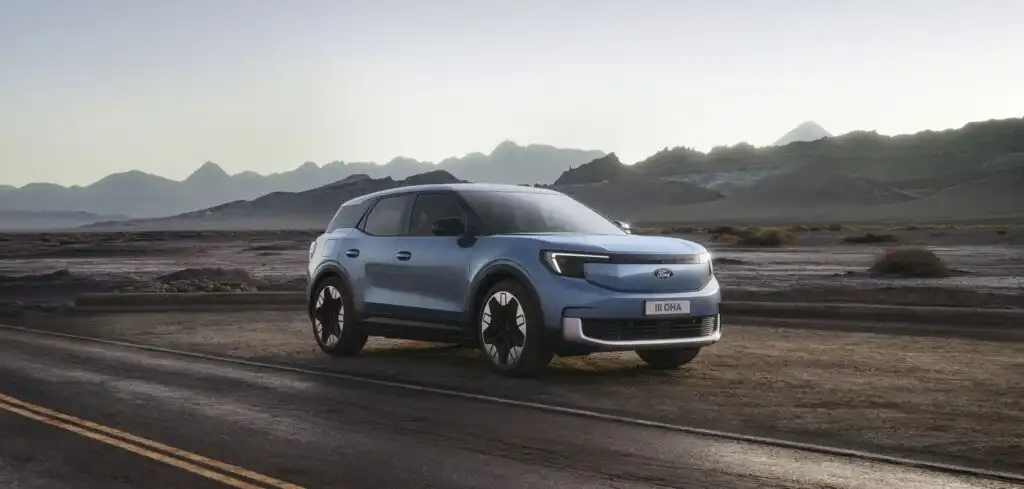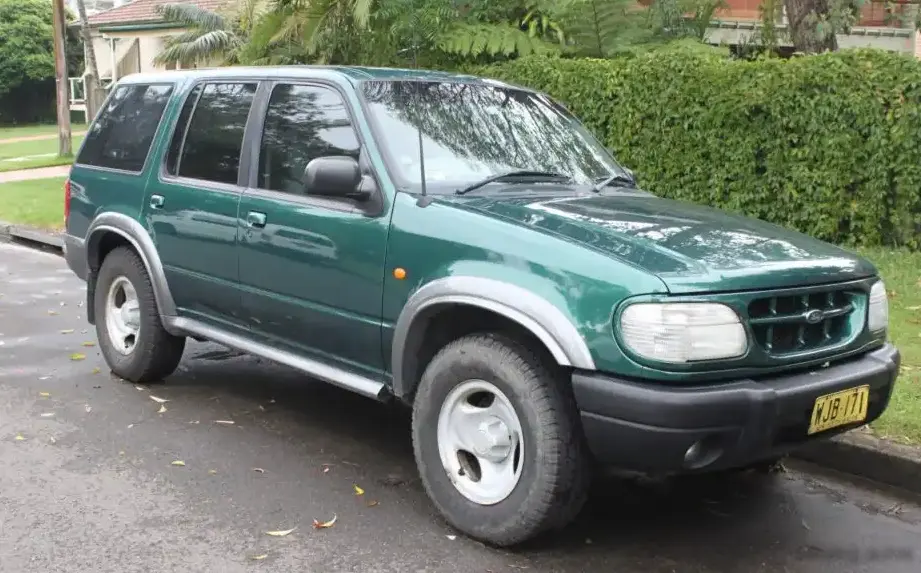
The Ford Explorer II 4.0 XLT 4WD, produced from 1996 to 2003, represented a significant evolution of Ford’s popular SUV. This second-generation Explorer (internally designated as the U100 platform) built upon the success of the original, offering increased size, improved refinement, and a wider range of features. The 4.0 XLT 4WD trim, powered by the 4.0-liter V6 engine producing 208 horsepower, occupied a sweet spot in the lineup, balancing capability with affordability. It was positioned as a mid-range offering, appealing to families and individuals seeking a versatile vehicle for both daily commuting and weekend adventures. This variant was particularly popular in North America, where the demand for larger SUVs was high.
Technical Specifications
| Brand | Ford |
| Model | Explorer |
| Generation | Explorer II |
| Type (Engine) | 4.0 XLT 4WD (208 Hp) |
| Start of production | 1996 |
| End of production | 2003 |
| Powertrain Architecture | Internal Combustion engine |
| Body type | SUV |
| Seats | 5 |
| Doors | 5 |
| Fuel consumption (urban) | 18.2 l/100 km (12.9 US mpg) |
| Fuel consumption (extra urban) | 11.1 l/100 km (21.2 US mpg) |
| Fuel Type | Petrol (Gasoline) |
| Acceleration 0 – 100 km/h | 10.9 sec |
| Acceleration 0 – 62 mph | 10.9 sec |
| Acceleration 0 – 60 mph | 10.4 sec |
| Maximum speed | 171 km/h (106.25 mph) |
| Weight-to-power ratio | 9.6 kg/Hp |
| Weight-to-torque ratio | 5.9 kg/Nm |
| Power | 208 Hp @ 5250 rpm |
| Torque | 339 Nm @ 3000 rpm (250.03 lb.-ft. @ 3000 rpm) |
| Engine layout | Front, Longitudinal |
| Engine displacement | 3996 cm3 (243.85 cu. in.) |
| Number of cylinders | 6 |
| Engine configuration | V-engine |
| Cylinder Bore | 100.3 mm (3.95 in.) |
| Piston Stroke | 84.3 mm (3.32 in.) |
| Compression ratio | 9.7:1 |
| Number of valves per cylinder | 2 |
| Fuel injection system | Multi-port manifold injection |
| Engine aspiration | Naturally aspirated engine |
| Engine oil capacity | 4.7 l (4.97 US qt | 4.14 UK qt) |
| Coolant capacity | 7.4 l (7.82 US qt | 6.51 UK qt) |
| Kerb Weight | 1990 kg (4387.2 lbs.) |
| Max. weight | 2510 kg (5533.6 lbs.) |
| Max load | 520 kg (1146.4 lbs.) |
| Trunk (boot) space – minimum | 1205 l (42.55 cu. ft.) |
| Trunk (boot) space – maximum | 2310 l (81.58 cu. ft.) |
| Fuel tank capacity | 83 l (21.93 US gal | 18.26 UK gal) |
| Length | 4790 mm (188.58 in.) |
| Width | 1790 mm (70.47 in.) |
| Height | 1800 mm (70.87 in.) |
| Wheelbase | 2830 mm (111.42 in.) |
| Front track | 1490 mm (58.66 in.) |
| Rear (Back) track | 1490 mm (58.66 in.) |
| Drive wheel | All wheel drive (4×4) |
| Number of gears and type of gearbox | 5 gears, manual transmission |
| Front suspension | Coil spring |
| Rear suspension | Leaf spring |
| Front brakes | Disc |
| Rear brakes | Disc |
| Assisting systems | ABS (Anti-lock braking system) |
| Steering type | Steering rack and pinion |
| Power steering | Hydraulic Steering |
| Tires size | 255/70 R16 |
Powertrain & Engine Architecture
The heart of the Explorer II 4.0 XLT 4WD was the 4.0-liter OHV (Overhead Valve) V6 engine. This engine, belonging to Ford’s Essex family, was a robust and relatively simple design. The engine code varied slightly depending on the year, but generally fell within the range of the 4.0L Windsor variants. It featured a cast iron block and aluminum cylinder heads, contributing to its durability. Fuel delivery was handled by a multi-port fuel injection system, providing adequate performance for the vehicle’s size and weight. The 5-speed manual transmission was a key component, offering a balance between fuel efficiency and driver control. While an automatic transmission was also available, the manual provided a more engaging driving experience and slightly better fuel economy. The engine’s valvetrain utilized two valves per cylinder, a common configuration for this type of engine at the time.
Driving Characteristics
The 4.0-liter V6, paired with the 5-speed manual transmission, delivered adequate, though not exhilarating, performance. Acceleration from 0-60 mph took around 10.4 seconds, which was competitive for the class in the late 1990s and early 2000s. The manual transmission allowed drivers to make the most of the engine’s torque, providing reasonable responsiveness in most driving situations. The 4WD system offered enhanced traction in inclement weather and on unpaved surfaces, making it a capable vehicle for a variety of conditions. Compared to the higher-output 4.0-liter SOHC engine (available in later Explorer models), the OHV version felt less refined and produced less peak power. However, it was generally considered more reliable and easier to maintain. The leaf spring rear suspension, while providing good load-carrying capacity, resulted in a somewhat firm ride quality, particularly when unladen.
Equipment & Trim Levels
The XLT trim level offered a good balance of features and value. Standard equipment typically included air conditioning, power windows and locks, a CD player, and cloth upholstery. The 4WD system was a significant addition, enhancing the vehicle’s all-weather capability. Optional extras included leather upholstery, a sunroof, upgraded audio systems, and alloy wheels. The interior design was functional and straightforward, prioritizing practicality over luxury. The dashboard layout was typical of Ford vehicles of the era, with clearly labeled controls and a relatively simple instrument cluster.
Chassis & Braking
The Explorer II utilized a body-on-frame construction, providing a robust and durable chassis. The front suspension featured coil springs, while the rear suspension employed leaf springs. This configuration allowed for a high payload capacity and good towing capability. The braking system consisted of disc brakes on all four wheels, providing adequate stopping power for the vehicle’s weight. An Anti-lock Braking System (ABS) was included as standard equipment, enhancing safety and control during emergency braking maneuvers. The steering system was a hydraulic rack-and-pinion setup, offering responsive and precise steering feel.
Market Reception & Comparison
The Explorer II 4.0 XLT 4WD was generally well-received by critics and consumers alike. It was praised for its spacious interior, comfortable ride, and capable 4WD system. However, some reviewers noted the engine’s lack of refinement and the somewhat firm ride quality. Compared to other SUVs in its class, such as the Chevrolet Blazer and the Jeep Grand Cherokee, the Explorer offered a compelling combination of features, value, and reliability. Fuel economy was average for the segment, with EPA estimates around 15 mpg city and 20 mpg highway. The manual transmission version offered slightly better fuel economy than the automatic.
Legacy
The Ford Explorer II 4.0 XLT 4WD has proven to be a relatively reliable vehicle over the long term. The 4.0-liter V6 engine is known for its durability, and the manual transmission is generally considered to be robust. However, like all vehicles of this age, they are prone to certain issues, such as rust, worn suspension components, and occasional engine oil leaks. In the used car market today, these Explorers are often sought after by enthusiasts and those looking for a capable and affordable SUV. They represent a significant piece of automotive history, embodying the popularity of the SUV segment in the late 1990s and early 2000s. While not a performance machine, the 4.0 XLT 4WD remains a practical and versatile vehicle for those seeking a classic American SUV.