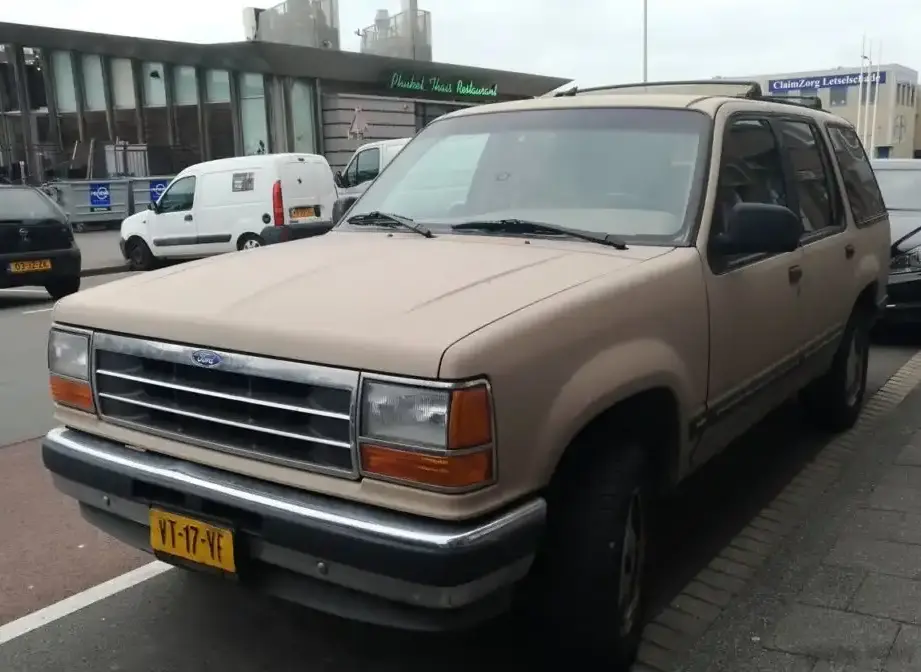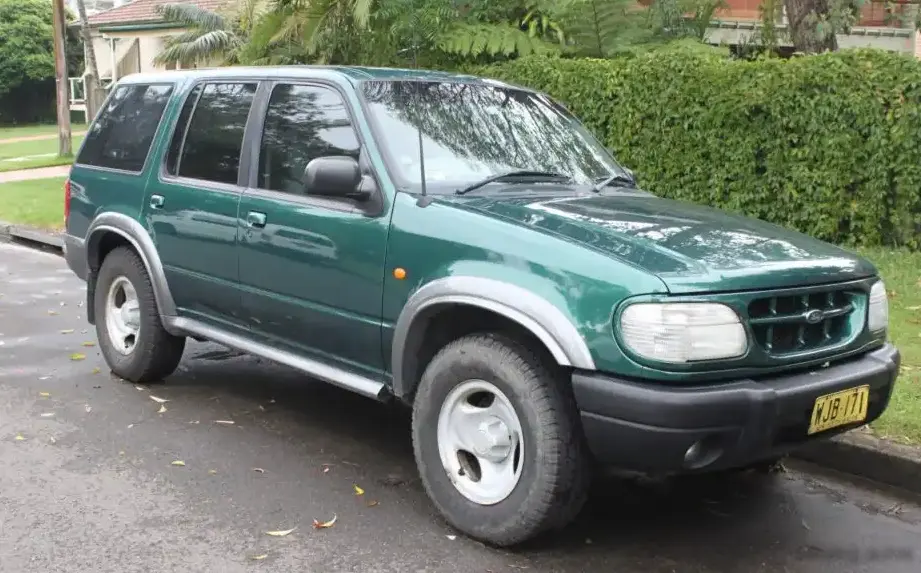
The Ford Explorer II 5.0 V8 XLT, produced from 1996 to 2003, represented a significant iteration of Ford’s popular SUV. This variant, equipped with the 5.0-liter V8 engine and a four-speed automatic transmission, occupied a mid-to-upper position within the Explorer II lineup, offering a balance of power, comfort, and capability. It was a key player in the increasingly competitive SUV market of the late 1990s and early 2000s, appealing to families and individuals seeking a robust vehicle for both daily driving and recreational pursuits. The Explorer II, a stretched version of the original Explorer, aimed to provide more interior space and cargo capacity, addressing a growing demand for larger SUVs.
Technical Specifications
| Brand | Ford |
| Model | Explorer |
| Generation | Explorer II |
| Type (Engine) | 5.0 V8 XLT (210 Hp) |
| Start of production | 1996 |
| End of production | 2003 |
| Powertrain Architecture | Internal Combustion engine |
| Body type | SUV |
| Seats | 5 |
| Doors | 5 |
| Fuel Type | Petrol (Gasoline) |
| Weight-to-power ratio | 9 kg/Hp, 111.1 Hp/tonne |
| Weight-to-torque ratio | 5.1 kg/Nm, 197.3 Nm/tonne |
| Power | 210 Hp @ 4600 rpm |
| Power per litre | 42.5 Hp/l |
| Torque | 373 Nm @ 3200 rpm, 275.11 lb.-ft. @ 3200 rpm |
| Engine layout | Front, Longitudinal |
| Engine displacement | 4942 cm3, 301.58 cu. in. |
| Number of cylinders | 8 |
| Engine configuration | V-engine |
| Cylinder Bore | 101.6 mm, 4 in. |
| Piston Stroke | 76.2 mm, 3 in. |
| Compression ratio | 8.8:1 |
| Number of valves per cylinder | 2 |
| Fuel injection system | Multi-port manifold injection |
| Engine aspiration | Naturally aspirated engine |
| Engine oil capacity | 4.7 l, 4.97 US qt | 4.14 UK qt |
| Coolant | 12.1 l, 12.79 US qt | 10.65 UK qt |
| Kerb Weight | 1891 kg, 4168.94 lbs. |
| Trunk (boot) space – minimum | 1206 l, 42.59 cu. ft. |
| Trunk (boot) space – maximum | 2311 l, 81.61 cu. ft. |
| Fuel tank capacity | 66 l, 17.44 US gal | 14.52 UK gal |
| Length | 4788 mm, 188.5 in. |
| Width | 1783 mm, 70.2 in. |
| Height | 1699 mm, 66.89 in. |
| Wheelbase | 2832 mm, 111.5 in. |
| Front track | 1494 mm, 58.82 in. |
| Rear (Back) track | 1488 mm, 58.58 in. |
| Drivetrain Architecture | The Internal combustion engine (ICE) drives the rear wheels of the vehicle. |
| Drive wheel | Rear wheel drive |
| Number of gears and type of gearbox | 4 gears, automatic transmission |
| Front suspension | Double wishbone |
| Rear suspension | Leaf spring |
| Front brakes | Disc |
| Rear brakes | Disc |
| Assisting systems | ABS (Anti-lock braking system) |
| Steering type | Steering rack and pinion |
| Power steering | Hydraulic Steering |
| Tires size | 225/70 R 15 |
Powertrain & Engine Architecture
The heart of the Explorer II 5.0 XLT was the 4.9-liter (301.58 cu. in.) Ford Windsor V8 engine. This engine, designated as the 5.0, was a staple of Ford’s lineup for decades, known for its robust construction and relatively simple design. It featured a cast iron block and cylinder heads, with a two-valve-per-cylinder configuration. Fuel delivery was handled by a multi-port fuel injection system, providing a balance between efficiency and performance. The engine produced 210 horsepower at 4600 rpm and 373 Nm (275.11 lb.-ft.) of torque at 3200 rpm. The four-speed automatic transmission (typically the 4R70W) was chosen for its durability and suitability for towing. This transmission featured electronic control for smoother shifting and improved fuel economy compared to earlier iterations. The transmission’s gear ratios were optimized for both on-road cruising and off-road capability.
Driving Characteristics
The 5.0 V8 and automatic transmission combination delivered a comfortable and capable driving experience. While not as quick as some of the lighter, more performance-oriented SUVs, the Explorer II 5.0 XLT offered ample power for merging onto highways, passing other vehicles, and towing trailers. The automatic transmission provided smooth, if not particularly sporty, shifts. The torque output of the 5.0 V8 was readily available at lower engine speeds, making it well-suited for everyday driving and off-road situations. Compared to the base 4.0-liter V6 engine, the 5.0 V8 provided a noticeable increase in power and towing capacity. However, it came at the expense of slightly lower fuel economy. The rear-wheel-drive configuration contributed to a more traditional SUV feel, offering a sense of stability and control.
Equipment & Trim Levels
The XLT trim level represented a step up from the base Explorer II, offering a more comprehensive list of standard features. These typically included air conditioning, power windows and locks, a premium sound system, and upgraded interior trim. Cloth upholstery was standard, with leather options available as an upgrade. Optional extras included a power sunroof, a CD player, and a towing package. The interior layout was functional and spacious, with seating for five passengers. The extended wheelbase of the Explorer II provided significantly more cargo space behind the second-row seats compared to the standard Explorer.
Chassis & Braking
The Explorer II utilized a body-on-frame construction, providing a robust and durable platform. The front suspension featured a double wishbone design, while the rear suspension employed leaf springs. This setup prioritized ride comfort and load-carrying capacity over sporty handling. Disc brakes were standard on all four wheels, providing adequate stopping power for the vehicle’s weight. An Anti-lock Braking System (ABS) was included as a standard safety feature. The steering system utilized a hydraulic power steering rack and pinion, offering responsive and precise steering control. The standard tire size was 225/70 R 15, providing a good balance between ride comfort and traction.
Market Reception & Comparison
The Explorer II 5.0 V8 XLT was generally well-received by critics and consumers alike. It was praised for its spacious interior, comfortable ride, and powerful engine. However, some reviewers noted that the vehicle’s size and weight could make it feel cumbersome in tight spaces. Compared to other SUVs in its class, such as the Chevrolet Tahoe and the GMC Yukon, the Explorer II offered a more affordable price point and a more manageable size. Fuel economy was a common criticism, as the 5.0 V8 engine was not particularly fuel-efficient. Reliability was generally good, although some owners reported issues with the automatic transmission and the rear differential.
Legacy
The Ford Explorer II 5.0 V8 XLT remains a popular choice among used car buyers seeking a capable and affordable SUV. The 5.0 V8 engine is known for its durability and relatively simple maintenance requirements. While parts availability may be diminishing, many components are still readily available from aftermarket suppliers. The Explorer II’s spacious interior and towing capacity continue to make it a practical choice for families and individuals with active lifestyles. However, potential buyers should be aware of potential issues with the automatic transmission and the rear differential, and should ensure that the vehicle has been properly maintained. The Explorer II, and particularly the 5.0 XLT variant, represents a significant chapter in Ford’s SUV history, bridging the gap between traditional body-on-frame SUVs and the more modern, car-based crossovers that would follow.