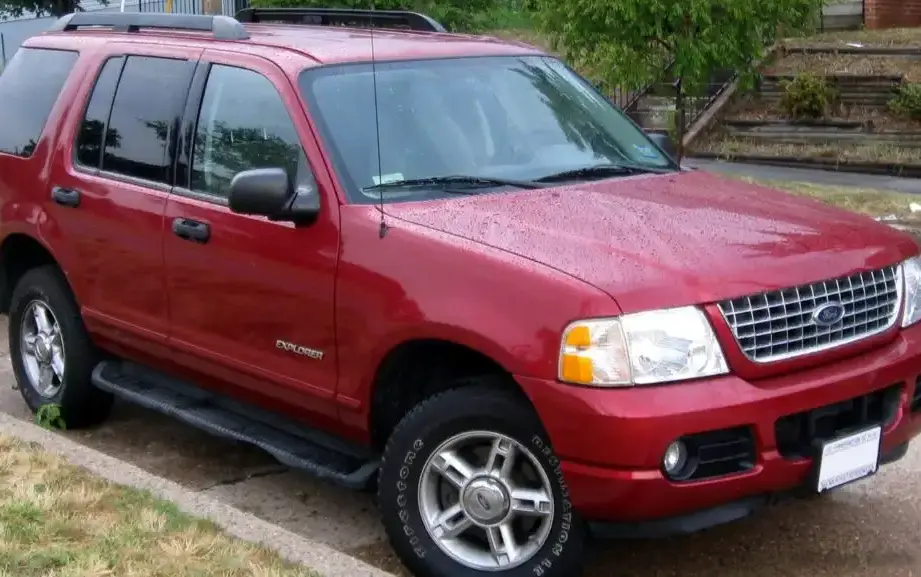
The Ford Explorer III, produced from 2002 to 2005, represented a significant evolution in Ford’s popular SUV lineup. This generation marked a shift towards a more refined and capable vehicle, addressing criticisms of the previous Explorer models. Among the various engine and drivetrain configurations offered, the 4.0-liter V6 producing 213 horsepower became a mainstay, offering a balance of power and affordability. This variant, typically paired with a five-speed manual transmission, positioned itself as a versatile option for families and those seeking a capable all-terrain vehicle without the premium price tag of the higher-output engines.
Technical Specifications
| Brand | Ford |
| Model | Explorer |
| Generation | Explorer III |
| Type (Engine) | 4.0 V6 (213 Hp) |
| Start of production | 2002 |
| End of production | 2005 |
| Powertrain Architecture | Internal Combustion engine |
| Body type | SUV |
| Seats | 5 |
| Doors | 5 |
| Fuel consumption (urban) | 15.7 l/100 km (15 US mpg, 18 UK mpg) |
| Fuel consumption (extra urban) | 11.8 l/100 km (19.9 US mpg, 23.9 UK mpg) |
| Fuel Type | Petrol (Gasoline) |
| Acceleration 0 – 100 km/h | 10 sec |
| Acceleration 0 – 62 mph | 10 sec |
| Acceleration 0 – 60 mph | 9.5 sec |
| Maximum speed | 180 km/h (111.85 mph) |
| Weight-to-power ratio | 9.2 kg/Hp |
| Weight-to-torque ratio | 5.8 kg/Nm |
| Power | 213 Hp @ 5250 rpm |
| Torque | 339 Nm @ 4000 rpm (250.03 lb.-ft. @ 4000 rpm) |
| Engine layout | Front, Longitudinal |
| Engine Model/Code | Cologne |
| Engine displacement | 3996 cm3 (243.85 cu. in.) |
| Number of cylinders | 6 |
| Engine configuration | V-engine |
| Cylinder Bore | 100.3 mm (3.95 in.) |
| Piston Stroke | 84.3 mm (3.32 in.) |
| Compression ratio | 9.7:1 |
| Number of valves per cylinder | 2 |
| Fuel injection system | Multi-port manifold injection |
| Engine aspiration | Naturally aspirated engine |
| Valvetrain | DOHC |
| Engine oil capacity | 4.7 l (4.97 US qt | 4.14 UK qt) |
| Coolant | 15.4 l (16.27 US qt | 13.55 UK qt) |
| Kerb Weight | 1965 kg (4332.08 lbs.) |
| Trunk (boot) space – minimum | 1320 l (46.62 cu. ft.) |
| Trunk (boot) space – maximum | 2490 l (87.93 cu. ft.) |
| Fuel tank capacity | 85 l (22.45 US gal | 18.7 UK gal) |
| Length | 4810 mm (189.37 in.) |
| Width | 1830 mm (72.05 in.) |
| Height | 1830 mm (72.05 in.) |
| Wheelbase | 2890 mm (113.78 in.) |
| Front track | 1545 mm (60.83 in.) |
| Rear (Back) track | 1555 mm (61.22 in.) |
| Drive wheel | All wheel drive (4×4) |
| Number of gears and type of gearbox | 5 gears, manual transmission |
| Front suspension | Double wishbone |
| Rear suspension | Coil spring |
| Front brakes | Ventilated discs |
| Rear brakes | Ventilated discs |
| Assisting systems | ABS (Anti-lock braking system) |
| Steering type | Steering rack and pinion |
| Power steering | Hydraulic Steering |
| Tires size | 235/70 R16 |
Powertrain & Engine Architecture
The heart of this Explorer variant is the 4.0-liter Cologne V6 engine. This engine, a mainstay in Ford’s lineup for many years, is a naturally aspirated, 90-degree V6 featuring a cast iron block and aluminum cylinder heads. The engine utilizes a multi-port fuel injection system, delivering fuel directly to each intake port for optimized combustion. The double overhead camshaft (DOHC) valvetrain, with two valves per cylinder, contributes to efficient cylinder filling and exhaust scavenging. The 5-speed manual transmission provided a direct connection to the engine, offering drivers more control over gear selection and power delivery. This transmission was chosen for its durability and relatively simple design, making it a reliable partner for the 4.0L V6.
Driving Characteristics
The 4.0-liter V6 with the five-speed manual transmission offered a noticeably more engaging driving experience compared to the automatic transmission equipped models. While not a performance-oriented setup, the 213 horsepower and 250 lb-ft of torque provided adequate power for everyday driving and towing. Acceleration from 0-60 mph took around 9.5 seconds, respectable for a mid-size SUV of its era. The manual transmission allowed drivers to keep the engine in its optimal power band, resulting in responsive acceleration. The gear ratios were well-suited for both on-road cruising and off-road crawling, making it a versatile vehicle for various terrains. Compared to the higher-output 4.0L V6, this version felt less strained during acceleration, and the manual transmission offered better fuel economy.
Equipment & Trim Levels
The 4.0-liter V6 manual Explorer typically came standard with features like air conditioning, power windows and locks, and an AM/FM stereo. Higher trim levels, such as the XLT and Limited, added features like leather upholstery, a premium sound system, and alloy wheels. Optional extras included a power sunroof, a navigation system, and a rear entertainment system. The interior design was functional and durable, prioritizing practicality over luxury. The dashboard layout was straightforward, with easy-to-read gauges and intuitive controls.
Chassis & Braking
The Explorer III utilized a body-on-frame construction, providing a robust and durable platform. The suspension consisted of an independent double wishbone setup at the front and a coil spring setup at the rear. This configuration offered a comfortable ride quality while maintaining good handling characteristics. Braking duties were handled by ventilated discs at all four corners, providing ample stopping power. An anti-lock braking system (ABS) was standard, enhancing safety and control during emergency braking situations. The all-wheel-drive system, a key feature of the Explorer, provided enhanced traction in various weather conditions and off-road scenarios.
Market Reception & Comparison
The 4.0-liter V6 manual Explorer was generally well-received by critics and consumers alike. It was praised for its versatility, reliability, and affordability. While not as powerful as the V8 options, the V6 offered a good balance of performance and fuel economy. Fuel economy figures averaged around 15 mpg in the city and 19.9 mpg on the highway. Compared to the automatic transmission version, the manual offered slightly better fuel efficiency and a more engaging driving experience. The V6 was often seen as the sweet spot in the Explorer lineup, appealing to buyers who didn’t need the extra power of the V8 but still wanted a capable and reliable SUV.
Legacy
The 4.0-liter V6 engine, in general, has proven to be a durable and reliable powerplant. While not immune to age-related issues, these engines are known to withstand high mileage with proper maintenance. The manual transmission version, in particular, is often favored by enthusiasts for its simplicity and robustness. Today, the Explorer III 4.0L V6 manual can be found on the used car market at relatively affordable prices. It remains a popular choice for those seeking a capable and dependable SUV for family transportation, light off-roading, or as a project vehicle. Its enduring popularity is a testament to its well-rounded design and proven reliability.