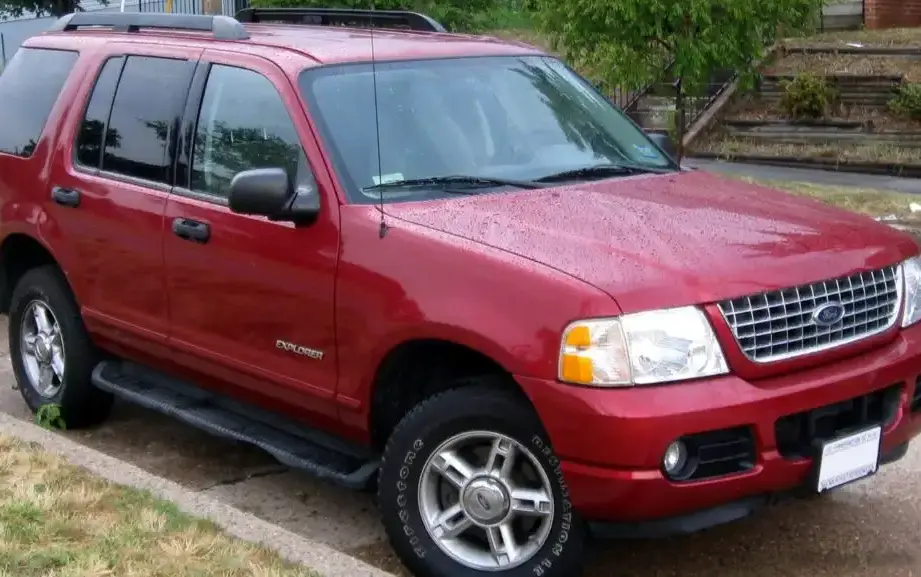
The Ford Explorer III, produced between 2002 and 2005, represented a significant evolution in Ford’s popular SUV lineup. This generation, built on the North American D3 platform, aimed to blend truck-based ruggedness with improved on-road refinement. Within the Explorer III range, the 4.6-liter V8 engine option, producing 242 horsepower, occupied a position as the premium powertrain choice, offering a substantial step up in performance compared to the base 4.0-liter V6. This variant was primarily targeted towards buyers needing towing capacity and robust acceleration, often families or those with active lifestyles. The 4.6L V8 was available with both automatic and manual transmissions, though the automatic was by far the more common configuration.
Technical Specifications
| Brand | Ford |
| Model | Explorer |
| Generation | Explorer III |
| Type (Engine) | 4.6 V8 (242 Hp) |
| Start of production | 2002 |
| End of production | 2005 |
| Powertrain Architecture | Internal Combustion engine |
| Body type | SUV |
| Seats | 5 |
| Doors | 5 |
| Fuel consumption (urban) | 16.8 l/100 km (14 US mpg, 16.8 UK mpg) |
| Fuel consumption (extra urban) | 12.4 l/100 km (19 US mpg, 22.8 UK mpg) |
| Fuel Type | Petrol (Gasoline) |
| Maximum speed | 185 km/h (114.95 mph) |
| Weight-to-power ratio | 8.1 kg/Hp |
| Weight-to-torque ratio | 5.2 kg/Nm |
| Power | 242 Hp @ 4750 rpm |
| Power per litre | 52.6 Hp/l |
| Torque | 380 Nm @ 4000 rpm (280.27 lb.-ft. @ 4000 rpm) |
| Engine layout | Front, Longitudinal |
| Engine Model/Code | Modular |
| Engine displacement | 4601 cm3 (280.77 cu. in.) |
| Number of cylinders | 8 |
| Engine configuration | V-engine |
| Cylinder Bore | 90.2 mm (3.55 in.) |
| Piston Stroke | 90 mm (3.54 in.) |
| Compression ratio | 9.4:1 |
| Fuel injection system | Multi-port manifold injection |
| Engine aspiration | Naturally aspirated engine |
| Valvetrain | DOHC |
| Engine oil capacity | 5.7 l (6.02 US qt | 5.02 UK qt) |
| Coolant | 17.6 l (18.6 US qt | 15.49 UK qt) |
| Kerb Weight | 1965 kg (4332.08 lbs.) |
| Trunk (boot) space – minimum | 1320 l (46.62 cu. ft.) |
| Trunk (boot) space – maximum | 2490 l (87.93 cu. ft.) |
| Fuel tank capacity | 85 l (22.45 US gal | 18.7 UK gal) |
| Length | 4810 mm (189.37 in.) |
| Width | 1830 mm (72.05 in.) |
| Height | 1830 mm (72.05 in.) |
| Wheelbase | 2890 mm (113.78 in.) |
| Front track | 1545 mm (60.83 in.) |
| Rear (Back) track | 1555 mm (61.22 in.) |
| Drive wheel | All wheel drive (4×4) |
| Number of gears and type of gearbox | 5 gears, manual transmission |
| Front suspension | Double wishbone |
| Rear suspension | Coil spring |
| Front brakes | Ventilated discs |
| Rear brakes | Disc |
| Assisting systems | ABS (Anti-lock braking system) |
| Steering type | Steering rack and pinion |
| Power steering | Hydraulic Steering |
| Tires size | 235/70 R16 |
Powertrain & Engine Architecture
The heart of this Explorer variant is Ford’s 4.6-liter Modular V8 engine. This engine, designated within the Ford family as part of the “Modular” engine series, featured a 90-degree V-angle and a cast iron block with aluminum cylinder heads. The engine utilized a single overhead camshaft (SOHC) design per bank, operating 3 valves per cylinder (2 intake, 1 exhaust). Fuel delivery was managed by a multi-port fuel injection system, providing precise fuel metering for optimal combustion. The 4.6L V8 produced 242 horsepower at 4750 rpm and 280 lb-ft of torque at 4000 rpm. The most common transmission pairing was a 5-speed automatic, offering smooth shifts and a torque converter designed to handle the V8’s output. A 5-speed manual transmission was also available, but represented a small percentage of sales.
Driving Characteristics
The 4.6L V8 equipped Explorer offered a noticeable performance advantage over the V6 models. Acceleration was brisk, and the engine provided ample power for highway passing and towing. The automatic transmission, while smooth, wasn’t particularly sporty, prioritizing comfort and ease of use. The gear ratios were tuned for everyday driving and towing, rather than outright performance. Compared to the manual transmission, the automatic offered a more relaxed driving experience, but at the expense of some driver engagement. The all-wheel-drive system provided enhanced traction in inclement weather, making it a capable vehicle in a variety of conditions.
Equipment & Trim Levels
The 4.6L V8 was typically offered on higher trim levels, such as the Limited and Eddie Bauer. These trims included features like leather upholstery, heated front seats, a premium sound system, and automatic climate control. Optional extras included a power moonroof, navigation system, and rear-seat entertainment system. Standard safety features included ABS brakes, front airbags, and side-impact airbags. The interior design was generally functional and comfortable, with a focus on durability and practicality.
Chassis & Braking
The Explorer III utilized a body-on-frame construction, providing a robust and durable chassis. The front suspension featured an independent double-wishbone design, while the rear suspension employed a solid axle with coil springs. This setup provided a comfortable ride, but wasn’t particularly sporty in handling. Braking duties were handled by ventilated disc brakes at the front and solid disc brakes at the rear. The ABS system helped to maintain control during hard braking situations. The Explorer’s weight, around 4332 lbs, contributed to its stable feel on the road.
Market Reception & Comparison
The 4.6L V8 Explorer was generally well-received by critics and consumers alike. It was praised for its strong performance, towing capacity, and comfortable ride. However, fuel economy was a common criticism, with the V8 engine consuming significantly more fuel than the V6. Compared to the V6 models, the V8 Explorer commanded a higher price tag, but offered a substantial upgrade in performance and features. It also faced competition from other mid-size SUVs, such as the Chevrolet TrailBlazer and the Jeep Grand Cherokee.
Legacy
The Ford Explorer III 4.6L V8 remains a popular choice in the used car market, particularly among those seeking a capable and reliable SUV with ample power. The 4.6L Modular V8 engine is known for its durability and relatively simple maintenance requirements. However, potential buyers should be aware of potential issues such as timing chain wear and spark plug fouling. Overall, the Explorer III 4.6L V8 represents a solid and dependable SUV that continues to provide years of service for many owners. Its blend of power, practicality, and affordability has cemented its place as a significant vehicle in Ford’s history.