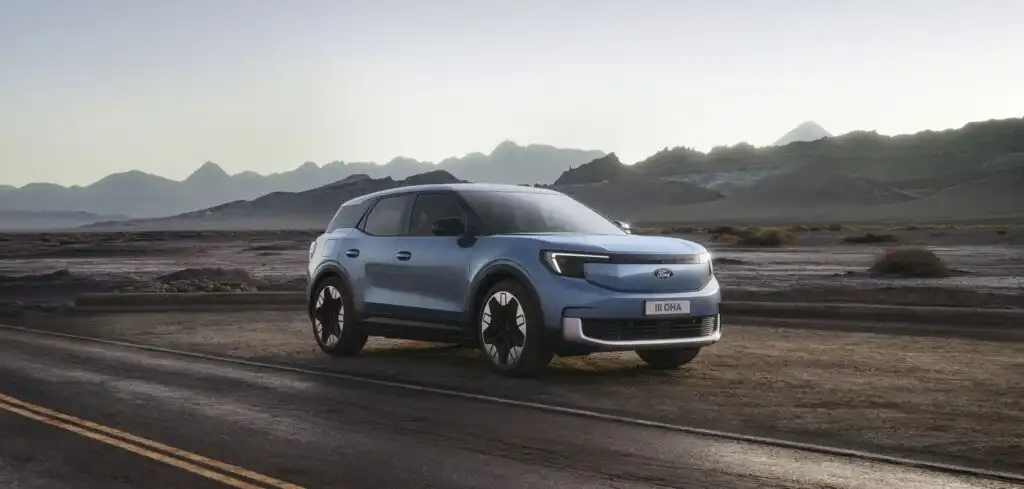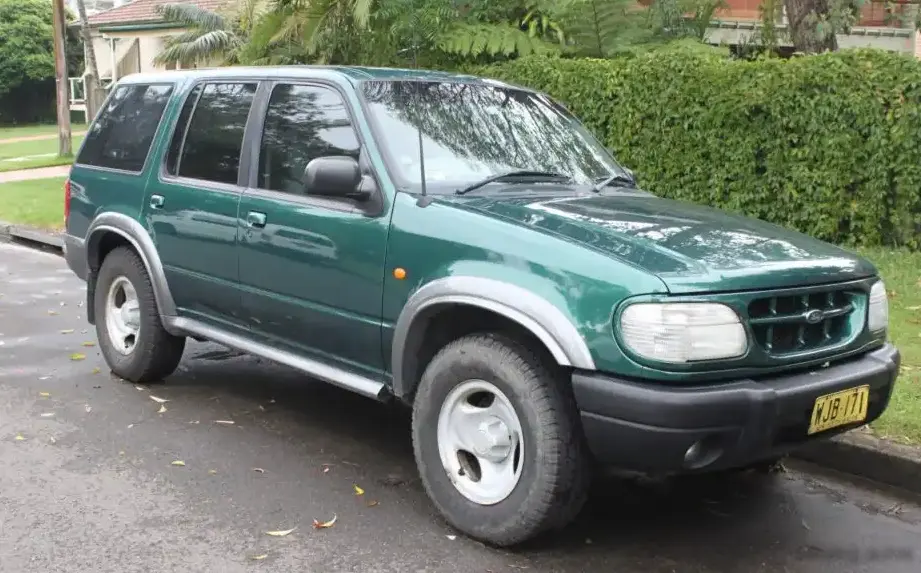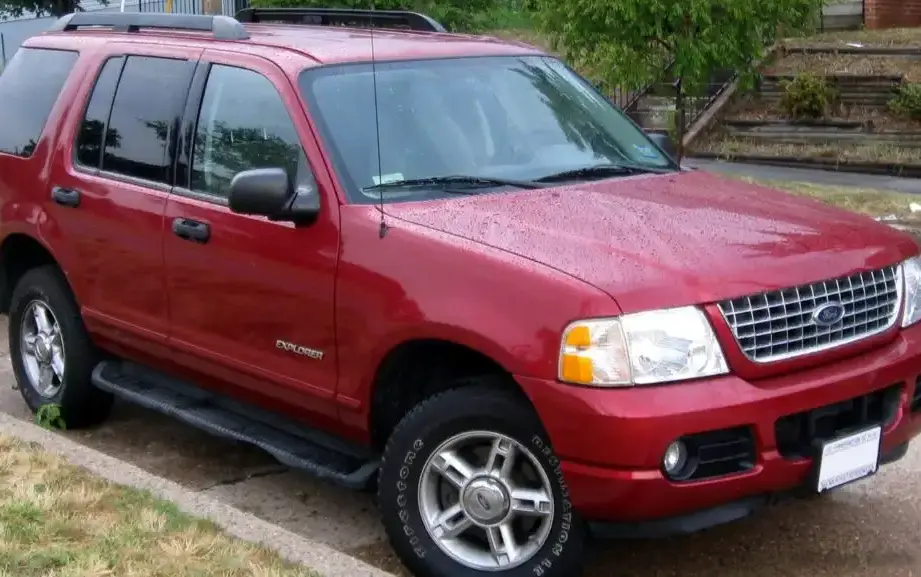
The Ford Explorer III, produced between 2002 and 2005, represented a significant evolution for Ford’s popular SUV. The third generation Explorer moved away from the body-on-frame construction of its predecessors to a more modern unibody design, shared with the Mercury Mountaineer. Within the Explorer III lineup, the 5.4L 3V (303 hp) variant, offered from 2003-2005, occupied the premium performance tier, positioned above the base 4.0L V6 and the mid-range 4.6L V8 options. This engine was a key selling point for buyers seeking substantial towing capacity and robust acceleration in a family-oriented SUV.
Technical Specifications
| Brand | Ford |
| Model | Explorer |
| Generation | Explorer III |
| Type (Engine) | 5.4 L 3V (303 Hp) |
| Start of production | 2003 year |
| End of production | 2005 year |
| Powertrain Architecture | Internal Combustion engine |
| Body type | SUV |
| Seats | 5 |
| Doors | 5 |
| Fuel Type | Petrol (Gasoline) |
| Weight-to-power ratio | 6.6 kg/Hp, 151.9 Hp/tonne |
| Weight-to-torque ratio | 4 kg/Nm, 248.1 Nm/tonne |
| Power | 303 Hp @ 5000 rpm |
| Power per litre | 56 Hp/l |
| Torque | 495 Nm @ 3750 rpm, 365.09 lb.-ft. @ 3750 rpm |
| Engine layout | Front, Longitudinal |
| Engine displacement | 5408 cm3, 330.02 cu. in. |
| Number of cylinders | 8 |
| Engine configuration | V-engine |
| Cylinder Bore | 90.2 mm, 3.55 in. |
| Piston Stroke | 105.9 mm, 4.17 in. |
| Compression ratio | 9.8:1 |
| Number of valves per cylinder | 4 |
| Fuel injection system | Multi-port manifold injection |
| Engine aspiration | Naturally aspirated engine |
| Kerb Weight | 1995 kg, 4398.22 lbs |
| Max. weight | 2595 kg, 5721 lbs |
| Max load | 600 kg, 1322.77 lbs |
| Trunk (boot) space – minimum | 391 l, 13.81 cu. ft. |
| Trunk (boot) space – maximum | 2492 l, 88 cu. ft. |
| Fuel tank capacity | 85 l, 22.45 US gal | 18.7 UK gal |
| Length | 4813 mm, 189.49 in. |
| Width | 1832 mm, 72.13 in. |
| Height | 1814 mm, 71.42 in. |
| Wheelbase | 2890 mm, 113.78 in. |
| Front track | 1547 mm, 60.91 in. |
| Rear (Back) track | 1555 mm, 61.22 in. |
| Drivetrain Architecture | The Internal combustion engine (ICE) drives the front wheels of the vehicle. |
| Drive wheel | Front wheel drive |
| Number of gears and type of gearbox | 6 gears, automatic transmission |
| Front suspension | Torsion |
| Rear suspension | Coil spring |
| Front brakes | Ventilated discs |
| Rear brakes | Disc |
| Steering type | Steering rack and pinion |
| Tires size | 235/70 R16 |
Powertrain & Engine Architecture
The heart of this Explorer variant is the 5.4-liter Triton V8 engine. This engine, designated as the 3V due to its three valves per cylinder (two intake, one exhaust), was a significant upgrade over the two-valve versions previously offered. The engine utilizes a 90-degree V-configuration, providing inherent balance and smoothness. Fuel delivery is managed by a multi-port fuel injection system, ensuring precise fuel atomization for optimal combustion. The 5.4L engine is longitudinally mounted in the chassis, driving the front wheels through a six-speed automatic transmission (5R110W). This transmission was chosen for its ability to handle the engine’s substantial torque output and provide smooth, responsive shifting. The 5R110W featured electronic control and overdrive capabilities, contributing to both performance and fuel efficiency.
Driving Characteristics
The 5.4L Explorer III delivers a noticeably more powerful driving experience compared to the V6 and smaller V8 models. Acceleration is brisk, allowing for confident merging and passing maneuvers. The six-speed automatic transmission is well-tuned, providing relatively quick and smooth gear changes. While not a sports car, the Explorer III 5.4L offers a level of performance that few other SUVs in its class could match at the time. The torque output of 495 Nm (365 lb-ft) is readily available at lower RPMs, making it particularly well-suited for towing. However, the added weight of the larger engine does impact handling slightly, making it feel less nimble than the lighter Explorer models. The gear ratios in the 5R110W are optimized for both acceleration and highway cruising, providing a comfortable and capable driving experience.
Equipment & Trim Levels
The 5.4L Explorer III typically came equipped with a generous array of standard features. These included air conditioning, power windows and locks, a CD player, and cloth upholstery. Leather upholstery, a premium sound system, and a sunroof were commonly available as optional extras. Higher trim levels, such as the Limited, often included these features as standard. The interior design was functional and family-friendly, with ample storage space and comfortable seating. The dashboard layout was straightforward and easy to use, with clearly labeled controls.
Chassis & Braking
The Explorer III’s unibody construction provided a stiffer and more refined chassis compared to previous generations. Front suspension utilized an independent torsion bar setup, while the rear employed a coil-spring independent suspension. This configuration aimed to balance ride comfort with handling stability. Braking duties were handled by ventilated discs at the front and solid discs at the rear. The braking system was adequate for everyday driving, but the added weight of the 5.4L engine required a bit more stopping distance compared to the lighter models. Anti-lock brakes (ABS) were standard equipment.
Market Reception & Comparison
The 5.4L Explorer III was generally well-received by automotive critics. Reviewers praised its powerful engine, smooth transmission, and spacious interior. However, some criticized its fuel economy, which was lower than that of the V6 models. Compared to the 4.0L V6, the 5.4L offered significantly more power and towing capacity, but at the expense of fuel efficiency. Against the 4.6L V8, the 5.4L provided a noticeable performance advantage, justifying its higher price point for buyers prioritizing power. Reliability was generally good, although some owners reported issues with spark plugs breaking during removal, a common problem with the Triton V8 engine family.
Legacy
The 5.4L Explorer III remains a popular choice in the used car market, particularly among buyers seeking a capable and affordable SUV with strong towing capabilities. While the engine is known for its power, potential buyers should be aware of the spark plug issue and ensure regular maintenance is performed. The transition to a unibody construction with the Explorer III marked a turning point for the model, paving the way for future generations. The 5.4L 3V engine, while eventually superseded by more modern designs, remains a robust and reliable powerplant when properly maintained, and continues to offer a compelling combination of performance and value in the used SUV market.