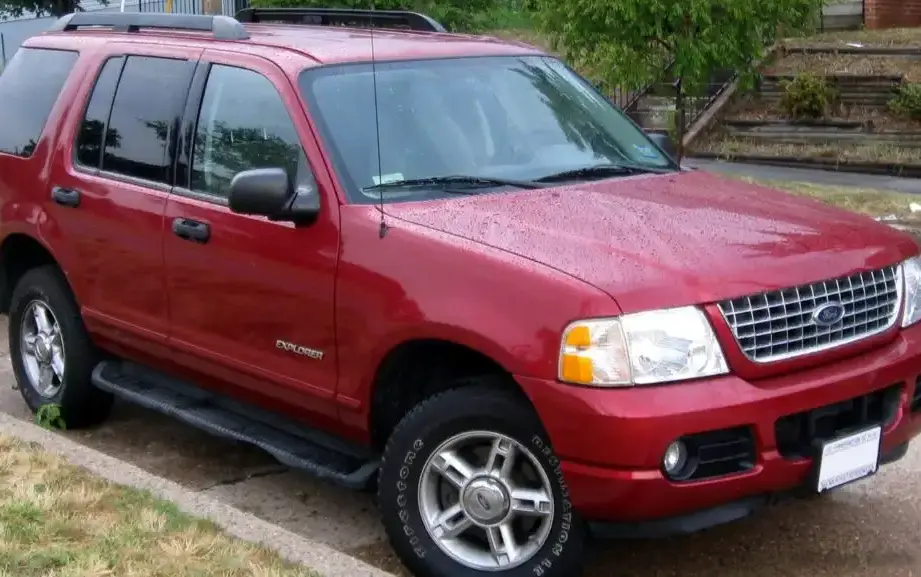
The Ford Explorer III, produced between 2002 and 2005, represented a significant evolution for Ford’s popular SUV. The third generation Explorer moved away from the body-on-frame construction of its predecessors to a more modern unibody design, offering improved ride quality and handling. Within this generation, the 5.4L 3V (303 Hp) AWD variant occupied the premium performance tier, positioned above the base 4.0L V6 and the mid-range 4.2L V6 options. This model aimed to provide Explorer buyers with substantial power and all-weather capability, catering to those needing towing capacity or living in regions with inclement weather. Production of this specific configuration ran from 2003 to 2005.
Technical Specifications
| Brand | Ford |
| Model | Explorer |
| Generation | Explorer III |
| Type (Engine) | 5.4 L 3V (303 Hp) AWD |
| Start of production | 2003 year |
| End of production | 2005 year |
| Powertrain Architecture | Internal Combustion engine |
| Body type | SUV |
| Seats | 5 |
| Doors | 5 |
| Fuel Type | Petrol (Gasoline) |
| Weight-to-power ratio | 6.6 kg/Hp, 151.9 Hp/tonne |
| Weight-to-torque ratio | 4 kg/Nm, 248.1 Nm/tonne |
| Power | 303 Hp @ 5000 rpm |
| Power per litre | 56 Hp/l |
| Torque | 495 Nm @ 3750 rpm, 365.09 lb.-ft. @ 3750 rpm |
| Engine layout | Front, Longitudinal |
| Engine displacement | 5408 cm3, 330.02 cu. in. |
| Number of cylinders | 8 |
| Engine configuration | V-engine |
| Cylinder Bore | 90.2 mm, 3.55 in. |
| Piston Stroke | 105.9 mm, 4.17 in. |
| Compression ratio | 9.8:1 |
| Number of valves per cylinder | 4 |
| Fuel injection system | Multi-port manifold injection |
| Engine aspiration | Naturally aspirated engine |
| Kerb Weight | 1995 kg, 4398.22 lbs |
| Max. weight | 2595 kg, 5721 lbs |
| Max load | 600 kg, 1322.77 lbs |
| Trunk (boot) space – minimum | 391 l, 13.81 cu. ft. |
| Trunk (boot) space – maximum | 2492 l, 88 cu. ft. |
| Fuel tank capacity | 85 l, 22.45 US gal | 18.7 UK gal |
| Length | 4813 mm, 189.49 in. |
| Width | 1832 mm, 72.13 in. |
| Height | 1814 mm, 71.42 in. |
| Wheelbase | 2890 mm, 113.78 in. |
| Front track | 1547 mm, 60.91 in. |
| Rear (Back) track | 1555 mm, 61.22 in. |
| Drive wheel | All wheel drive (4×4) |
| Number of gears and type of gearbox | 6 gears, automatic transmission |
| Front suspension | Torsion |
| Rear suspension | Coil spring |
| Front brakes | Ventilated discs |
| Rear brakes | Disc |
| Steering type | Steering rack and pinion |
| Tires size | 235/70 R16 |
Powertrain & Engine Architecture
The heart of the Explorer III 5.4L AWD was the 5.4-liter Triton V8 engine. This engine, designated with the 3V (three valves per cylinder) designation, represented an upgrade over earlier Triton engines, offering improved breathing and efficiency. The engine utilized a 90-degree V8 configuration with a cast iron block and aluminum cylinder heads. Fuel delivery was handled by a multi-port fuel injection system, precisely metering fuel into each intake port. The 3V cylinder heads featured two intake valves and one exhaust valve per cylinder, enhancing volumetric efficiency. The engine’s 5.4 liters of displacement, combined with the three-valve head design, allowed it to produce 303 horsepower at 5000 rpm and 495 Nm (365 lb-ft) of torque at 3750 rpm. This power was channeled through a six-speed automatic transmission, a significant upgrade from the four-speed units found in earlier Explorers. The 6-speed transmission provided closer gear ratios, improving both acceleration and fuel economy.
Driving Characteristics
The 5.4L AWD Explorer offered a noticeably different driving experience compared to the V6 models. The substantial torque output of the V8 provided strong acceleration, particularly from a standstill and during passing maneuvers. While not a sports car, the Explorer felt confident and capable on the road. The six-speed automatic transmission contributed to a smoother driving experience, with less noticeable gear hunting than older transmissions. The all-wheel-drive system provided enhanced traction in slippery conditions, making it a suitable vehicle for areas with snow or rain. Compared to a manual transmission equipped Explorer, the automatic offered convenience but sacrificed some driver engagement and potentially a slight amount of fuel efficiency. The weight of the vehicle, around 4400 lbs, was noticeable, but the V8’s power mitigated much of the sluggishness often associated with larger SUVs.
Equipment & Trim Levels
The 5.4L AWD Explorer typically came well-equipped, reflecting its position as the premium trim level. Standard features generally included leather upholstery, power-adjustable front seats, a premium audio system (often with a CD changer), automatic climate control, and alloy wheels. Optional extras included a power moonroof, a navigation system, and rear-seat entertainment system. The interior typically featured woodgrain trim accents and a generally upscale appearance. Safety features such as anti-lock brakes and front airbags were standard. The exterior styling was generally consistent across the Explorer III range, but the 5.4L models often featured unique badging and wheel designs to distinguish them from the lower trims.
Chassis & Braking
The Explorer III utilized an independent front suspension with torsion bars and a multi-link independent rear suspension with coil springs. This suspension setup provided a comfortable ride quality, especially considering the vehicle’s size and weight. The front suspension featured stabilizer bars to reduce body roll during cornering. Braking duties were handled by ventilated disc brakes at all four corners, providing adequate stopping power. The all-wheel-drive system employed an automatic engagement system, seamlessly distributing power between the front and rear axles as needed. The steering system utilized a rack-and-pinion setup, offering responsive and precise steering feel.
Market Reception & Comparison
The 5.4L Explorer was generally well-received by automotive critics, who praised its powerful engine, comfortable ride, and spacious interior. However, some reviewers noted that the fuel economy was relatively low compared to V6-powered competitors. Compared to the 4.0L and 4.2L V6 models, the 5.4L offered significantly more power and towing capacity, but at a higher price point. The 5.4L was also more expensive to maintain, due to the increased complexity of the engine and its potential for issues such as spark plug breakage (a common problem with early Triton V8s). Against competitors like the Chevrolet TrailBlazer and the Jeep Grand Cherokee, the Explorer offered a compelling combination of features, performance, and value.
Legacy
The 5.4L Triton V8 engine, while powerful, has developed a reputation for certain reliability issues over time, particularly concerning spark plug breakage and timing chain wear. However, with proper maintenance and preventative care, these engines can remain reliable for many years. Today, the Explorer III 5.4L AWD models hold a moderate value in the used car market, appealing to buyers seeking a capable and spacious SUV with a powerful engine. The transition to a unibody construction with the Explorer III marked a turning point for the model, paving the way for future generations of the popular SUV. The 6-speed automatic transmission was also a significant improvement, offering a smoother and more efficient driving experience.