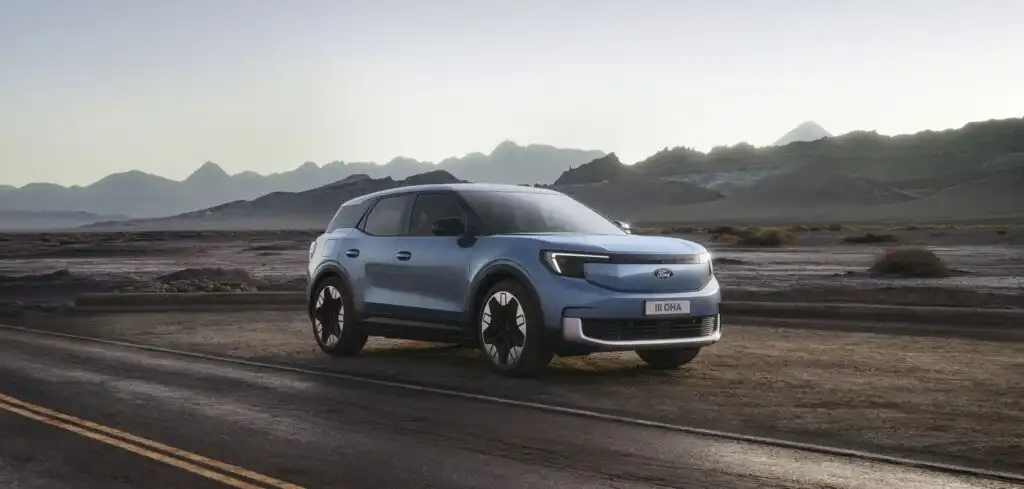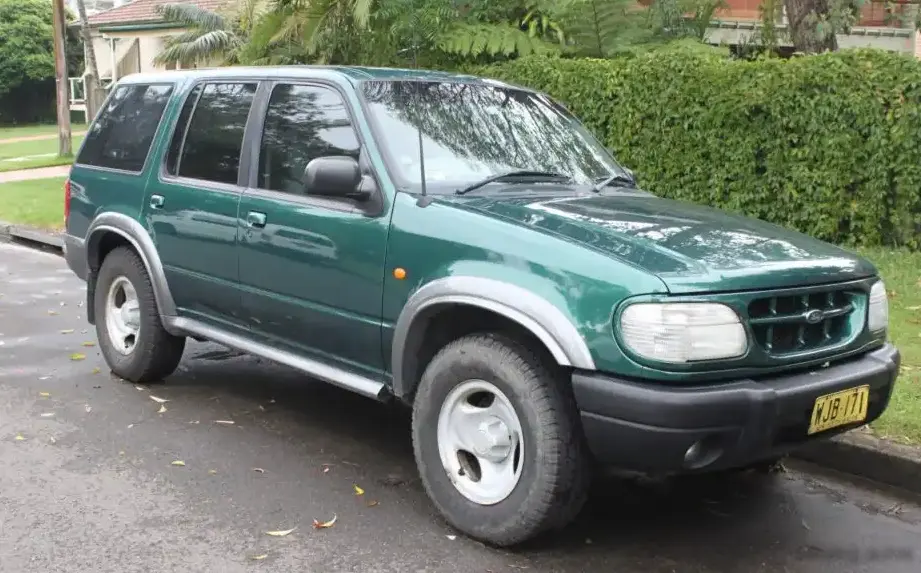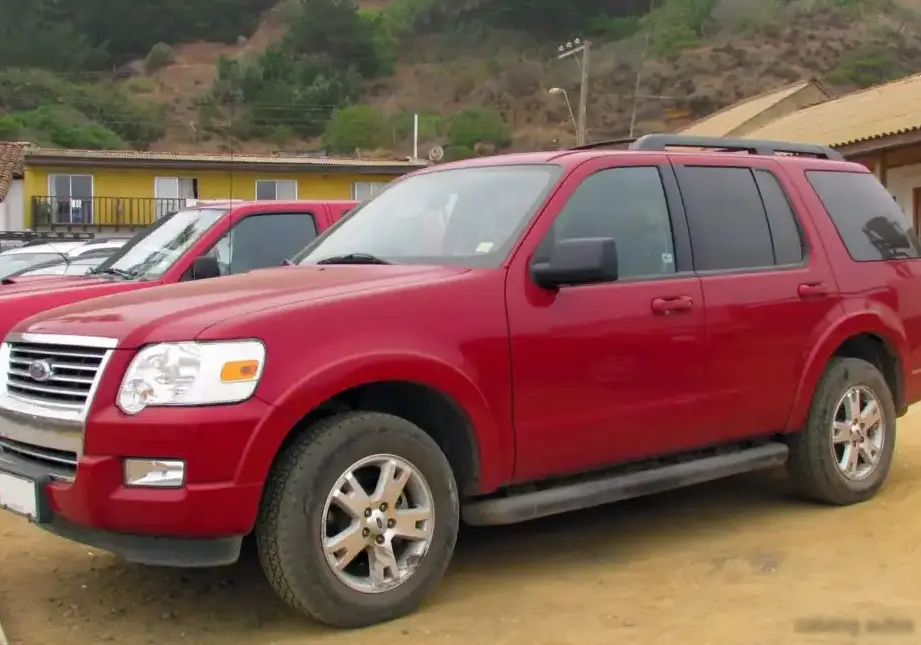
The Ford Explorer IV 4.0i V6 12V Sport Trac, produced from 2006 to 2010, represents a significant iteration of Ford’s popular SUV. This variant, positioned as a mid-range offering within the fourth-generation Explorer (2006-2010) lineup, combined a 4.0-liter V6 engine with a five-speed automatic transmission and rear-wheel drive. It aimed to provide a balance between capability, comfort, and affordability, appealing to families and individuals seeking a versatile vehicle for both daily commuting and light-duty recreational activities. The Sport Trac designation denoted a specific trim level with unique styling cues and features.
Technical Specifications
| Brand | Ford |
| Model | Explorer |
| Generation | Explorer IV |
| Type | 4.0 i V6 12V Sport Trac (208 Hp) |
| Start of production | 2006 |
| End of production | 2010 |
| Powertrain Architecture | Internal Combustion engine |
| Body type | SUV |
| Seats | 5 |
| Doors | 5 |
| Fuel consumption (urban) | 14.7 l/100 km (16 US mpg, 19.2 UK mpg) |
| Fuel consumption (extra urban) | 11.2 l/100 km (21 US mpg, 25.2 UK mpg) |
| Fuel Type | Petrol (Gasoline) |
| Maximum speed | 170 km/h (105.63 mph) |
| Weight-to-power ratio | 9.3 kg/Hp |
| Weight-to-torque ratio | 5.9 kg/Nm |
| Power | 208 Hp @ 5500 rpm |
| Power per litre | 52.1 Hp/l |
| Torque | 328 Nm @ 3000 rpm (241.92 lb.-ft. @ 3000 rpm) |
| Engine layout | Front, Longitudinal |
| Engine displacement | 3990 cm3 (243.48 cu. in.) |
| Number of cylinders | 6 |
| Engine configuration | V-engine |
| Cylinder Bore | 100.33 mm (3.95 in.) |
| Piston Stroke | 84.3 mm (3.32 in.) |
| Compression ratio | 9.7:1 |
| Number of valves per cylinder | 2 |
| Fuel injection system | Multi-port manifold injection |
| Engine aspiration | Naturally aspirated engine |
| Engine oil capacity | 4.7 l (4.97 US qt | 4.14 UK qt) |
| Coolant capacity | 11.5 l (12.15 US qt | 10.12 UK qt) |
| Kerb Weight | 1925 kg (4243.9 lbs.) |
| Max. weight | 2567 kg (5659.27 lbs.) |
| Max load | 642 kg (1415.37 lbs.) |
| Trunk (boot) space – minimum | 391 l (13.81 cu. ft.) |
| Trunk (boot) space – maximum | 2492 l (88 cu. ft.) |
| Fuel tank capacity | 85 l (22.45 US gal | 18.7 UK gal) |
| Length | 4813 mm (189.49 in.) |
| Width | 1832 mm (72.13 in.) |
| Height | 1814 mm (71.42 in.) |
| Wheelbase | 2890 mm (113.78 in.) |
| Front track | 1547 mm (60.91 in.) |
| Rear track | 1555 mm (61.22 in.) |
| Drivetrain Architecture | Rear wheel drive |
| Number of gears | 5 |
| Gearbox type | Automatic transmission |
| Front suspension | Torsion |
| Rear suspension | Coil spring |
| Front brakes | Disc |
| Rear brakes | Disc |
| Assisting systems | ABS (Anti-lock braking system) |
| Steering type | Steering rack and pinion |
| Tires size | 235/70 R16 |
Powertrain & Engine Architecture
The heart of the Explorer IV 4.0i Sport Trac is Ford’s 4.0-liter Cologne V6 engine. This engine, designated with various codes depending on specific calibration and emissions requirements, is a naturally aspirated, 12-valve (two valves per cylinder) powerplant. The 4.0L engine utilizes a multi-port fuel injection system, delivering fuel directly into the intake ports just before the intake valves. This design, common for its time, provided a good balance of fuel efficiency and performance. The engine’s architecture is a 60-degree V-configuration, contributing to a relatively compact engine bay footprint. The 5R55E five-speed automatic transmission was the standard pairing for this engine. This transmission is known for its relatively smooth shifting characteristics, but also for potential issues with torque converter failure and valve body wear, particularly with higher mileage. The transmission is electronically controlled, adapting shift points based on throttle position and vehicle speed.
Driving Characteristics
The 208 horsepower and 241 lb-ft of torque produced by the 4.0L V6, when coupled with the five-speed automatic, provided adequate, but not exhilarating, performance. Acceleration from 0 to 60 mph typically took around 8-9 seconds. Compared to the higher-output 4.6L V8 option available on some Explorer trims, the 4.0L felt noticeably less powerful, especially when fully loaded or towing. However, the automatic transmission offered a more relaxed driving experience than the available manual transmission. The gear ratios were tuned for everyday drivability, prioritizing smooth cruising over aggressive acceleration. The rear-wheel drive configuration provided a more traditional driving feel compared to the available four-wheel drive systems, offering slightly better fuel economy but reduced traction in inclement weather.
Equipment & Trim Levels
The Sport Trac trim level generally included features such as alloy wheels, a color-keyed body cladding, and upgraded interior trim. Standard interior features typically included cloth upholstery, air conditioning, a CD player, and power windows and locks. Optional extras included leather upholstery, a sunroof, a premium sound system, and a navigation system. The Sport Trac also often featured a unique instrument cluster design and exterior badging to differentiate it from other Explorer trims.
Chassis & Braking
The Explorer IV utilized a body-on-frame construction, providing a robust and durable platform. The front suspension employed an independent torsion bar setup, while the rear suspension utilized a solid axle with coil springs. This configuration offered a good balance of ride comfort and load-carrying capacity. Braking duties were handled by disc brakes on all four wheels, with ABS (Anti-lock Braking System) as standard equipment. The braking system was adequate for the vehicle’s weight and performance, but lacked the sophistication of more modern braking systems.
Market Reception & Comparison
The Explorer IV 4.0i Sport Trac was generally well-received by consumers seeking a versatile and affordable SUV. Critics praised its comfortable ride, spacious interior, and available features. However, some reviewers noted the engine’s lack of power compared to competitors and the potential reliability issues with the automatic transmission. Compared to the V8-powered Explorers, the 4.0L offered better fuel economy, but at the expense of performance. Against competitors like the Chevrolet TrailBlazer and the Jeep Grand Cherokee, the Explorer offered a compelling combination of value and practicality.
Legacy
The Ford Explorer IV 4.0i V6 Sport Trac remains a relatively common sight on used car lots today. The 4.0L V6 engine is generally considered to be a reliable powerplant, although regular maintenance is crucial to prevent issues such as oil leaks and timing chain wear. The five-speed automatic transmission is the most common point of concern, with potential for failure as the vehicle ages. Overall, the Explorer IV 4.0i Sport Trac represents a solid and dependable SUV that continues to offer good value for its price, provided it has been well-maintained.