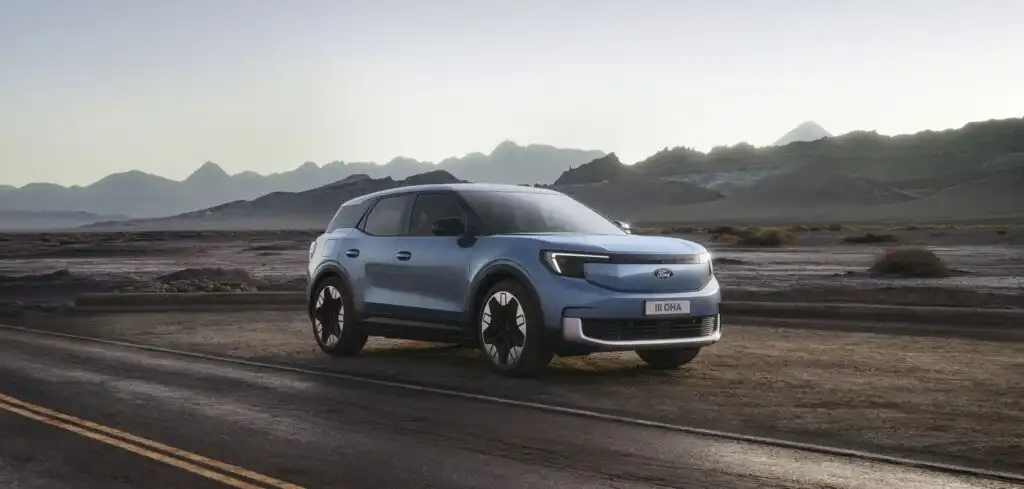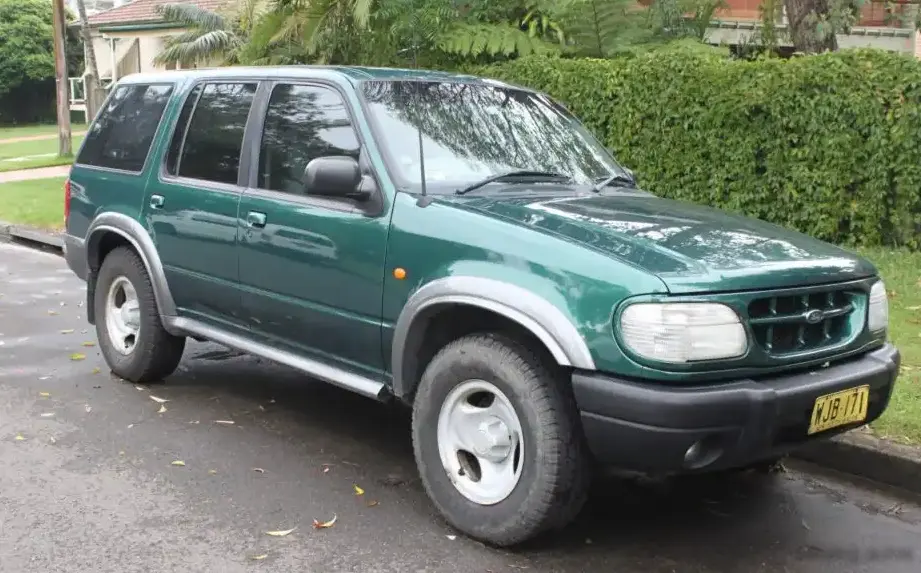
The Ford Explorer V, specifically the facelifted version produced from 2018 to 2019, represented a significant evolution of Ford’s popular mid-size SUV. Within the fifth generation (2016-2019), the 2.3 EcoBoost engine paired with a six-speed automatic transmission and four-wheel drive (4WD) offered a compelling blend of performance and efficiency. This configuration occupied a middle ground in the Explorer lineup, positioned between the base 3.5L V6 and the more powerful 3.5L EcoBoost V6, appealing to buyers seeking a balance of capability and fuel economy. The facelift brought styling updates and refined interior features, further enhancing the Explorer’s market appeal.
Technical Specifications
| Brand | Ford |
| Model | Explorer |
| Generation | Explorer V (facelift 2018) |
| Type (Engine) | 2.3 EcoBoost (280 Hp) 4WD Automatic |
| Start of production | 2018 |
| End of production | 2019 |
| Powertrain Architecture | Internal Combustion engine |
| Body type | SUV |
| Seats | 7 |
| Doors | 5 |
| Fuel consumption (urban) | 13 l/100 km (18.1 US mpg, 21.7 UK mpg, 7.7 km/l) |
| Fuel consumption (extra urban) | 9.4 l/100 km (25 US mpg, 30.1 UK mpg, 10.6 km/l) |
| Fuel consumption (combined) | 11.2 l/100 km (21 US mpg, 25.2 UK mpg, 8.9 km/l) |
| Fuel Type | Petrol (Gasoline) |
| Weight-to-power ratio | 7.4 kg/Hp, 135.1 Hp/tonne |
| Weight-to-torque ratio | 4.9 kg/Nm, 202.6 Nm/tonne |
| Power | 280 Hp @ 5600 rpm |
| Power per litre | 123.8 Hp/l |
| Torque | 420 Nm @ 3000 rpm (309.78 lb.-ft. @ 3000 rpm) |
| Engine layout | Front, Transverse |
| Engine displacement | 2261 cm3 (137.97 cu. in.) |
| Number of cylinders | 4 |
| Engine configuration | Inline |
| Cylinder Bore | 87.5 mm (3.44 in.) |
| Piston Stroke | 94 mm (3.7 in.) |
| Compression ratio | 9.5:1 |
| Number of valves per cylinder | 4 |
| Fuel injection system | Direct injection |
| Engine aspiration | Turbocharger, Intercooler |
| Valvetrain | Ti-VCT, DOHC |
| Engine oil capacity | 5.4 l (5.71 US qt | 4.75 UK qt) |
| Coolant capacity | 11 l (11.62 US qt | 9.68 UK qt) |
| Kerb Weight | 2073 kg (4570.18 lbs.) |
| Trunk (boot) space – minimum | 595 l (21.01 cu. ft.) |
| Trunk (boot) space – maximum | 2313 l (81.68 cu. ft.) |
| Fuel tank capacity | 70 l (18.49 US gal | 15.4 UK gal) |
| Length | 5047 mm (198.7 in.) |
| Width | 2004 mm (78.9 in.) |
| Width with mirrors folded | 2096 mm (82.52 in.) |
| Width including mirrors | 2291 mm (90.2 in.) |
| Height | 1778 mm (70 in.) |
| Wheelbase | 2865 mm (112.8 in.) |
| Front track | 1702 mm (67.01 in.) |
| Rear (Back) track | 1702 mm (67.01 in.) |
| Ride height (ground clearance) | 198 mm (7.8 in.) |
| Drag coefficient (Cd) | 0.35 |
| Approach angle | 15.6° |
| Departure angle | 20.9° |
| Ramp-over (brakeover) angle | 16.9° |
| Drive wheel | All wheel drive (4×4) |
| Number of gears and type of gearbox | 6 gears, automatic transmission |
| Front suspension | Independent, type McPherson with coil spring and anti-roll bar |
| Rear suspension | Independent multi-link spring suspension with stabilizer |
| Front brakes | Ventilated discs |
| Rear brakes | Ventilated discs |
| Assisting systems | ABS (Anti-lock braking system) |
| Steering type | Steering rack and pinion |
| Power steering | Electric Steering |
| Tires size | 255/50 R20 |
| Wheel rims size | 20 |
Powertrain & Engine Architecture
The heart of this Explorer variant is the 2.3-liter EcoBoost inline-four cylinder engine. This engine, designated with Ford engine codes like BT4, utilizes direct fuel injection and a single turbocharger with an intercooler to deliver a robust 280 horsepower and 310 lb-ft of torque. The Ti-VCT (Twin Independent Variable Camshaft Timing) system optimizes valve timing for improved performance and efficiency across the engine’s operating range. The six-speed automatic transmission, a staple in Ford vehicles of this era, was chosen for its balance of responsiveness and fuel economy. While not as sophisticated as newer transmissions with eight or ten speeds, it provided smooth shifts and adequate control for everyday driving. The 4WD system is primarily front-wheel drive based, engaging the rear wheels when slip is detected, offering enhanced traction in inclement weather or on loose surfaces.
Driving Characteristics
The 2.3L EcoBoost Explorer offered a noticeable step up in performance compared to the base V6 model. Acceleration was brisk, and the engine provided ample power for highway merging and passing maneuvers. However, it didn’t possess the outright acceleration of the 3.5L EcoBoost V6. The six-speed automatic transmission, while generally smooth, could sometimes feel a bit hesitant during quick downshifts. The 4WD system provided confident handling in various conditions, but it wasn’t designed for serious off-roading. The gear ratios were tuned for a balance between fuel efficiency and everyday drivability, prioritizing comfortable cruising over sporty performance. Compared to manual transmission equipped Explorers (which were rare), the automatic offered convenience but sacrificed some driver engagement.
Equipment & Trim Levels
The 2.3L EcoBoost 4WD Explorer typically came standard with features like Ford’s SYNC infotainment system, a rearview camera, keyless entry, and automatic climate control. Higher trim levels, such as the Limited, added features like leather upholstery, heated front seats, a power liftgate, and advanced safety technologies like blind-spot monitoring and lane-keeping assist. Optional extras included a panoramic sunroof, navigation system, and premium audio systems. Interior upholstery generally consisted of cloth on lower trims and leather on higher trims. Dashboard configurations were consistent across the 2.3L models, featuring a user-friendly layout with intuitive controls.
Chassis & Braking
The Explorer V utilized a unibody construction, providing a good balance of strength and weight. The front suspension employed an independent McPherson strut design, while the rear suspension featured an independent multi-link setup. Both ends were equipped with coil springs and anti-roll bars to minimize body roll during cornering. Braking duties were handled by ventilated discs on all four wheels, providing adequate stopping power for the vehicle’s weight. ABS (Anti-lock Braking System) was standard, enhancing safety during emergency braking situations. The suspension tuning was geared towards comfort, prioritizing a smooth ride over sporty handling.
Market Reception & Comparison
Critics generally praised the 2.3L EcoBoost Explorer for its combination of performance, fuel economy, and value. It offered a compelling alternative to competitors like the Honda Pilot and Toyota Highlander. Fuel economy was a strong point, with combined ratings around 21 mpg, which was competitive for its class. Reliability was generally good, although some owners reported minor issues with the turbocharger and fuel injection system. Compared to the V6 models, the 2.3L EcoBoost offered a noticeable performance improvement without a significant penalty in fuel economy. Compared to the 3.5L EcoBoost, it was more affordable but lacked the same level of power and towing capacity.
Legacy
The 2.3L EcoBoost engine proved to be a durable and reliable powerplant when properly maintained. In the used car market, Explorers equipped with this engine and transmission continue to be popular choices, offering a good balance of features, space, and affordability. While not as sought-after as the higher-performance 3.5L EcoBoost models, the 2.3L version represents a sweet spot for buyers seeking a practical and efficient family SUV. Common maintenance items include regular oil changes, spark plug replacements, and inspection of the turbocharger and cooling system. Overall, the 2018-2019 Ford Explorer 2.3 EcoBoost 4WD Automatic remains a capable and well-rounded vehicle that continues to provide reliable transportation for many owners.