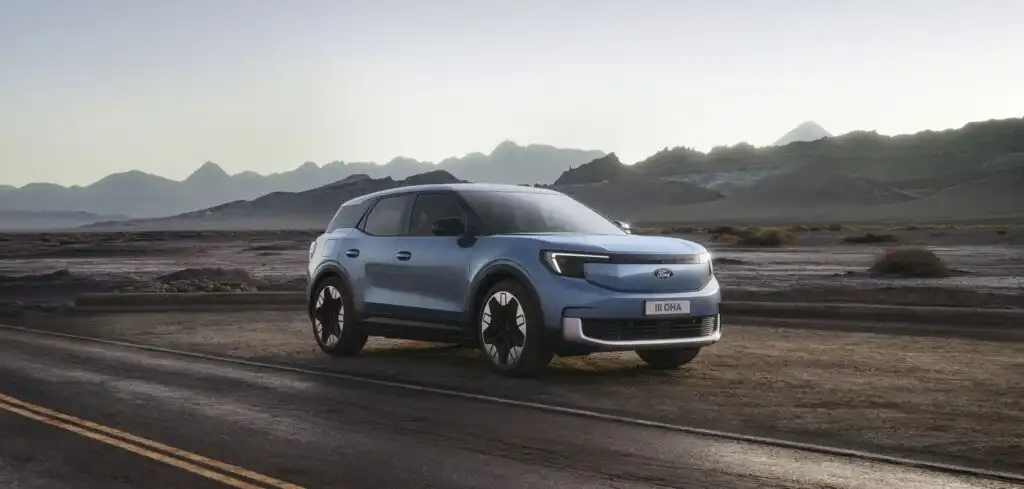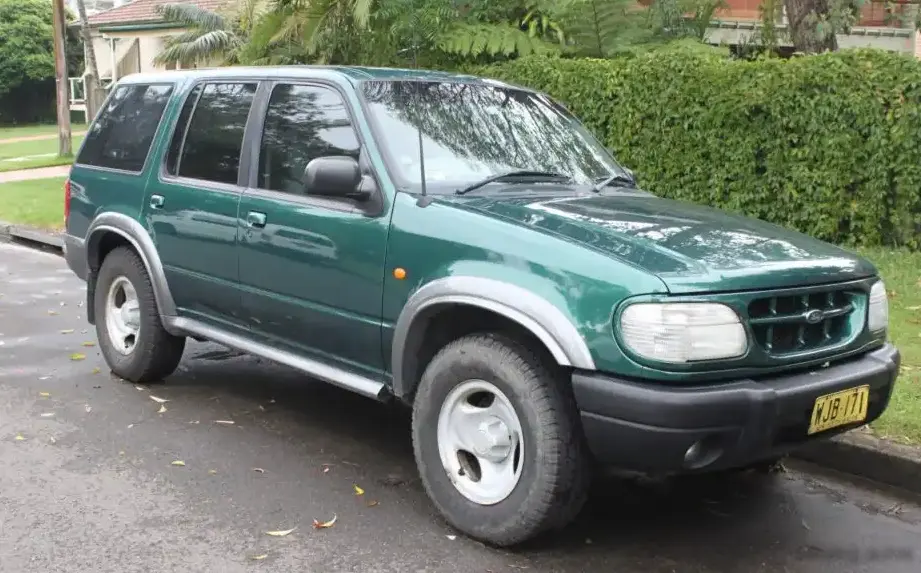
The Ford Explorer V, specifically the 2.3 EcoBoost variant with an automatic transmission, represented a significant offering in the mid-size SUV segment during its 2018-2019 model years. This facelift of the fifth-generation Explorer (introduced in 2010) aimed to modernize the vehicle and provide a more fuel-efficient alternative to the larger, V6-powered models. Positioned as a mid-range trim, the 2.3L EcoBoost Automatic Explorer offered a balance between performance, fuel economy, and features, appealing to families and individuals seeking a versatile and comfortable SUV. It was primarily sold in the North American market, where large SUVs and crossovers remain highly popular.
Technical Specifications
| Brand | Ford |
| Model | Explorer |
| Generation | Explorer V (facelift 2018) |
| Type (Engine) | 2.3 EcoBoost (280 Hp) Automatic |
| Start of production | 2018 |
| End of production | 2019 |
| Powertrain Architecture | Internal Combustion engine |
| Body type | SUV |
| Seats | 7 |
| Doors | 5 |
| Fuel consumption (urban) | 12.3 l/100 km (19.1 US mpg) |
| Fuel consumption (extra urban) | 8.7 l/100 km (27 US mpg) |
| Fuel consumption (combined) | 10.6 l/100 km (22.2 US mpg) |
| Fuel Type | Petrol (Gasoline) |
| Weight-to-power ratio | 7.1 kg/Hp |
| Weight-to-torque ratio | 4.8 kg/Nm |
| Power | 280 Hp @ 5600 rpm |
| Power per litre | 123.8 Hp/l |
| Torque | 420 Nm @ 3000 rpm (309.78 lb.-ft. @ 3000 rpm) |
| Engine layout | Front, Transverse |
| Engine displacement | 2261 cm3 (137.97 cu. in.) |
| Number of cylinders | 4 |
| Engine configuration | Inline |
| Cylinder Bore | 87.5 mm (3.44 in.) |
| Piston Stroke | 94 mm (3.7 in.) |
| Compression ratio | 9.5:1 |
| Number of valves per cylinder | 4 |
| Fuel injection system | Direct injection |
| Engine aspiration | Turbocharger, Intercooler |
| Valvetrain | Ti-VCT, DOHC |
| Engine oil capacity | 5.4 l (5.71 US qt | 4.75 UK qt) |
| Coolant capacity | 11 l (11.62 US qt | 9.68 UK qt) |
| Kerb Weight | 2000 kg (4409.25 lbs.) |
| Trunk (boot) space – minimum | 595 l (21.01 cu. ft.) |
| Trunk (boot) space – maximum | 2313 l (81.68 cu. ft.) |
| Fuel tank capacity | 70 l (18.49 US gal | 15.4 UK gal) |
| Length | 5047 mm (198.7 in.) |
| Width | 2004 mm (78.9 in.) |
| Width with mirrors folded | 2096 mm (82.52 in.) |
| Width including mirrors | 2291 mm (90.2 in.) |
| Height | 1778 mm (70 in.) |
| Wheelbase | 2865 mm (112.8 in.) |
| Front track | 1702 mm (67.01 in.) |
| Rear track | 1702 mm (67.01 in.) |
| Ride height (ground clearance) | 198 mm (7.8 in.) |
| Drag coefficient (Cd) | 0.35 |
| Approach angle | 15.6° |
| Departure angle | 20.9° |
| Ramp-over angle | 16.9° |
| Drivetrain Architecture | Front wheel drive |
| Number of gears | 6 |
| Gearbox type | Automatic transmission |
| Front suspension | Independent, McPherson with coil spring and anti-roll bar |
| Rear suspension | Independent multi-link with stabilizer |
| Front brakes | Ventilated discs |
| Rear brakes | Ventilated discs |
| Steering type | Steering rack and pinion |
| Power steering | Electric |
| Tires size | 245/60 R18 |
| Wheel rims size | 18 |
Introduction
The 2018-2019 Ford Explorer 2.3 EcoBoost Automatic was a key component of the Explorer lineup following its mid-cycle refresh. Built on the global Ford D4 platform (also known as the 1HX0/A3 platform), this variant aimed to provide a more accessible entry point into the Explorer range without sacrificing the spaciousness and practicality that the model was known for. It slotted below the 3.5L V6 models in terms of price and performance, targeting buyers who prioritized fuel efficiency and a comfortable ride over outright power. The facelift brought updated styling, improved technology, and refinements to the interior, enhancing the Explorer’s appeal in a competitive SUV market.
Powertrain & Engine Architecture
At the heart of the Explorer 2.3 EcoBoost was Ford’s 2.3-liter inline-four cylinder engine, designated as the EcoBoost. This engine utilized direct fuel injection and a single turbocharger with an intercooler to deliver a balance of power and efficiency. The engine code is generally associated with the EcoBoost family, and specific calibrations varied slightly year to year. The Ti-VCT (Twin Independent Variable Camshaft Timing) system optimized valve timing for improved performance and fuel economy across the rev range. The 2.3L engine produced 280 horsepower at 5600 rpm and 310 lb-ft of torque at 3000 rpm. This power was delivered through a six-speed automatic transmission, chosen for its smooth shifting and responsiveness. While not as sporty as some competitors’ transmissions, it was well-suited to the Explorer’s intended use as a family hauler. The transmission was calibrated to prioritize fuel efficiency and comfortable cruising.
Driving Characteristics
The Explorer 2.3 EcoBoost Automatic offered a comfortable and composed driving experience. Acceleration was adequate for everyday driving, with the turbocharger providing a noticeable boost in power when needed. However, it wasn’t as quick or responsive as the V6-powered Explorers. The six-speed automatic transmission shifted smoothly, but could sometimes feel hesitant during quick overtaking maneuvers. The front-wheel-drive configuration provided good traction in most conditions, but all-wheel drive was available as an option for enhanced stability in inclement weather. The suspension was tuned for comfort, absorbing bumps and imperfections in the road well. Steering feel was light and precise, making the Explorer easy to maneuver in urban environments. Overall, the driving experience was geared towards comfort and practicality rather than sporty performance.
Equipment & Trim Levels
The 2.3 EcoBoost trim typically included standard features such as Ford’s SYNC infotainment system with a touchscreen display, Bluetooth connectivity, a rearview camera, and automatic climate control. Higher trim levels added features like leather upholstery, heated front seats, a power liftgate, and a premium sound system. Optional extras included navigation, a panoramic sunroof, and advanced safety features like blind-spot monitoring and lane-keeping assist. Interior upholstery was typically cloth on base models, with leather available on higher trims. The dashboard layout was functional and user-friendly, with clearly labeled controls and a logical arrangement of features.
Chassis & Braking
The Explorer 2.3 EcoBoost utilized an independent front suspension with McPherson struts and a coil spring, along with an independent multi-link rear suspension. This setup provided a comfortable ride and good handling characteristics. Front and rear brakes were ventilated discs, providing adequate stopping power for the vehicle’s weight. Anti-lock braking system (ABS) was standard, along with electronic stability control. The Explorer’s chassis was designed to provide a balance between rigidity and weight savings, contributing to its overall handling and ride quality. Stabilizer bars were included on both the front and rear axles to reduce body roll during cornering.
Market Reception & Comparison
The Explorer 2.3 EcoBoost Automatic was generally well-received by critics and consumers. It was praised for its fuel efficiency, comfortable ride, and spacious interior. However, some reviewers noted that its acceleration was not as strong as the V6 models. Compared to the 3.5L V6 Explorer, the 2.3L EcoBoost offered better fuel economy but less power. It also typically had a lower price point, making it a more attractive option for budget-conscious buyers. Compared to competitors like the Honda Pilot and Toyota Highlander, the Explorer 2.3 EcoBoost offered a similar level of practicality and comfort, but with a more distinctive American styling.
Legacy
The 2.3L EcoBoost engine proved to be a reliable and durable powertrain when properly maintained. While some early EcoBoost engines experienced issues with timing chain guides, these problems were largely addressed in later model years. The Explorer 2.3 EcoBoost Automatic remains a popular choice in the used car market, offering a good balance of value, practicality, and fuel efficiency. Its spacious interior and comfortable ride make it a suitable option for families and individuals seeking a versatile SUV. The 2.3L EcoBoost engine continues to be used in other Ford vehicles, demonstrating its ongoing relevance and reliability.